





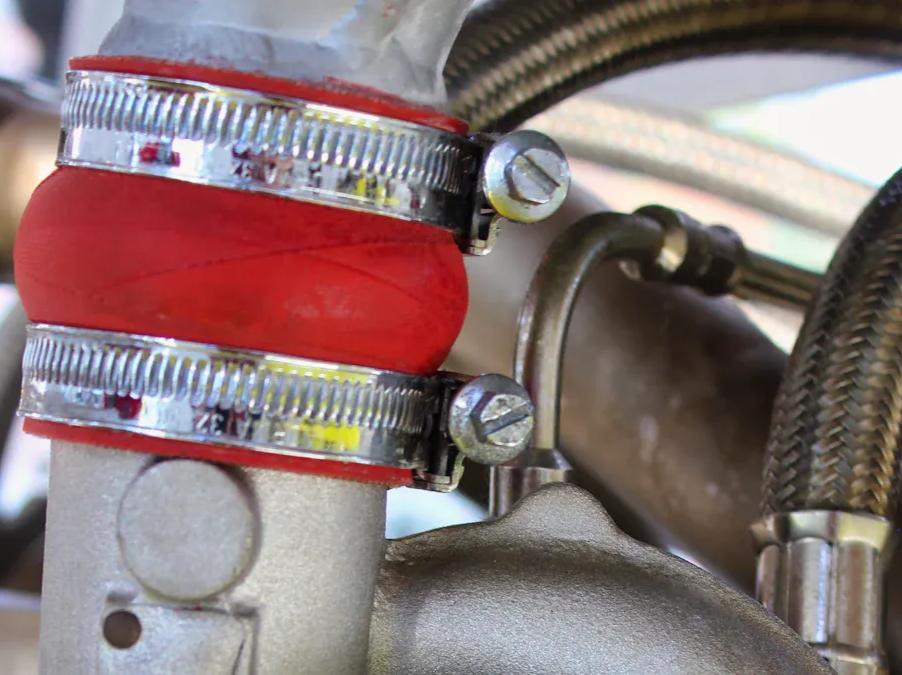
For radiator hoses, a зажим с постоянным натяжением, often called a spring clamp, suits most cooling systems because its spring steel band stretches with the rubber or silicone as that material expands and contracts through heat cycles. That behavior prevents the slow leaks that appear when a fixed clamp loses grip.
A high quality worm gear clamp remains a solid budget alternative, costing less and staying reliable when the installer sizes it correctly and avoids overtightening. Tension behavior, material, fit, and cost decide which clamp suits a given system.
HWKG’s constant tension hose clamps take this further, sitting alongside its worm drive clamps, Зажимы с Т-образными болтами, band clamps, and pipe couplings, backed by digital quality control and in-house R&D.This guide compares constant tension and worm gear clamps on tension, material, fit, and cost, so the right choice for a radiator hose becomes clear.
Основные выводы
- Constant-tension clamps keep a steady grip on radiator hoses through heat cycles.
- Worm gear clamps work well for budget builds when you tighten them to the hose maker’s spec.
- Match the clamp size to the hose’s outside diameter for a secure seal.
- Avoid over-tightening to prevent damage to soft radiator hoses.
- Check clamps after the first few heat cycles and at each coolant service.
Key Selection Factors
Tension And Heat Cycling
A radiator hose goes through constant change. Coolant gets hot during a drive, and the rubber or silicone softens and expands. The hose shrinks again after shutdown. This cycle happens thousands of times over a vehicle’s life, and the hose material slowly takes a permanent set.
A clamp has to make up for that movement. A fixed clamp holds one diameter, so it loses grip as the hose relaxes. A clamp with spring action stores energy in its band and lets it out as the hose shrinks. That stored tension keeps the seal tight through every cycle. This is the main reason tension behavior matters more than raw clamping force on a radiator hose.
Material And Fit
Stainless steel fights corrosion and handles under-hood heat well. Plated steel costs less and works fine in many applications, though plating can wear at the edges over time. The choice affects long-term reliability more than initial performance.
Fit deserves equal attention. Radiator hoses sit on soft rubber and often connect to plastic radiator tanks or thermostat housings. A clamp that puts force on a narrow band can crush or crease a soft hose. Wide bands spread the load. The clamp range must also match the hose outside diameter, with enough adjustment left for the hose to compress slightly under pressure. A hose clamp sized at the very edge of its range offers little margin for heat cycling. Buyers who check both material and fit before installation avoid most comebacks.
Hose Clamp Types Compared
Constant-Tension And Spring Clamps
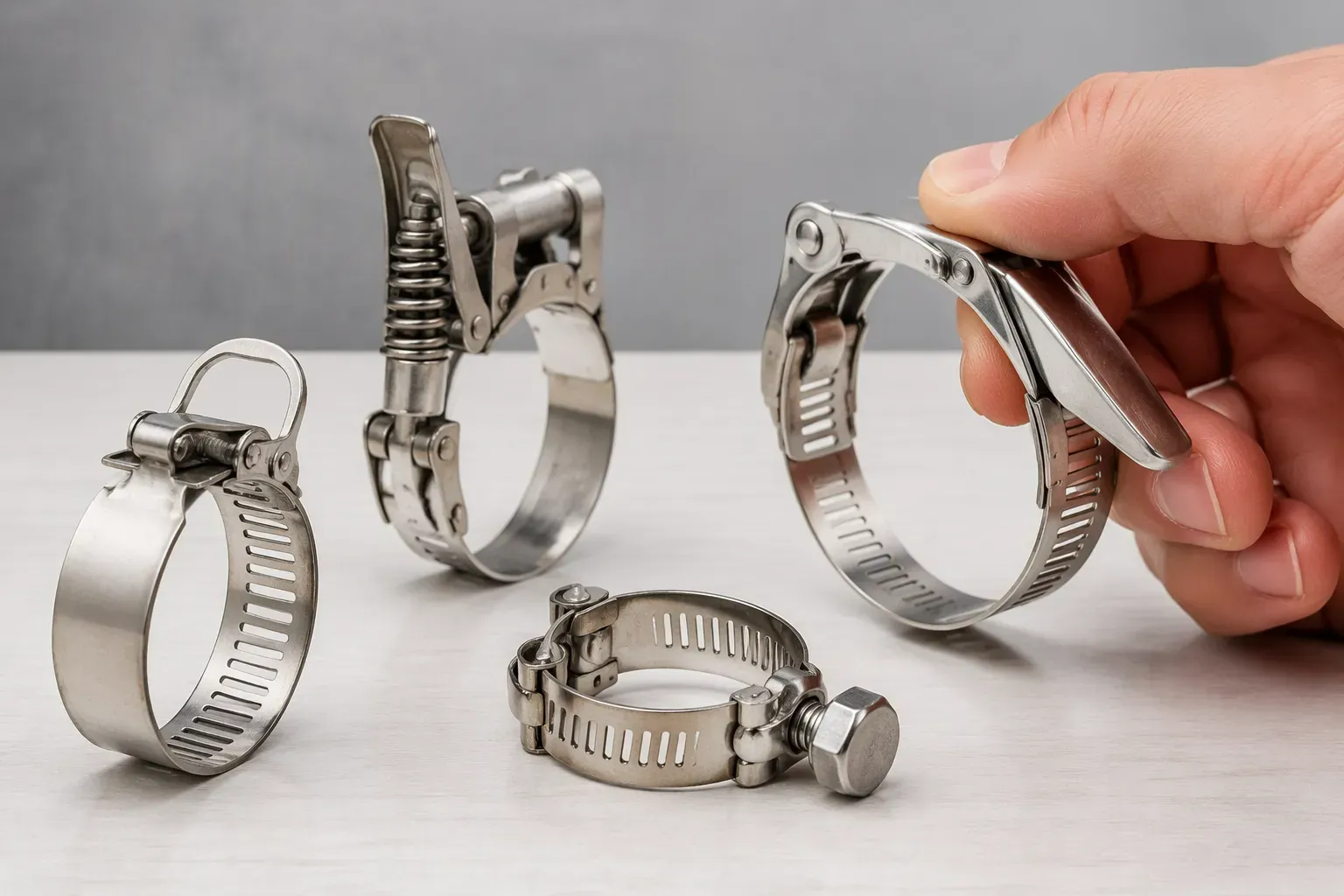
Constant-tension clamps are the best choice for radiator hoses. The spring steel band stretches when the hose swells and pulls back when it shrinks. Pressure stays even all the way around, so the seal holds through every heat cycle. This design also protects plastic radiator tanks and thermostat housings. A spring clamp spreads its load over a wide band and stops before it bends soft flanges.
OEM spring steel clamps are the gold standard here. Car makers use them at the factory for a good reason: they adjust themselves and never need retightening. Aftermarket constant-tension clamps work the same way, and many come with a size chart for common hose diameters. Buyers who match the clamp to the hose outside diameter get factory-level reliability.
Worm Gear, T-Bolt, And Crimp Clamps
Worm gear clamps are still the workhorse of the aftermarket. They cost little, fit many diameters, and install with a common screwdriver or nut driver. Good ones like Ideal-Tridon hold well on coolant hoses. The danger is over-tightening. A worm gear band puts force on a narrow strip, and too much torque can crease or cut a soft radiator hose. Most of these failures come from installers who tighten by feel instead of by spec.
T-bolt and T-band clamps work well on high-pressure cooling systems. A T-bolt design pulls a wide band tight with strong, even force, and some mechanics like it on performance builds. These clamps are great where system pressure runs high and the hose sees hard use. They cost more and take more effort to fit, so daily drivers rarely need them.
Crimp clamps give a reliable factory-style connection. A crimping tool squeezes the band once, and the joint stays put. The trade-off is service: taking it off destroys the clamp. Stainless steel or wire clamps often last longer on radiator hoses, especially where corrosion and heat cycling combine.
The table below sums up how each type performs on a radiator hose.
| Тип зажима | Плюсы | Минусы |
|---|---|---|
| Constant-tension / spring | Self-adjusts through heat cycles; even pressure; safe on plastic flanges | Needs exact sizing; limited reuse |
| Червячная передача | Low cost; wide range; easy to install | Can crease or cut soft hose if over-tightened |
| T-bolt / T-band | Strong, uniform clamping force; good for high pressure | Higher cost; bulkier fit |
| Crimp | Secure factory-style joint; compact | Single use; needs a crimping tool |
Brands like Norma and Oetiker cover several of these categories, and each design has a place in the right application. A hose clamp chosen for the system’s pressure and service needs will always beat one picked on price alone.
Best Hose Clamp By Scenario
Daily Drivers And Budget Builds
A daily driver spends most of its life in stop-and-go traffic, and the cooling system heats and cools constantly. A constant-tension or spring clamp suits this pattern best. The band adjusts itself as the hose swells and shrinks, so the seal stays tight without any retightening. A driver who replaces a radiator hose at home can reuse the factory spring clamp in many cases, provided the clamp still holds its shape and the size matches the new hose.
Budget builds deserve the same reliability at a lower price. A quality worm gear clamp fills that role well. It costs little, fits a range of diameters, and works with common hand tools. The installer should tighten it to the hose maker’s spec and stop there. A careful hand and a steady torque keep a worm gear clamp from creasing a soft hose. Shops that order in volume often buy this style from a wholesale supplier because one clamp size covers several hose diameters on the shelf.
Performance And High-Pressure Systems
Performance engines and high-pressure cooling systems push more demand onto the joint. System pressure rises, and the hose sees harder use. A T-bolt or heavy-duty bolt clamp shines here. The welded construction pulls a wide band tight with uniform force, and the joint holds under pressure that would test a lighter clamp.
HWKG’s heavy-duty bolt clamps fit this scenario, and the company’s worm drive clamps cover the milder builds in the same shop. A custom clamp order lets a builder match band width and diameter to a specific hose. Buyers who source through a manufacturer with in-house engineering get a clamp sized for the job instead of one forced to fit.
The choice comes down to the system, not the price tag. A stock daily driver gains nothing from a T-bolt clamp, and a high-boost build should not trust a light band. Match the clamp to the pressure, the hose material, and the service plan. That approach keeps every build sealed for the long run.
Installation And Sizing Basics
Choosing The Right Diameter
Correct sizing starts with the hose, not the clamp. Measure the outside diameter of the hose at the point where the clamp will sit. A caliper gives the most accurate reading. A tape measure works for a rough check. Measure the fitting or flange as well, since the hose compresses over it.
Then compare that number against the clamp’s stated range. The right clamp holds the hose near the middle of its adjustment window, not at the outer edge. A clamp running at its limit has little room to take up hose relaxation. Silicone hoses may need specific clamp styles, because silicone is softer and more slippery than rubber. A wide band with even pressure suits that material best.
Avoiding Over- And Under-Tightening
Worm gear clamps fail in two directions. Over-tightening drives the band into the hose, and the narrow strip creases or cuts the rubber. That damage starts a leak path the clamp cannot seal. Under-tightening leaves the joint loose, and coolant seeps out once system pressure builds. Tighten to the hose maker’s specification when one is available, and stop there.
Spring clamps remove most of this guesswork. The band self-adjusts as the hose expands and contracts, so the installer does not set the final tension by hand. A spring clamp only needs the correct size and a proper seat on the hose. Check the joint after the first few heat cycles. A quick visual inspection for seepage confirms the clamp is holding.
A constant-tension or spring clamp is still the best overall choice for radiator hoses. The spring band adjusts through every heat cycle and keeps steady pressure on soft rubber and plastic flanges. A good worm gear clamp is the reliable budget option when the installer follows the hose maker’s torque spec.
The right choice depends on the reader’s own setup. A daily driver or budget build gets the most from a spring clamp, while a performance system under high pressure may justify a T-bolt design. Whatever the hose clamp type, the correct diameter and careful tightening decide how long the joint stays sealed.
Часто задаваемые вопросы
Do radiator hoses need a special clamp?
Yes, in most cases. Radiator hoses sit on soft rubber and often meet plastic flanges. A constant-tension clamp spreads pressure evenly and adjusts through heat cycles. A narrow, over-tightened band can crease the hose. Match the clamp style to the hose material and the flange type.
Can a worm gear clamp work on a radiator hose?
A quality worm gear clamp works well when the installer sizes it correctly and tightens to the hose maker’s spec. It costs less and fits many diameters. The risk is over-tightening, which can cut or crease a soft hose. Careful installation keeps the joint sealed.
How often should a driver check the clamps?
Check the joint after the first few heat cycles on a new hose. Look for seepage, loose bands, or cracked rubber. After that, inspect the clamps at each coolant service. Spring clamps need little attention. Worm gear clamps may need a light retighten if the hose has relaxed.
Does silicone hose need a different clamp?
Silicone is softer and more slippery than rubber. It needs a clamp with a wide band and even pressure. A constant-tension clamp or a liner-style worm gear clamp suits silicone best. Buyers should confirm the clamp range covers the hose outside diameter with room to spare.
Can a buyer order clamps in bulk for a shop?
Yes. Many wholesale suppliers stock common radiator hose diameters in volume. A shop can order one clamp size that covers several hose fittings. Custom clamp orders also let a builder match band width and diameter to a specific hose. Confirm the size range before ordering.