


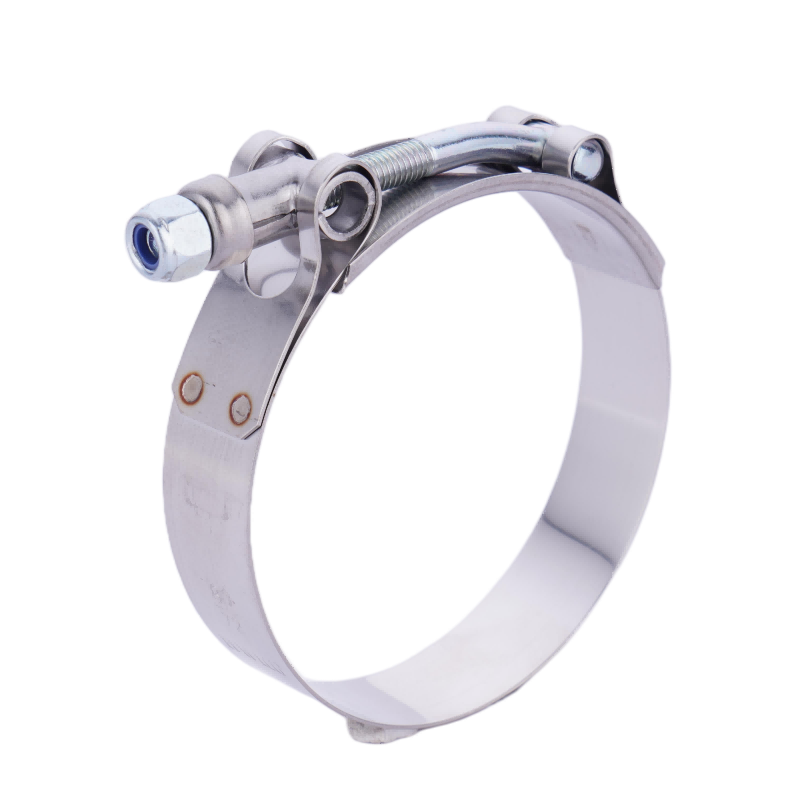
T-bolt clamps can work well under high pressure in tough jobs. The way the clamp is made and what it is made from are very important. These things decide how good the clamp is when it is under stress.
Key Takeaways
- T-bolt clamps work well in high-pressure places. They give a tight fit that stops leaks. The design has a wide band and a strong bolt. These parts help spread pressure evenly on hoses.
- Picking the right clamp size and type is very important. This keeps things safe and working well in tough places.
- Checking and installing clamps the right way helps them last longer.
- HWKG gives expert help to pick the best clamps for your needs.
How T-bolt clamps work
T-bolt clamp mechanism
T-bolt clamps use a robust mechanical structure to secure hoses and pipes. The clamp wraps a metal strip around the hose, and a T-bolt passes through the metal strip and connects to a nut. When the nut is tightened, the T-bolt pulls the metal strip, creating a strong clamping force that firmly holds the hose in place. The cable tray beneath the clamp evenly distributes the stress, preventing hose damage and ensuring a tight seal.
The table below shows the main parts and their functions:
| Component | Function |
|---|---|
| Metal Band | Provides the main structure and support for clamping. |
| T-bolt | Exerts tension when tightened, enhancing the clamping force. |
| Nut | Secures the T-bolt in place, allowing for adjustable tension. |
| Bridge | Distributes the clamping force evenly, preventing damage to hoses. |
This design helps T-bolt clamps handle high pressure. The clamp holds firm even when the hose faces strong forces or vibration. Many people use these clamps in cars, boats, factories, and farms because they trust the secure fit.
Tip: Always check the clamp for proper fit before tightening. A good fit ensures the clamp works as intended.
Comparison with other clamp types
Different clamps use different methods to hold hoses. Worm gear clamps use a screw to tighten a band. Spring clamps use metal that pushes back to keep tension. T-bolt clamps stand out because they spread force evenly around the hose. This prevents leaks and keeps the hose safe.
The table below compares how each clamp type distributes pressure:
| Clamp Type | Pressure Distribution Characteristics |
|---|---|
| T-bolt clamps | Even distribution of clamping force around the entire circumference. |
| Worm gear clamps | Distributes pressure but may lack uniformity. |
| Spring clamps | Utilizes constant tension but may not provide secure sealing. |
Pressure ratings also differ. T-bolt clamps can handle 150-250 PSI, and heavy-duty versions reach up to 300 PSI. Worm gear clamps usually handle up to 50 PSI for soft hoses, 100 PSI for rigid hoses, and 150 PSI if using multiple clamps. Quick release clamps can manage 100-200 PSI, with high-end versions reaching 250 PSI.
| Clamp Type | Maximum Pressure Rating |
|---|---|
| T-bolt clamps | 150-250 PSI (up to 300 PSI for heavy-duty) |
| Worm gear clamps | Up to 50 PSI (soft hoses), 100 PSI (rigid hoses), 150 PSI (multiple clamps) |
| Quick release clamps | 100-200 PSI (up to 250 PSI for high-end versions) |
T-bolt clamps offer reliable performance in high-pressure situations. Their design and strength make them a top choice for many demanding jobs.
T-bolt clamps: High-pressure features

Design for pressure resistance
T-bolt clamps are specially designed to withstand high pressure. They utilize a wide band around the hose for complete coverage and pressure distribution. The clamp forms a strong seal to prevent leaks. The bolts are extremely strong and equipped with retaining nuts for maximum tightening. Even under high pressure, the clamp remains secure. The smooth inner side of the band and rounded edges protect the hose from cuts or damage. Some T-bolt clamps feature a rotating bridge to ensure a secure fit even in confined spaces.
HWKG makes T-bolt clamps with self-locking nuts. These nuts keep the clamp tight, even if there is shaking or heat.
Note: T-bolt clamps meet SAE J1508 standards and have a torque rating of 75 inch-pounds. This ensures reliable performance in high-pressure jobs.
Material and corrosion protection
The material of a clamp is crucial to its strength and service life. Most high-pressure T-bolt clamps are made of stainless steel. Stainless steel is rust-resistant and performs well in humid environments. Many HWKG clamps are made of marine-grade stainless steel. This steel can withstand the corrosion of seawater and chemicals. For added safety, some clamps are made of 304 or 316 stainless steel. HWKG also manufactures clamps with galvanized or Dacromet coatings. These coatings provide even better rust protection.
| Clamp Type | Corrosion Resistance Level | Suitable Environments |
|---|---|---|
| Stainless Steel Clamps | High | Marine settings, industrial chemical plants |
| Non-Metallic Options | Moderate | Low-pressure, low-temperature environments |
| Coated Clamps | Moderate | Areas with moderate corrosion risks |
HWKG checks its clamps to make sure they last a long time. Some clamps pass salt spray tests for up to 500 hours with no rust. This means they work well in hard jobs and last a long time.
Applications in demanding environments
T-bolt clamps are widely used in a variety of harsh working environments. Clamps are suitable for industries such as automotive, marine, factory, and farm. In cars and trucks, they are used to secure turbocharger hoses and radiator lines. In ships, they protect hoses from seawater corrosion and severe vibrations. Factories use them to connect high-strength hoses and pipes. Farms use them to connect water systems requiring robust, leak-proof connections.
HWKG T-bolt clamps can withstand pressures from 150 to 300 PSI and above. They are robust, durable, and rust-free, making them ideal for high-intensity operations. HWKG holds multiple certifications including ISO 9001, IATF 16949, ISO 14001, and ISO 45001. These certifications demonstrate HWKG’s commitment to product quality, safety, and environmental protection.
| Certification/Standard | Description |
|---|---|
| ISO9001 | Quality management system certification |
| IATF16949 | International quality for automotive industry |
| ISO14001 | Environmental management system certification |
| ISO45001 | Health and safety management system certification |
Factors affecting pressure performance
Band width and thickness
The width and thickness of the clamp band are very important. A wider band spreads the force over more space. This helps stop leaks and keeps the hose safe. Thicker bands make the clamp stronger. They let you use more force when tightening. The table below shows how band size changes torque ratings:
| Band Width | Thickness | Torque Rating |
|---|---|---|
| 0.75 inch | 0.25 inch | 75 in/lb |
| 0.875 inch | 0.04 inch | N/A |
Picking the right band size helps the clamp fit the job. For high-pressure jobs, thick and wide bands work best. They make the clamp safer and stronger.
Proper installation and fit
Putting the clamp on the right way is very important. If you install it wrong, problems can happen. Here are some common mistakes and what they do:
- If the clamp is not lined up, it can cause leaks or hurt the hose.
- If you tighten the clamp too much, it can bend or break the clamp or hose.
- If you use the wrong size clamp, it can leak or damage the hose.
To stop these problems, always check the clamp size and where it sits before tightening. Use a torque wrench to make sure you use the right force. For high-pressure jobs, match the clamp and hose ratings. This helps stop blow-offs and other failures.
Maintenance and longevity
Taking care of clamps helps them last longer. Good care means:
- Check clamps often for rust, wear, or if they get loose.
- Use the right tools, like a torque wrench, to tighten them.
- Make sure the clamp is lined up right.
- Do not tighten too much or too little.
- Change out clamps that are rusty or broken right away.
The operating environment of the clamp is also important. High temperatures, chemicals, and drastic temperature changes can all cause the clamp to weaken or loosen. Choosing the right material, such as stainless steel, helps extend the clamp’s lifespan. With proper maintenance and installation, stainless steel T-bolt clamps can remain secure and function normally under high pressure.
Choosing the right T-bolt clamp
Assessing pressure and temperature needs
Selecting the right clamp starts with knowing the job’s pressure and temperature requirements. T-bolt clamps work best for high-pressure and high-temperature uses. They give even force around the hose, which helps prevent leaks. People often use them in cars, factories, and boats. Worm drive clamps fit lower-pressure jobs and offer more flexibility. When choosing a clamp, consider:
- The maximum pressure the system will face
- The highest and lowest temperatures in the environment
- The type of hose or pipe material
- The risk of vibration or movement
These factors help match the clamp to the job and keep the system safe.
Matching clamp type to application
Different jobs require different types of clamps. Heavy-duty T-bolt clamps are suitable for turbochargers, intercoolers, and large machinery. They have strong clamping force and can withstand intense vibrations. HWKG offers a variety of models and surface finishes to meet special needs. The table below lists some options:
| Model Description | Diameter Range (mm) | Surface Treatment |
|---|---|---|
| Single-headed heavy duty padded clamp | 17 – 252 | Solid stainless steel |
| Heavy duty clamp with spring pad | 17 – 252 | Solid stainless steel |
| Clamp with bracket | 17 – 252 | Solid stainless steel |
| Clamp with rubber strip | 17 – 252 | Solid stainless steel |
Choosing the right model and treatment helps the clamp last longer and work better in tough places.
Industry case studies show T-bolt clamps work well in high-pressure jobs. The table below shows important results:
| Key Takeaway | Description |
|---|---|
| Clamping Force | T-bolt clamps give 30-50% more clamping force than other clamps. |
| Radial Pressure | They give even pressure all around, which is important for high-pressure jobs. |
| Application Suitability | Best for jobs over 2 bar, like turbocharger systems and silicone hoses in places with lots of shaking. |
FAQ
What makes T-bolt clamps good for high-pressure jobs?
T-bolt clamps use a strong steel band and a T-bolt with a self-locking nut. This design gives even pressure around hoses. It helps stop leaks in high-pressure systems.
How does HWKG ensure clamp quality?
HWKG uses advanced machines and strict tests. Their clamps meet ISO and IATF standards. The company checks every clamp for strength, durability, and rust resistance.
Can T-bolt clamps work in hot or cold places?
Yes. HWKG T-bolt clamps use stainless steel and special coatings. They work in temperatures from -40°C to 250°C. Some models can handle up to 500°C.
How should someone install a T-bolt clamp?
A person should place the clamp evenly on the hose. They should use a torque wrench to tighten it to the recommended force. This keeps the seal tight and safe.
Where do people use HWKG T-bolt clamps?
People use HWKG T-bolt clamps in cars, boats, factories, and farms. These clamps hold hoses for turbochargers, cooling systems, marine engines, and irrigation pipes.