



Connectors are classified into three types: rigid connectors, flexible connectors, and fluid connectors. Hengwei Hose Clamps Co., Ltd. sells hose clamps that provide secure connections for a variety of applications. Connectors and hose clamps help ensure safe operation in places such as cars, kitchens, and gardens. Connectors come in many varieties and have diverse uses. For example, claw connectors are suitable for small machinery. Flexible connectors help reduce noise and prevent component wear. Hose clamps effectively prevent leaks, ensuring proper equipment operation.
| Coupling Type | Description |
|---|---|
| Jaw Couplings | Simple design, used a lot in small machines and tight spaces. |
| Elastomeric Couplings | Cuts down on shaking, good for jobs that need less noise and wear. |
Key Takeaways
- Choose the appropriate fitting based on your needs. Rigid fittings provide a secure connection. Flexible fittings allow for slight movement of components.
- In many places, hose clamps are used to keep connections tight. They prevent leaks and ensure hoses function properly in places like cars, kitchens, and gardens.
- Consider your project requirements. Factors such as alignment, load, and environment will help you choose the best fitting or hose clamp.
- Hengwei Hose Clamps Co., Ltd. offers a variety of high-quality hose clamps. Their products are suitable for a wide range of applications and perform well every time.
Three Types of Coupling Overview
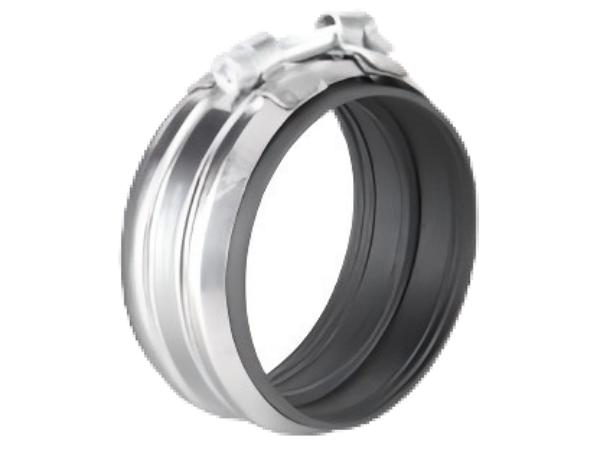
Three important types of couplings in mechanical equipment—rigid couplings, flexible couplings, and hydraulic couplings—are used to connect shafts and other components. Each coupling has its unique shape and function. Rigid couplings form a strong, fixed connection between shafts. Flexible couplings allow for slight movement of the shaft when necessary. Hydraulic couplings utilize fluid to smoothly transmit power. These couplings help ensure the safe and efficient operation of mechanical equipment in many situations.
Hose clamps, such as those manufactured by Hengwei Hose Clamps Co., Ltd., are also very useful. They securely fasten hoses, preventing leaks in water pipes in cars, kitchens, or gardens. Hose clamps themselves do not transmit power, but they assist couplings by ensuring a secure and safe connection.
Tip: Choosing the right coupling or hose clamp can help mechanical equipment operate better and reduce maintenance.
Rigid Coupling Definition
A rigid coupling connects two shafts, enabling them to rotate synchronously. It is small in size and simple in structure. It typically consists of two parts that fit tightly on the shafts, allowing power to be transmitted directly from one shaft to the other. It ensures perfect shaft alignment. Rigid couplings completely prevent component movement.
Rigid Coupling Features
Rigid couplings have the following main characteristics:
- They prevent shaft displacement.
- They are simple and robust in design, and easy to install.
- They require very careful assembly, typically with an accuracy within 0.05 mm.
- The connection is fixed, so bending or slippage will not occur.
- They transmit power in a straight line and keep all components aligned.
| Feature | Rigid Coupling | Flexible Coupling |
|---|---|---|
| Characteristics | Cannot compensate for shaft displacement | Can compensate for axial and radial displacement |
| Structure | Simple structure | More complex structure suitable for misalignment |
| Assembly Requirements | Requires high precision (0.05mm) | Allows for more tolerance (0.1mm) |
Applications of Rigid Couplings
Rigid couplings are widely used in various machines and applications. For example:
- Large machinery, such as pumps, compressors, conveyors, and mixers.
- Conveying systems, used to maintain stable speed and strong power.
- Automotive and aircraft, used to connect drive shafts and power shafts.
- Food processing machinery, used to ensure shaft alignment for smooth operation.
- Medical equipment, such as X-ray machines and automatic doors.
These applications demonstrate how rigid couplings can effectively transmit power and ensure the coordinated operation of various components.
| Application Area | Description |
|---|---|
| Industrial Machines | Used in pumps, compressors, conveyors, and mixers to maintain precise alignment and reduce wear. |
| Conveyor Systems | Ensures reliable power transfer from motor to rollers, maintaining consistent speed. |
| Automotive and Aerospace | Connects drive shafts and power transmission shafts, crucial for high-speed applications. |
| Food Processing Equipment | Aligns and joins shafts at lower speeds and torque, ensuring smooth operation. |
| Medical Equipment | Used in X-ray machines and automatic doors for reliable operation. |
There are three types of couplings, each with its own application. Rigid couplings provide strength and ensure component alignment. Flexible couplings allow components to move slightly when necessary. Hydraulic couplings help transmit power smoothly. Hengwei Hose Clamps Co., Ltd.’s hose clamps serve a fastening function in many applications.
Types of Flexible Couplings
Definition of Flexible Couplings
Flexible couplings connect two shafts and allow them to move slightly. These couplings help keep the machine running when the shafts are misaligned. Rigid couplings do not allow this movement. Flexible couplings can handle misalignment and absorb shocks. They transmit power less directly than rigid couplings, but they help prevent machine damage. Each type of coupling has its unique application. The special feature of flexible couplings is that they allow the shafts to move when necessary.
| Feature | Rigid Couplings | Flexible Couplings |
|---|---|---|
| Alignment | Needs perfect alignment | Handles shafts not lined up |
| Torque Transmission | Sends lots of power | Sends less power |
| Vibration | Passes on shaking | Takes in shocks and shaking |
Flexible Coupling Characteristics
Flexible couplings consist of various components, making them suitable for a wide range of mechanical equipment. These components include rubber, metal grilles, or disc assemblies. These components allow the coupling to bend or slide, thus helping to dampen vibration and shock. Some couplings have special tooth profiles that allow them to move greater distances. Others use elastic grilles or rubber to reduce vibration.
- Elastic components allow the coupling to bend and move.
- Damping materials protect the machine from shocks.
- Special tooth profiles help solve shaft misalignment problems.
- Flexible couplings can reduce stress on machine components.
Applications of Flexible Couplings
Flexible couplings have a wide range of applications. They contribute to the proper operation of pumps, fans, and compressors. They are also used in conveyor belts, HVAC systems, and robotics. Their main functions include:
- Addressing misalignment problems: They allow shaft movement, thus preventing rapid wear of components.
- Dampening vibration and shock: They absorb vibration, thus extending the service life of the machine.
- Distributed Load: They distribute the workload, thus reducing the risk of component damage.
- Easy to Maintain: They are quick to maintain, minimizing machine downtime.
Examples: Claw couplings, tire couplings, pin couplings, and bushing couplings.
Flexible couplings come in many types. Claw couplings use rubber washers to assist in motion and vibration. Tire couplings use rubber tires to transmit power and allow for a wide range of shaft movements. Pin couplings and bushing couplings use rubber bushings to connect components. They are simple in structure and inexpensive.
| Coupling Type | Distinguishing Characteristics | Applications |
|---|---|---|
| Jaw Couplings | Use a rubber spider to send power. Handle shafts that are not lined up. Keep working even if the spider breaks. Good for fast-moving machines. | Conveyors, blowers, mixers, printing presses. |
| Tire Couplings | Send power with friction and rubber. Let shafts move a lot. Easy to put together and need little care. | Compressors, machine tools, fans. |
| Pin And Bushing Couplings | Simple with rubber bushes. Handle sideways and angled movement. Cost less money. | Fans, alternators, cranes, shovels. |
Other types of flexible couplings include elastomer couplings, disc couplings, gear couplings, and Oldham couplings. Each type of coupling has specific functions suitable for different machines. Flexible couplings are very important because they ensure both machine operation and machine safety.
Fluid Coupling in Industry
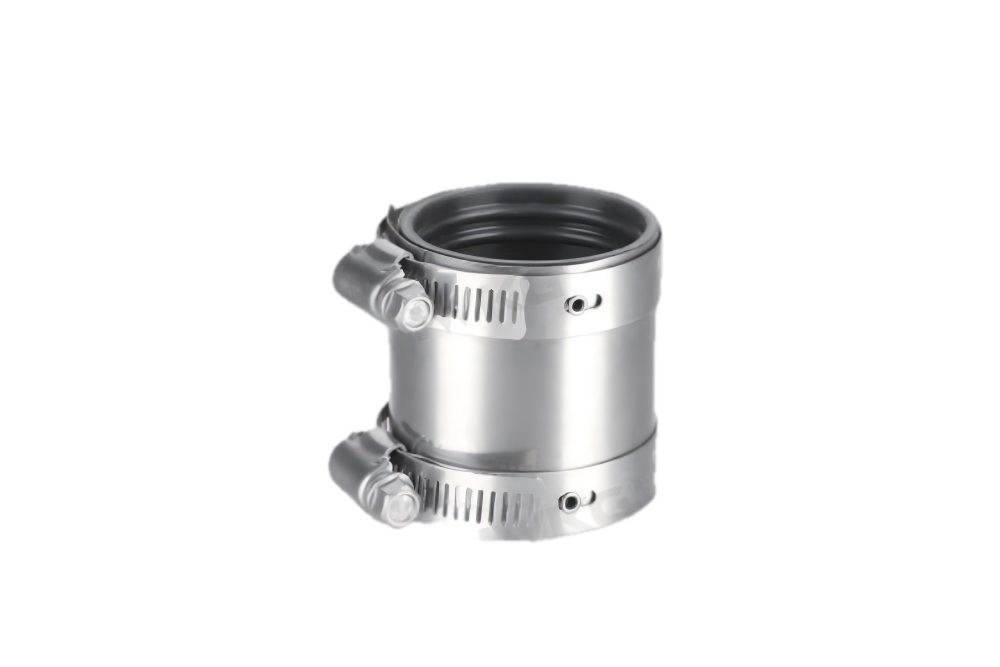
Hydraulic Coupler Definition
A hydraulic coupler connects two shafts and transmits power using hydraulic fluid. Unlike other couplers that use solid connections, it utilizes a fluid to smoothly transfer energy. A hydraulic coupler mainly consists of four parts: a pump (or impeller) located on the motor shaft, driving the hydraulic fluid to rotate at high speed; a turbine (or impeller) located on the gearbox shaft, driven by the hydraulic fluid; the hydraulic fluid transferring energy between the two shafts; and a housing connecting all components and sealing the hydraulic fluid.
| Component | Description |
|---|---|
| Pump (Impeller) | It is on the motor shaft and acts like a pump. It spins and throws oil outward. |
| Turbine (Runner) | It is on the gearbox shaft and turns when oil hits it. |
| Oil (Operating Fluid) | The oil moves energy from one shaft to the other. |
| Shell (Casing) | This is a strong container that holds the oil and seals. |
When the motor starts, the impeller rotates and pushes lubricating oil towards the turbine. The lubricating oil creates vortex motion within the turbine, aiding its rotation. The turbine rotates almost synchronously with the impeller. A small speed difference, called slip, always exists between the two.
Characteristics of Hydraulic Couplers
Hydraulic couplers offer many advantages. They help machines start smoothly, avoiding jerking. They protect machines from sudden shocks and overloads. Because these couplers have no moving parts in contact with each other, wear is reduced. Hydraulic couplers also allow the system to bend slightly when necessary. This helps machines cope with changes in speed and load without failure. They are ideal for machines with frequent start-stop cycles.
Applications of Hydraulic Couplers
Many industries use hydraulic couplers because they smoothly transmit power and ensure machine safety. Mining and conveying systems use them to obtain stable power and prevent damage from overloads. Power plants and steel mills use them for good control and operation in high-temperature environments. Ships and automobiles use hydraulic couplings to make driving smoother and protect gears from shocks.
| Industry | Primary Reasons for Selection |
|---|---|
| Mining and Conveyor Systems | They give steady power and protect from overloads. |
| Power Plants and Steel Industries | They control power well and work in high heat. |
| Marine and Automotive Sectors | They make power smooth and protect transmissions. |
Hydraulic couplings are one of three types of couplings. Their unique feature is the use of oil rather than solid connections to transmit power. This distinguishes them from other couplings. Their smooth operation and flexibility make them ideal for large machinery.
Coupler Types and Applications
Automotive Couplings and Hose Clamps
Automotive vehicles use various couplings to connect shafts. These components transmit power from the engine to the wheels. Couplings must function well at high speeds and withstand bumps and vibrations. Hose clamps are also crucial in automobiles. They keep hoses secure and prevent leaks. This is important for coolant, fuel, and air systems. Hengwei Hose Clamp Co., Ltd. sells a variety of automotive hose clamps.
Kitchen and Bathroom Connectors
Kitchens and bathrooms require connectors and hose clamps to keep water clean. These components also prevent leaks. Special sanitary-grade fittings help speed up cleaning. They have no sharp bends or dead angles. The smooth surface does not easily harbor bacteria. Most kitchen and bathroom connectors use clamps or welded connections; threaded connections are rarely used.
Hengwei Hose Clamp Co., Ltd. provides hose clamps that meet these requirements. They help keep kitchens and bathrooms safe and dry.
Garden and Irrigation Connectors
Garden and irrigation systems use connectors to connect pipes and hoses. These connections must be tight to prevent leaks. Hose clamps secure hoses to faucets and barbs, ensuring water flows in the correct direction. Stainless steel and crimp-type hose clamps are durable and easy to install.
| Benefit Type | Description |
|---|---|
| Couplings | Join pipe sections for a leak-proof system. |
| Hose Clamps | Hold hoses on fittings and stop leaks. |
| Types of Clamps | Stainless and crimping clamps last long and are easy to use. |
Hengwei Hose Clamps Co., Ltd. offers high-strength hose clamps for garden and irrigation systems. These clamps help maintain smooth water flow and conserve water.
Tip: Always select the appropriate fitting or hose clamp based on the location and pressure. This helps ensure optimal equipment performance.
Three types of fittings—rigid fittings, flexible fittings, and fluid fittings—each have their own uses. They connect shafts and help machines operate efficiently. The table below lists their differences and application areas:
| Coupling Type | Performance Characteristics | Applications |
|---|---|---|
| Rigid Coupling | Needs perfect alignment, does not need much care | Pumps, conveyors, cars |
| Flexible Coupling | Works with parts not lined up, takes in shaking | Electric motors, machines |
| Fluid Coupling | Sends power smoothly, needs oil checks | Marine, factories |
Choosing the right connector or hose clamp is crucial for safety and equipment operation. You should consider size, temperature, operating environment, material, pressure, and required speed. All hose clamps sold by Hengwei Hose Clamp Co., Ltd. are ISO 9001 certified. These clamps provide secure connections in many applications.
FAQ
What is the main function of a connector?
A connector is used to connect two shafts. It transfers power from one component to another. Connectors help machines operate efficiently and ensure safety.
What role do hose clamps play in a machine?
Hose clamps securely fasten hoses to connectors. They prevent leaks and ensure a strong connection. This helps machines operate smoothly.
When should flexible connectors be used?
Flexible connectors are ideal when shafts are misaligned. They also reduce vibration and protect machine parts from damage.
What makes Hengwei hose clamps unique?
| Feature | Benefit |
|---|---|
| High Precision | Makes tight, leak-free links |
| Custom Design | Works for many different jobs |
| Strong Material | Stays strong for a long time |