






T bolt clamps outperform Schneckenantriebsklemmen in demanding applications where vibration and movement are significant concerns. Worm gear clamps remain the go-to option for general tasks where cost is the primary factor. No single clamp is the best choice for every situation. The right selection comes down to your specific requirements.
Buyers should evaluate five key factors: clamping force, even pressure distribution, size range, cost, and ease of use. A T bolt design delivers greater clamping force and more uniform pressure. A worm drive clamp offers a wider size range and a lower upfront cost. No one clamp type fits every hose, pipe, or budget. Choosing the right clamp for the job prevents leaks, reduces repair needs, and saves money over time.
Die wichtigsten Erkenntnisse
- T-Bolzen Klemmen provide stronger clamping force and even pressure for high-stress jobs.
- Worm gear clamps cost less and fit more hose sizes for everyday tasks.
- Choose T-bolt clamps for turbo, intercooler, and high-vibration systems.
- Choose worm gear clamps for coolant, fuel, and low-pressure plumbing lines.
- Match the clamp to your specific needs to prevent leaks and save money.
Key Differences: T Bolt Clamps Vs Worm Drive Clamps
Clamping Force And Pressure Distribution
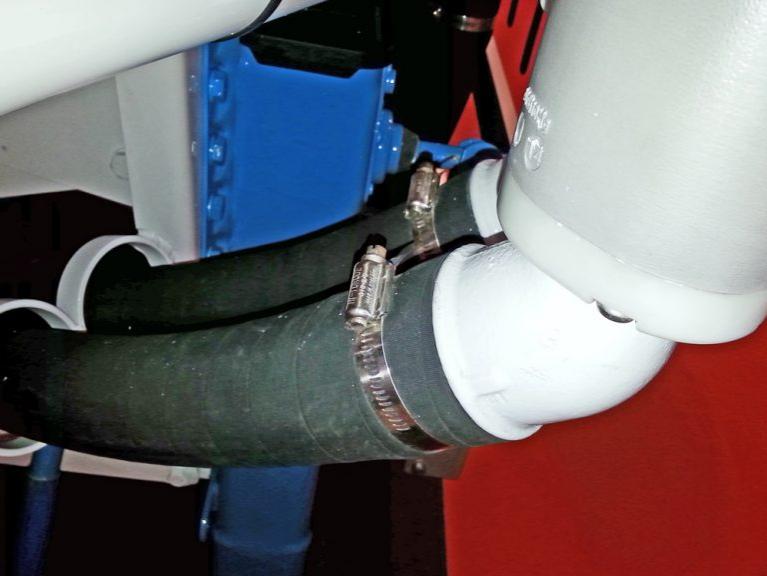
T bolt clamps have a thick band and a T-shaped bolt that goes through a nut housing. This setup creates much more clamping force than a worm gear clamp. A normal worm gear clamp makes about 100–200 inch-pounds of torque. A T-bolt clamp gives about 400–600 inch-pounds. That gap matters when a hose has to stay sealed under pressure.
| Klemmtyp | Typical Clamping Force |
|---|---|
| Standard worm gear clamp | ~100–200 inch-pounds |
| T-Bolzen-Klemme | ~400–600 inch-pounds |
Worm drive clamps work by threads cutting into a slotted band. This limits clamping force and can harm a hose if you tighten it too much. A worm gear clamp puts the most force at one spot, where the band meets the worm screw housing. This makes pressure uneven around the hose. SAE International research names uneven radial clamping pressure from worm gear clamps as a top cause of hose joint failures in engine cooling systems. The uneven pressure lets micro-leaks form in lower-pressure areas. The high-pressure spot puts stress on the rubber right under it, which speeds up material fatigue. In forced induction engines, silicone couplers in intercooler and charge pipes deal with high boost pressure, strong thermal cycling, and engine-movement stress. Uneven clamping can make the boost system lose pressure under load. A hose coming apart without warning can hurt both performance and safety. T-bolt clamps give more even clamping force and are less likely to damage a hose. Worm drive clamps stay more cost-effective and budget-friendly.
Sizing, Adjustment Range, And Reusability
Worm drive clamps have a wider adjustment range than T-bolt clamps. One worm drive clamp can fit many hose diameters. T-bolt clamps have a limited usable range. Buyers must measure carefully before picking a size.
T-bolt clamps come in a variety of SAE J1508 sizes. Always put together a sample of your hose and pipe or fitting before measuring and picking T-Bolt clamps, since they have a limited usable range. The right size of clamp is key to a leak proof seal.
Both clamp types can be reused under normal conditions. A worm drive clamp can be loosened and retightened many times. A T-bolt clamp also allows repeated use. The T-bolt design keeps its shape better after high-torque cycles. A worm drive clamp may lose holding power after repeated over-tightening. For any hose clamp, matching the clamp to the hose material and pressure environment stops leaks and extends service life.
When To Choose T-Bolt Clamps
T-Bolt Clamps For Turbo And Intercooler Hoses
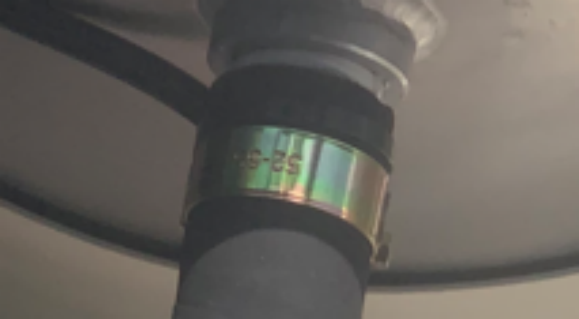
Turbocharger and intercooler systems push charged air through hoses at high pressure. A weak clamp lets that hose slip off the fitting during a hard boost event. T-bolt clamps solve this problem with a heavy-gauge band and a T-shaped bolt that creates much more holding power than a worm gear design.
The table below shows where high clamping force matters most in automotive and industrial work.
| Anwendungsbereich | Specific Use Case | Why High Clamping Force Is Critical |
|---|---|---|
| Automobilindustrie | Turbo hose connections (air-to-air, coolant) | Prevents turbo hose blow-off and boost loss under thermal cycling |
| Automobilindustrie | Heavy-duty truck and off-highway engine systems | Maintains seal integrity where hose relaxation could compromise performance |
| Industrie | Process lines subject to temperature variation | Compensates for thermal cycling to avoid seal failure |
| Marine | Marine engine cooling systems | Withstands temperature fluctuations and vibration |
| HLK | Chilled water and refrigerant connections | Prevents leakage in temperature-varying environments |
These clamps provide a strong connection in demanding automotive and industrial applications, including turbocharger and intercooler systems.
High-Vibration And High-Boost Environments
Worm drive clamps often fail when installers tighten them enough to match T-bolt clamping force. Several failure patterns show up again and again in turbo systems. Overtightening stands out as the most common failure mode. The installer over-torques the clamp, deforms the hose surface, and creates a stress concentration at the band edge that becomes a leak path. Undertightening ranks second, often because the required retorque after initial heat cycles almost never happens on a daily driver. Clamp relaxation follows, since worm gear clamps lose a measurable percentage of initial clamping force within the first several heat cycles. Thermal cycling makes things worse. A worm gear clamp stays fixed once torqued, so it cannot respond to hose expansion or contraction. In turbo plumbing, a relaxed worm gear clamp can fail entirely when a hard boost event pushes the hose off the fitting.
The results range from minor to catastrophic. Boost leaks cause power loss, increased turbo lag, erratic boost pressure, and poor fuel economy. Oil leaks onto hot exhaust components pose a severe fire hazard. Coolant leaks lead to overheating and engine damage. Loose connections let dirt into the intake tract or oil system. In extreme cases, a blown-off hose causes immediate loss of control or severe fluid loss.
HWKG’s bolt clamps use heavy-duty construction to provide uniform clamping force. A manufacturer with production experience builds these clamps for automotive, machinery, and industrial systems. Buyers who need a custom fit for a specific turbo setup can request tailored sizes and packaging. The T-bolt design holds its shape after repeated high-torque cycles, which supports a wide range of applications where vibration and pressure never stop.
When To Choose Worm Drive Clamps
Coolant, Fuel, And Plumbing Lines
Worm drive clamps are the usual pick for coolant hoses, low-pressure fuel lines, and plumbing connections in most cars and buildings. Car makers suggest worm-drive clamps for coolant hoses during repairs and upgrades, and for low-pressure fuel lines like return and vent systems. These clamps work well because they are easy to install and fit different hose outer diameters. A worm gear clamp needs a non-perforated or rolled-edge band so it does not cut the hose. Getting the right size and torque also matters for a tight connection.
| Klemmtyp | Recommended For | Wichtigste Merkmale |
|---|---|---|
| Spring / Constant-Tension Clamps | Coolant hoses (OEM standard) | Automatically expand and contract with temperature changes |
| Worm-Drive Clamps | Coolant hoses (service); low-pressure fuel lines | Easy to install; adjustable for different hose ODs |
| EFI Fuel-Injection Clamps | High-pressure fuel-injected systems | Solid band for uniform 360° pressure |
| T-Bolzen-Klemmen | Boosted cooling systems | Higher clamping force; overkill for stock radiator hoses |
HWKG manufactures worm drive hose clamps designed for reliable high-torque fastening. A wholesale supplier or factory that builds plumbing, automotive, and industrial systems can count on these clamps for steady performance. The wider adjustment range of worm drive clamps means one size fits many hose diameters. This flexibility cuts down on inventory needs for any manufacturer or distributor.
Budget And Low-Pressure Applications
Worm drive clamps win on cost and availability for general-purpose work. A good worm gear clamp costs between $1 and $3, while a T-bolt clamp runs $4 to $8 each. That price gap matters when a project needs dozens or hundreds of clamps. Local hardware stores and auto parts shops carry worm drive clamps in many sizes. T-bolt clamps often need a special order.
Low-pressure systems hardly ever need the extreme clamping force of a T-bolt design. Worm gear clamps handle moderate-pressure jobs in automotive and home systems without any problem. In low-pressure irrigation, worm gear clamps do the job well, though they may loosen over time from temperature changes, vibration, and hose compression. Checking and re-tightening them now and then stops leaks. A T-bolt clamp gives better 360° sealing without distortion, but low-pressure irrigation does not need that level of performance.
T-bolt clamps also bring real drawbacks in plumbing lines made for worm gear clamps. They need a socket or wrench to tighten, while a worm gear clamp needs only a flathead screwdriver or nut driver. The T-bolt sticks out further from the band, which causes clearance problems in tight spaces. Their narrow take-up range — about 1/16 inch — demands exact clamp sizing. A hose clamp that does not fit just right will not seal. These trade-offs make worm drive clamps the practical choice for many applications where high clamping force is not needed.
Practical Considerations Before You Buy
Material And Corrosion Resistance
The material of a hose clamp decides how long it will last in different places. For marine use, 304 stainless steel does not hold up well against chloride and may pit quickly. 316 stainless steel resists chloride much better and offers a longer service life. Designers choose 316-grade worm gear clamps for boats and coastal equipment.
In automotive engine compartments, galvanized steel bands with zinc coating work well for moderate conditions. These work well for general-purpose water, oil, and HVAC systems. However, galvanized bands and plated screws break down quickly in marine or high-humidity environments. Stainless steel resists corrosion better in harsh automotive conditions and handles higher working pressures.
| Material | Korrosionsbeständigkeit | Optimale Verwendung |
|---|---|---|
| Edelstahl 304 | High general resistance; low chloride resistance | Automotive, industrial indoor |
| Edelstahl 316 | Very high; excellent in saltwater | Anlagen für die Schifffahrt, Küstenanlagen und Chemieanlagen |
| Verzinkter Stahl | Moderate; zinc coating delays rust | General-purpose, irrigation, HVAC |
Cost, Availability, And Installation Tips
Worm drive clamps cost less and you can still find them at local suppliers. T-bolt clamps cost more and often need a special order. For high-stress jobs, t-bolt earns its higher price with better durability and clamping force.
Several installation mistakes cause early failure. Installers should stay away from these common errors:
- Over-tightening: bends the housing and harms the hose wall
- Under-tightening: leads to poor sealing and leaks
- Torque relaxation: hose material creeps over time, so force drops
- Point loading: the screw can cut softer silicone hoses
- Vibration sensitivity: threads loosen without a locking feature
A hose clamp installed at the wrong torque will fail early. Using the right size, placing each unit properly away from the hose edge, and checking the hose for damage stops most failures. Following manufacturer torque specs prevents most of these problems. With extensive manufacturing experience, HWKG maintains quality across production batches through advanced quality management systems. They offer custom designs and packaging. For wholesale buyers, these custom options cut down on inventory complexity.
T-Bolt Clamps Vs Worm Drive Clamps: Summary Table
Comparison Criteria And Final Verdict
Before picking a hose clamp, engineers check a few important performance points. The table below shows a direct comparison of t bolt clamps and worm drive clamps using these points.
| Kriterien | T-Bolzen-Klemmen | Schneckengewindeklemmen |
|---|---|---|
| Spannkraft | 400–600 inch-pounds per SAE J1508 | 100–200 inch-pounds |
| Pressure Uniformity | 360-degree unified seal via radial clamping | Point load at screw housing; uneven distribution |
| Hose Damage Risk | Low; even pressure prevents stress concentration | Higher; over-tightening deforms and cuts hoses |
| Kosten | $4–$8 per clamp | $1–$3 per clamp |
| Adjustment Range | Narrow (~1/16 inch); requires exact sizing | Wide; one size fits multiple hose diameters |
| Best-Use Cases | Turbo/intercooler hoses (high boost pressure), high-vibration environments, heavy-duty industrial systems | Coolant lines, low-pressure fuel lines, plumbing, general-purpose tasks |
Each design has its own job in a professional toolkit. T-bolt clamps work better in high-stress conditions. Worm drive clamps give you reliable performance at a lower cost for everyday jobs. Any manufacturer or wholesale supplier should keep both designs in stock.
HWKG manufactures each hose clamp type to meet industrial demands. Their worm drive hose clamps are designed for steady high-torque fastening, and their T-bolt clamps provide even clamping force. A wholesale buyer or factory looking for pipe couplings and band clamps can find every option from one supplier. Custom designs and packaging fit specific project needs.
The verdict is clear. Buyers pick t-bolt clamps for systems that need the most holding power and vibration resistance. They pick worm drive clamps for general work where cost and flexibility matter most. Neither design wins every time. The application decides the right choice.
The decision rule stays simple. Choose t bolt clamps for high-stress, high-vibration, and high-boost systems. Choose worm drive clamps for general-purpose, low-pressure, and cost-sensitive jobs. Neither design wins every time. The application dictates the right choice.
Match the clamp to hose material, pressure, and environment first. Compare pricing only within suitable options. A buyer who picks by price alone may face repeat leaks, downtime, and service labor that cost more than the initial savings. A smart wholesale buyer keeps both types on hand. T-bolt clamps handle the turbo hose. A worm drive clamp handles the coolant line. Each job gets the right tool.
Häufig gestellte Fragen
Can a manufacturer use a worm gear clamp on a turbo hose?
No. A worm gear clamp cannot provide enough clamping force for turbo systems. It loosens under vibration and causes boost leaks. T-bolt clamps deliver 400–600 inch-pounds of torque for a secure seal. Choose the clamp based on the pressure environment.
How does a wholesale buyer measure for a t-bolt clamp?
Measure the hose outer diameter and the fitting diameter precisely. A t-bolt clamp has a narrow adjustment range of about 1/16 inch. A custom size from a supplier like HWKG ensures a correct fit and prevents leaks.
Which hose clamp resists corrosion best in saltwater?
A 316 stainless steel hose clamp offers excellent corrosion resistance in marine environments. A 304 stainless steel version may not hold up well in saltwater environments. Use a high-grade clamp rated for chloride resistance. Match the clamp to the environment for long reliability.