





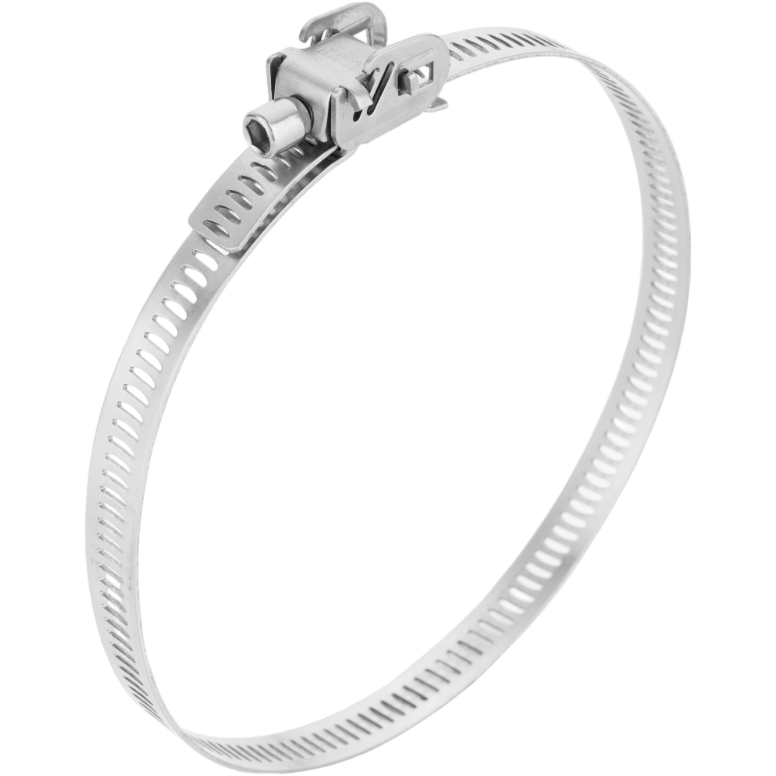
A Schnellverschluss-Schlauchschelle tightens or loosens a metal band around a hose without tools. These quick release Schlauchschellen use a spring-loaded lever or a pivoting screw. The main parts include the lever or screw, spring, band, and housing. In some designs, the screw pivots away so the clamp opens fully without unscrewing it. A slotted metal strip locks into place around the hose. A locking clip with a mounted screw flips up for hand threading and presses down to secure the clamp. A swivel-lock screw toggle latch enables fast installation and removal. This article explains the release mechanism step by step, then covers benefits, limits, and practical tips.
Die wichtigsten Erkenntnisse
- Quick release hose clamps can be tightened or loosened by hand, so you do not need any tools.
- A lever or a screw that pivots lets you put it on and take it off quickly and easily.
- These clamps are great for jobs that need to be opened often, like car repair and plumbing.
- Always measure your hose size and avoid tightening it too much to stop leaks.
- Quick release clamps can be used again and again. They save time when you need to make changes over and over.
Parts of a Quick Release Hose Clamp

A quick release hose clamp relies on a small set of parts that work together. The main components include the lever or screw, the spring, the housing, and the band. Each part plays a clear role in the tool-free operation that makes these clamps so convenient.
Lever, Spring, and Housing
The lever acts as the handle for the entire release mechanism. An integrated over-center locking lever pulls down to tighten the band around the hose. Lifting the lever releases the lock. The spring applies internal spring force to hold the over-center lock engaged. This spring also assists rapid release when the lever lifts. The housing guides the free end of the band and houses the lever assembly and latch mechanism. Together, these three parts form the control side of the clamp.
Some quick release hose clamps use a pivoting screw instead of a lever. Turning the screw tightens the band. Pivoting the screw away from the band opens the clamp without fully unscrewing it. This design suits closed systems where the clamp must disengage to be applied.
Band and Housing
The band is the metal strip that wraps around the hose. The lever is an integrated over-center locking lever; pushing it down tightens the band and locks it. Pulling the lever up releases tension and opens the clamp. The spring holds the over-center lock engaged and assists rapid release.
| Komponente | Material |
|---|---|
| Band | 200 Series Stainless Steel |
| Wohnungswesen | 200 Series Stainless Steel |
These materials resist corrosion and heat. A quick release clamp with a 200 series stainless steel band and housing works well in plumbing, automotive, and industrial settings. The lever and spring are what makes tool-free operation possible. A locking clip with a mounted screw flips up for hand threading and presses down to secure the clamp. This small detail separates quick release hose clamps from standard hose clamp types.
The Quick Release Mechanism

The quick release mechanism turns a simple lever move into a tight hold around a hose. This part shows how a clamp works step by step. Knowing this helps users work without tools.
Tightening the Band
Tightening the band follows a clear order. The user puts the band around the hose. The band goes all the way around the hose. The user puts the housing over the band end. One push down on the lever locks the quick release hose clamp.
Pushing the lever down engages the over-center locking lever, pulling the band tighter and locking it. The lever works as a mechanical advantage. This action makes the band shorter and pulls it tight. The band makes a tight seal against the hose. The seal stops fluid from leaking. The lever goes down all the way and locks in place.
A locking clip snaps on when the lever is down. Users can set the locking clip by hand, no tools needed. The clip holds the lever steady during shaking and pressure changes. A spring keeps tension on the band. This spring stops the band from loosening over time.
For screw-type models, turning the screw pulls the band tighter. The screw gives even pressure all around. The quick release clamp blends screw precision with tool-free release. Users can change how tight the clamp is after putting it on. The quick release clamp gives reliable fastening. The locking parts work together for steady pressure.
Releasing Tension
Releasing tension needs only two simple moves. The user pulls the lever up. This action releases the locking clip. The lever returns to its starting place. The band grows bigger and frees the hose. A spring helps the release work. The mechanism opens fast so you can remove the hose.
For pivoting screw designs, the user moves the screw away from the band. The screw goes to the side without coming all the way off. This swivel feature saves time during fixes. Users can move the clamp without unscrewing it. The release works well in tight spots.
The quick release hose clamps let you work without tools. The quick release clamp design still lets you fine-tune. The mechanisms include both lever and screw choices.
The swivel feature is important. The screw moves away from the band so the clamp opens without fully unscrewing. Some quick release clamps use this design. These clamps work in closed systems where the clamp must come off to be put on. The user opens the clamp fully, puts it around the hose, and locks it.
Each hose clamp has good points. The mechanism works well for jobs that need many changes. The band keeps a tight seal.
Quick Release vs. Traditional Clamps
Speed, Reusability, and Adjustment
A standard worm gear clamp needs a screwdriver or nut driver each time you adjust it. A quick release hose clamp works differently. You flip a lever or pivot a screw by hand. No tool ever touches the band. This difference saves real time on jobs that have many connections.
The table below shows the main differences at a glance.
| Funktion | Traditional Clamp | Quick Release Clamp |
|---|---|---|
| Tools needed | Screwdriver or nut driver | Keine |
| Removal speed | Slow, many turns | Fast, one lever move |
| Wiederverwendbarkeit | Gut | Ausgezeichnet |
| Fine adjustment | Continuous | Continuous or stepped |
A quick release hose clamp is great when a job needs frequent access. The release mechanism lets you install and remove it fast without searching for tools. A mechanic who swaps a hose three times in one afternoon feels the benefit. The locking clip also holds tension through vibration. A quick release clamp blends gear precision with tool-free release. That mix works well for racing, marine, and maintenance work.
Limits and When to Avoid Them
Quick release clamps do not fit every job. High-pressure systems often need more tightening torque than a hand lever can give. A permanent installation with no expected service may not be worth the higher cost. A standard worm-drive clamp costs less and holds well enough for many fixed lines.
Users should check the torque needs of each application before choosing. A quick release hose clamp works best where the hose needs regular inspection or replacement. A permanent joint on a pressurized line may need a bolt clamp instead. The installation procedure also matters. A user must seat the band correctly before locking the lever. A poor seat causes leaks that no mechanism can fix.
Matching the clamp style to the job prevents callbacks and leaks.
Applications and Practical Tips
Automotive, Plumbing, and Air Hoses
Quick release hose clamps work well in many places. You will find hose clamp applications in car cooling systems, plumbing connections, air hose lines, garden watering setups, kitchen and bathroom fixtures, and industrial equipment. The release mechanism lets you make fast adjustments without tools. A mechanic changing a radiator hose saves time with tool-free removal. Gardeners connect and disconnect air hoses often. Plumbers like the speed during fixture work. These advantages make hose clamps a smart choice for frequent tasks.
The design fits any system where regular service access matters. The mechanism cuts downtime during repairs. For tough environments, a worm-drive clamp gives continuous tightening control. This range covers most hose clamp applications across automotive, industrial, and sanitary fields.
Traditional clamps need tools each time. A quick release hose clamp removes that step. These hose clamps shine where service frequency is high. Users save minutes on every adjustment. The tool-free release also helps in tight spaces.
Sizing and Avoiding Over-Tightening
Choosing the right hose clamp size prevents leaks and damage. Users must measure the hose outer diameter before picking a clamp. Following a proper installation procedure ensures a secure fit. The installation steps are simple.
- Use a digital caliper to measure the outer diameter (OD) of the hose. Take the measurement on a clean, dry, straight section away from bends or old clamp marks.
- Take three readings at different points around the circumference. Average the values for accuracy.
- Select a clamp whose adjustable range includes the measured OD plus 1–2 mm of clearance. Position the OD near the middle of the clamp’s range.
Users can calculate OD from circumference when a caliper is not available. Divide the circumference by π, about 3.1416. A tape measure with 1 mm markings gives enough accuracy.
Over-tightening damages the band. Too much tightening torque crushes the material and causes leaks. The quick release clamp design limits maximum hand-applied torque naturally. Users should still avoid forcing the lever past its stopping point. Stop when the band contacts the material firmly.
Install the hose onto the fitting first. The hose expands to its actual in-use diameter. Measure after installation for best accuracy. These steps ensure a leak-free connection without damaging components. Quick release clamps reduce time on repeated service access.
A quick release hose clamp operates on a simple principle. A lever or pivoting screw shortens the band’s circumference. This action tightens the clamp around the hose. The release mechanism relies on an over-center locking lever or swivel action. These parts make tool-free operation possible. This design offers a convenient, reusable alternative to traditional screw-type models. Users can install and remove hose clamps quickly without tools. Proper installation matters for best results. Users must check sizing before applying the clamp. They must avoid over-tightening. Over-tightening crushes the material and causes leaks. A proper fit ensures a tight seal. These steps ensure a leak-free connection.
Häufig gestellte Fragen
How does a quick release hose clamp tighten without tools?
A lever or pivoting screw pulls the band tight. Pushing the lever down tightens the band and locks it. A spring holds tension. The release mechanism locks in place by hand. No screwdriver touches the hose clamp during this step.
Can a person reuse these clamps many times?
Yes. The release mechanism opens and closes without damaging the band. A user can remove and reinstall the hose clamp again and again. This makes hose clamps with quick release ideal for jobs that need frequent access. Traditional screw-type clamps wear faster with repeated use.
How does a person pick the right size?
Measure the hose outer diameter with a caliper. Take three readings and average them. Choose a hose clamp whose range covers that number plus a small clearance. Correct sizing prevents leaks. A loose or tight fit hurts performance during installation.
What happens if someone over-tightens the clamp?
Too much force crushes the hose and damages the band. The release mechanism limits hand-applied torque naturally. Stop when the band contacts the hose firmly. Over-tightening causes leaks and shortens hose life. Proper installation avoids this problem.
Where do these clamps work best?
Automotive, plumbing, air hose, garden, and sanitary systems all use them. Any job with frequent service access benefits. Match the clamp style to the application for the best result.