





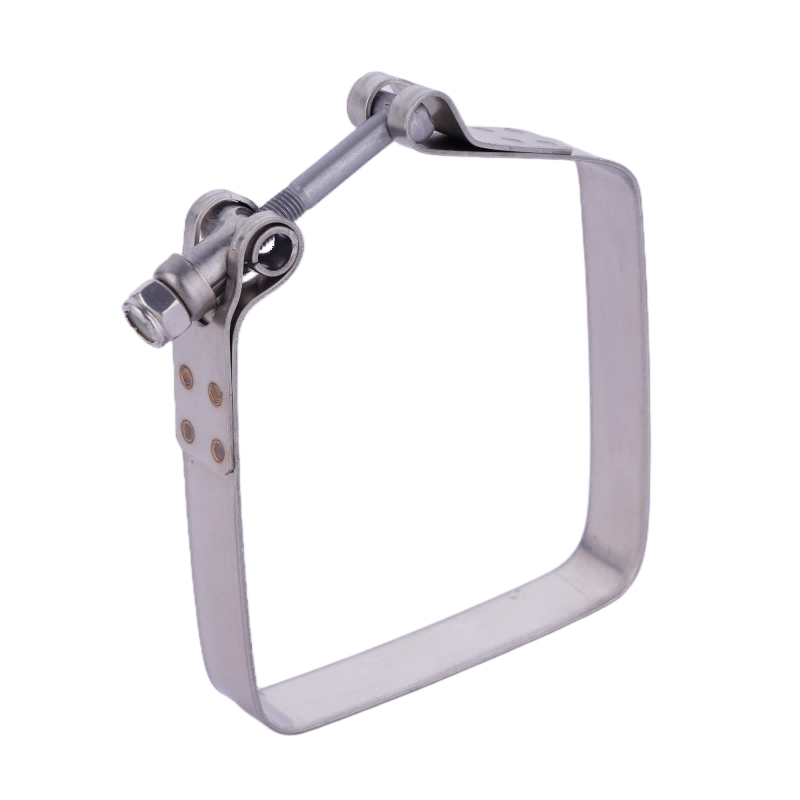
T-bolt clamps effectively prevent leaks by uniformly clamping hoses and pipe joints. They are widely adopted across industrial and civilian sectors to create reliable, leak-tight connections. The robust structural design performs steadily under high pressure, vibration and temperature fluctuation, ensuring stable system operation.
Key Takeaways
- Bolt clamps deliver circumferential uniform compression to form a 360° tight seal, ideal for high-pressure fluid and gas pipeline systems to avoid leakage.
- Correct installation is critical: match clamp size to hose outer diameter, position the clamp perpendicularly at the joint, and apply gradual even torque during tightening.
- Regular inspection and selecting premium stainless steel material extend service life and maintain long-term leak-proof performance.
T bolt clamps: leak prevention
How T-bolt clamps work
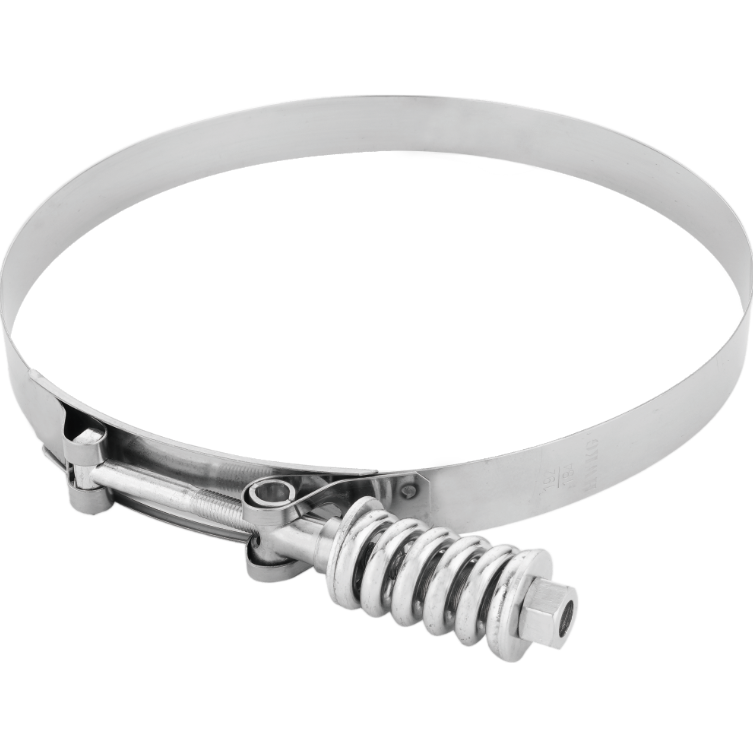
T-bolt clamps adopt a heavy-duty hoop and T-bolt structural design to lock hoses and pipe fittings firmly. Manufactured with high-strength stainless steel materials, they adapt to harsh working conditions. The T-bolt structure enables even radial compression on the hose, preventing local deformation and maintaining consistent clamping force. The design tolerates cyclic temperature changes and pressure surges, making it suitable for high-pressure liquid and gas conveying systems.
- T-bolt clamps distribute clamping force circumferentially without stress concentration, eliminating local weak points that easily cause leakage.
- Standardized dimensional design ensures precise matching with conventional hoses, avoiding sealing failure caused by over-tightening or under-tightening.
- Mass production covers complete size specifications, meeting both standard and customized pipeline assembly needs.
T-bolt hose clamps are widely applied in automotive, household sanitary and garden irrigation fields. In automotive systems, they secure coolant pipelines, fuel lines and air intake hoses to maintain leak-free connection under high temperature and engine vibration. In household kitchen and sanitary equipment, they seal water pipelines and drainage hoses to prevent dripping and seepage. For garden irrigation and outdoor water facilities, reliable clamping ensures stable water delivery and reduces long-term outdoor leakage risks.
360-degree seal and uniform pressure
T-bolt hose clamps form a full 360° circumferential sealing surface, which is essential for blocking liquid and gas leakage under rated working pressure. Unlike partial-contact clamps, they leave no sealing gaps at the joint.
With consistent circumferential pressure output, T-bolt clamps perform excellently in high-pressure working conditions. Uniform stress fits the hose and gasket perfectly to achieve optimal sealing effect; uneven clamping force easily leads to joint deformation and hidden leakage troubles. Premium T-bolt clamps are engineered to resist mechanical vibration and ambient temperature cycling, which are typical working conditions in automotive engines and outdoor irrigation systems.
- Even clamping pressure maintains stable gasket compression and prevents leakage.
- Uneven force distribution causes joint distortion and seepage failure.
- Temperature-compensated structural design adapts to hose thermal expansion and contraction, sustaining long-term sealing performance.
| Certification | Description |
|---|---|
| ISO 9001 | Quality management standard |
| IATF 16949 | Automotive manufacturing standard |
| AS9100 | Aerospace quality management standard |
These certifications show that t-bolt hose clamps from trusted companies like Hengwei are made to high standards. They last a long time, can take high heat, and handle shaking. This makes them a good pick for people who need strong hose clamps to stop leaks.
T-bolt vs. other clamps
Leak prevention comparison
T-bolt clamps outperform conventional types in high-pressure and dynamic fluid systems, widely specified for heavy-duty vehicles and industrial machinery. Its thickened band and T-bolt locking structure realize uniform circumferential pressure, creating a reliable tight seal and minimizing leakage risk. Worm drive clamps are more suitable for low-pressure conventional scenarios with cost advantages, yet over-tightening easily damages hose outer walls. Common band clamps feature simple structure but limited clamping force, only applicable to light-duty low-sealing-demand occasions.
T-bolt clamps are the preferred choice for severe working conditions with high temperature, high pressure and continuous vibration, commonly applied to radiator hoses, turbo pipelines and large air intake ducts of commercial vehicles and engineering equipment.
Qualified T-bolt clamps are manufactured with strict performance testing, ensuring stable leak-proof performance in complex and harsh environments.
Factors affecting leak performance
Multiple factors affect the leak-proof performance of T-bolt clamps, among which standardized installation is the core factor. Common installation errors include mismatched clamp size, offset mounting position and excessive tightening torque, which easily cause local stress concentration, hose damage and sealing failure. Clamp material compatibility with hose medium and service environment also determines long-term sealing durability; inappropriate material selection will lead to aging, corrosion and seal failure over time.
Periodic inspection effectively prolongs the service life of clamps and hoses. It is necessary to check for rust, surface deformation and thread damage regularly, and replace failed clamps in time to eliminate hidden leakage risks. Professional dimensional matching and performance testing ensure clamps maintain stable sealing performance for long-term industrial and civilian use.
Leak-free installation tips
Proper installation steps
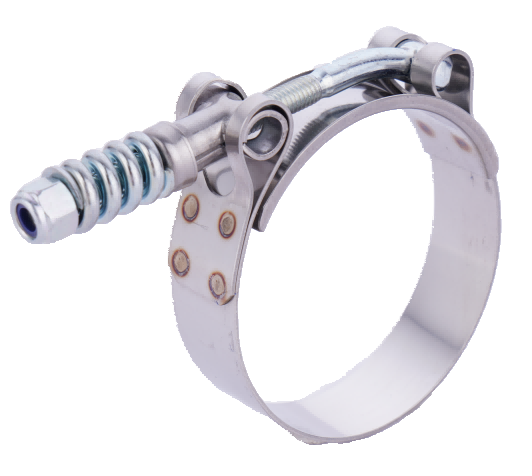
Putting on t-bolt hose clamps the right way stops leaks. Hengwei Hose Clamp Co., LTD. says to follow these steps for the best results:
- Confirm hose outer diameter and select matched clamp specification to avoid sealing failure or component damage caused by size mismatch.
- Mount the T-bolt clamp perpendicularly at the middle of the pipe joint to avoid offset installation causing local weak sealing points.
- Tighten the bolt gradually with uniform force to prevent hose extrusion deformation and local indentation.
- Use a torque wrench for standardized tightening to control clamping force within the recommended torque range and avoid over-tightening or under-tightening.
- After installation, inspect the clamp band and T-bolt for flat mounting and reliable locking.
Adopting standardized installation and inspection procedures can consistently achieve stable, leak-free pipeline connections.
Maintenance and material selection
Routine daily inspection is essential to extend the service life of hoses and clamps. Early detection of surface wear, rust corrosion and thread sliding is required, with timely replacement of failed parts to maintain clamping force and sealing stability under high pressure and vibration.
Material selection directly determines corrosion resistance and structural strength. Austenitic stainless steel T-bolt clamps feature high tensile strength, excellent rust and corrosion resistance, suitable for automotive, household sanitary and outdoor garden scenarios. Qualified industrial-grade clamps comply with ISO material and safety specifications for long-term reliable service.
| Material | Description |
|---|---|
| Stainless Steel | High strength, does not rust, good for leak-proof connections. |
| Application | Used in factories, stores, and the military. |
| Clamp Type | Heavy-duty t-bolt clamp with smooth band edges for soft hoses. |
Professional design and standardized performance testing enable T-bolt clamps to meet the sealing demands of key engineering and pipeline projects.
T-bolt clamps create durable leak-tight connections and have become standard fasteners across multiple industries. With high structural strength and uniform clamping force, they deliver long-term stable performance. Standardized installation and daily maintenance are critical to sustaining leak-proof effect and system operation safety. The clamps are widely recognized for reliable performance in automotive, household sanitary and garden irrigation applications.
Standardized torque-controlled installation effectively reduces pipeline leakage rate and extends the overall service life of fluid conveying systems.
FAQ
How do T-bolt clamps prevent leaks?
T-bolt clamps tightly and evenly compress the hose, creating a strong seal around it. This seal prevents liquid leakage. It is effective even under high pressure or violent shaking.
Where can manufacturers or suppliers use T-bolt clamps?
Manufacturers and suppliers use T-bolt clamps in places such as automobiles, kitchens, and gardens. These clamps help maintain a tight connection and prevent leaks. They perform well in many places where a strong, secure hose is required.
Can T-bolt clamps withstand high temperatures?
T-bolt clamps produced by reputable manufacturers like Hengwei Hose Clamp Co., Ltd. can withstand high temperatures. They maintain a tight connection in both high and low temperature environments.