





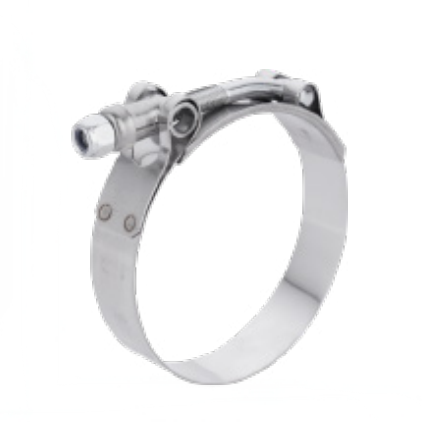
A abrazadera de perno, often called a Abrazadera con perno en T, is a fastening device for holding hoses and pipes tight under high pressure and heat. Its main parts include a T-shaped bolt, a saddle, and a nut. The T-shaped bolt creates strong clamping force and spreads that force evenly along the item it holds. Stainless steel construction makes it last long and resist rust. High-tensile bolts give the clamp a high load-bearing capacity. These devices stop leaks in automotive and industrial uses. These devices serve many industries.
Puntos clave
- Bolt clamps use a T-shaped bolt and saddle to create strong, even pressure. This stops leaks in high-pressure and high-heat systems.
- Estos abrazaderas work well in cars, trucks, plumbing, and factories. They handle tough conditions like vibration and temperature changes.
- Install bolt clamps correctly: measure the hose, position the clamp on the sealing surface, and tighten to the maker’s torque setting.
- Check bolt clamps often for rust, thread damage, or wear. Replace damaged parts to keep the system safe and efficient.
- Choose the right clamp for your hose and working conditions. This ensures a secure fit and long-lasting performance.
How a Bolt Clamp Works
Tightening Mechanism
A bolt clamp uses a design that is simple but strong. A t-shaped bolt goes through a saddle and screws into a nut. This setup forms the main part of the fastening system. When a technician turns the nut with a wrench or socket, the bolt pulls the band tighter around the hose.
The threaded bolt and saddle create a mechanical advantage. This lets the clamp build much higher tension without bending the band. So it gives much greater clamping force than a standard worm gear clamp. The screw mechanism turns twisting motion into pulling force along the bolt. The band then wraps tightly around the hose or pipe.
A T-bolt clamp has a band and a bolt and nut that make a “T” shape for tightening. This design allows very high clamping force and gives a strong, even 360° seal. The bolt’s large cross-section and fine-pitch threads (1/4-28) allow higher torque use. This creates greater radial compression for a tight and leak-free connection.
Even Pressure Distribution
The T-bolt clamp spreads pressure evenly through two key design elements. First, the heavy-duty T-bolt works with a sturdy saddle to spread clamping force more evenly around the hose circumference. Second, the smooth inner band is key for even pressure distribution.
Unlike worm-drive clamps with perforated bands that make uneven pressure points, the smooth band stops localized stress concentrations. This evenness avoids hose damage such as cutting, bulging, or early wear. It also lowers the risk of cold flow or material creep in softer hose compounds, extending the hose’s working lifespan.
A widened band structure, usually 18–30 mm, increases the physical force-bearing area. Combined with a reinforced saddle design, this spreads tightening force evenly around the circumference. The result is a secure and even pressure profile that stops leaks.
These features make t-bolt clamps suitable for silicone hoses, charge air systems, and vibration-prone applications. The table below shows how specific physical properties support a secure fit under vibration.
| Physical Property | Contribution to Secure Seal |
|---|---|
| Wider, heavier-gauge stainless steel band | Delivers greater clamping force and distributes load evenly |
| Robust T-bolt and nut with larger bolt diameter | Handles higher installation torque without deformation |
| Self-locking nuts and heat-treated alloy steel bolts | Resist loosening during sustained vibration and thermal cycling |
| Load-distributing band design | Improves even load transfer and reduces localized stress |
| Corrosion-resistant stainless steel construction | Maintains mechanical strength in harsh environments |
| Rounded band edge | Protects soft hose material from damage at the clamp interface |
Even clamping force lowers leak risk and ensures a secure seal. A manufacturer like HWKG designs these clamps for demanding conditions. The mix of a strong bolt, a smooth band, and a reinforced saddle gives reliable performance. This stops leaks and keeps a tight and secure fit across many applications.
Key Features of a Clamp
Construcción y materiales
Welded construction helps each bolt clamp spread clamping force evenly across the whole band. This design stops weak spots and keeps tension even all around the full circle. HWKG uses AISI 304, AISI 316, and AISI 321 stainless steel for its heavy-duty bands. These steel types give high-temperature strength, corrosion resistance, and long fatigue life. AISI 321 resists sensitization from exhaust heat cycles. Special alloys like Inconel handle even higher heat for turbo downpipes.
Buyers can order band widths from 18 mm to 26 mm. Wider bands spread the load better and lower stress on soft hoses. Material grades include W1, made of galvanized steel, and W5, made entirely of SS316 stainless steel. W5 works well in marine and chemical settings. Rounded band edges keep soft silicone hoses from cuts. The captured nut in each t-bolt clamp spreads load evenly and keeps tension over time.
Performance Advantages
These t-bolt clamps handle system pressure up to 250 PSI. They also hold a firm grip through thermal expansion and contraction. A heat-resistant locknut keeps its service rating up to 250°F. The solid steel bolt takes high torque without stripping or bending. Corrosion-resistant metal keeps the clamp stable in wet or humid places. These clamps also resist rust and weathering.
HWKG builds these clamps with digital quality control and automated production lines. The factory has 50+ engineers and holds 20+ patents. The company brings 20+ years of manufacturing experience to each custom order. High-pressure testers and temperature chambers check each batch before shipping. Spring-loaded t-bolt clamps have a precision-calibrated spring element between the bolt head and the band. When the hose heats up, the spring extends slightly. When the hose cools, the spring squeezes the band into a tighter diameter. This dynamic response keeps the connection sealed through repeated thermal cycles. The design suits turbocharger connections, heavy-duty truck intake systems, and marine cooling lines. Wholesale buyers and OEM customers depend on HWKG for steady quality and reliable supply.
T-Bolt Clamps vs. Other Clamps
Compared to Worm Drive Clamps
Buyers often compare t-bolt clamps with worm drive clamps. Murray Corporation says T-bolt clamps work best in high-pressure and high-heat settings. In these places, a tight and even clamping force is most important. Worm drive clamps fit lower pressure or temperature needs. They are a low-cost and flexible choice. DISLAB Precision adds that worm-drive clamps are the easier pick for general hose connections. T-bolt clamps fit larger or more demanding joints.
Turbocharger and charge air cooler plumbing shows the gap clearly. Boost pipes face extreme temperature changes and pressure pulses at the same time. A worm gear clamp that loosens a bit during thermal cycling can fail when a hard boost pushes the hose off the fitting. A T-bolt clamp keeps steady force through those cycles. Silicone hoses expand more than EPDM and have smoother surfaces. So a worm gear clamp can cut into the material at the band edges. Worm gear clamps also need retorquing after heat cycles. That rarely happens on a daily driver. A spring-loaded T-bolt version adjusts itself and removes that problem. Endurance racing teams choose spring-type constant tension clamps or quality T-bolt clamps on critical cooling and charge air circuits for this reason.
Compared to Spring Clamps
Spring clamps are simpler. They use the spring’s own tension to hold a hose. They need no tools to install. That simplicity holds them back. They cannot match the holding force of a threaded bolt. They also offer little adjustment for different hose sizes or wall thicknesses. A manufacturer like HWKG builds heavy-duty bolt clamps for demanding systems instead.
One trade-off is worth noting. A T-bolt clamp can be wider than other designs. It also leaves an exposed threaded stud after tightening. Installers must check clearance around the fitting. A clamp cannot set the pressure rating or service life of a hose system on its own. No design is automatically right for every assembly. Wholesale buyers and OEM suppliers should match the clamp to the hose, the fitting, and the working conditions.
Clamp Applications Across Industries
Automotive and Heavy-Duty Vehicles
Many vehicle systems get worm drive clamps, bolt clamps, band clamps, and pipe couplings from HWKG. Car intake and exhaust hoses always need strong holding power against heat and motion. Trucks and other heavy vehicles face the same needs on a bigger scale. Banks Power says spring-loaded clamps are used in boosted-air systems, including charge-air plumbing and other parts facing pressure and heat changes. Murray Corporation’s technical guide says spring-loaded t-bolt clamps are commonly used in heavy truck coolant and charge-air systems. Banks Power also says a T-bolt style V-band clamp works in high-pressure, high-flow systems. These examples show that t-bolt clamps handle the hardest plumbing jobs on trucks and performance vehicles. A wholesale buyer who orders parts for a fleet should pick clamps rated for these conditions.
Plumbing, HVAC, and Industrial Systems
Factories, trucking, farms, heavy machinery, and water and air hose jobs all depend on good hose clamps. These clamps are made for firm plastic and rubber hoses and tubes, so they fit snugly and hold tight. The table below shows which clamp types fit common uses.
| Tipo de abrazadera | Plumbing Uses | HVAC Uses | Industrial Pipe Uses |
|---|---|---|---|
| Abrazaderas de banda | Plumbing and city water lines | HVAC systems | Factory pipes and air ducts |
| Abrazaderas con perno en T | Irrigation systems | N/A | Factory uses |
Kitchen and sanitary work, garden watering, water supply, and drainage systems also need reliable clamps. Band clamps with an EPDM rubber cushion soak up vibration and keep surfaces from damage. The cushion also lowers noise that could pass through nearby materials. Too much vibration is a top cause of pipe and tube failure. A manufacturer like HWKG builds these cushion clamps for plumbing lines, hydraulic uses, industrial equipment, pressure washer systems, and water transfer setups. A custom order can set the band width and rubber grade to fit the pipe material and expected movement. This method keeps connections secure in both commercial and residential work.
Maintenance and Installation Tips
Proper Installation Steps
Good installation begins with the right size. The installer slides the hose all the way onto the pipe. Then they measure the hose’s outside diameter where the clamp will go. They do not use the nominal pipe size for this. They then pick a t-bolt clamp whose adjustment range covers that measured value. Band width must match the sealing area.
Positioning comes next. The installer seats the hose completely. They put the clamp band on the round sealing surface behind the pipe bead. The band should not sit over the bead. It must stay away from bends or uneven surfaces. Tool access and clearance also need checking.
Tightening should happen slowly. The installer applies pressure evenly and keeps the band lined up. They follow the torque settings the manufacturer specifies. For turbocharger and intercooler hoses under high pressure, many clamps call for 6-8 Nm (53-70 in-lbs). A loose clamp causes boost leaks and lost power. A too-tight clamp can split a silicone hose. The installer then checks for over-compression. Deep marks along band edges, too much hose bulging, or twisted threads signal a problem. They stop if these signs appear. Finally, they check for leaks by watching for hissing, hose movement, or oil residue.
Inspection and Care
Checking the clamp often keeps it working well. The inspector looks for rust on the band and bolt. They check for thread damage on the fastening hardware. They also look at the band for wear or cracks. Any damaged part needs replacement.
HWKG uses high-pressure testers and temperature chambers as quality benchmarks. These tools confirm that each batch meets strict standards before shipping. A wholesale buyer or OEM supplier can trust that every clamp gives a secure fit. The manufacturer brings over 20 years of experience to each custom order. Regular checks and well-built clamps reduce downtime and protect system safety.
A bolt clamp keeps hoses and pipes tight when pressure and heat are high. Its T-shaped bolt, saddle, and nut work together to make a strong, even grip. These clamps give strong holding power, even pressure, lasting strength, and reuse. They work in automotive, plumbing, and industrial systems in many industries. HWKG makes t-bolt clamps and other hose clamps for very tough jobs. A wholesale buyer or supplier should always match the clamp to the hose, fitting, and working conditions. The right choice keeps the system safe and efficient for a long time. Picking the right clamp protects industrial equipment and keeps work running smoothly.
Preguntas frecuentes
What makes a bolt clamp different from a worm drive clamp?
A bolt clamp uses a T-shaped bolt and saddle to create stronger tension. Worm drive clamps depend on a perforated band and screw housing. The bolt design spreads force more evenly and lasts better under heat and vibration. That gap matters most in high-pressure systems.
How tight should someone tighten a bolt clamp?
Makers usually give torque values for each clamp size. For turbocharger and intercooler hoses, many ask for 6-8 Nm (53-70 in-lbs). Installers should always follow the maker’s rating. Too little torque causes leaks. Too much can split a silicone hose.
Which stainless steel grade works best for a bolt clamp?
The right grade depends on the setting. AISI 304 handles most automotive and industrial jobs. AISI 316 resists salt and chemicals, so it suits marine work. AISI 321 fights heat cycles in exhaust systems. HWKG offers W1 and W5 material options for different needs.
Can a buyer order custom bolt clamps in bulk?
Yes. A maker like HWKG takes custom orders for band width, material grade, and bolt size. Wholesale buyers and OEM suppliers can ask for specific torque ratings and finishes. The factory backs each batch with high-pressure testers and temperature chambers before shipping.
Where do bolt clamps perform best?
These clamps shine in high-pressure, high-heat, and vibration-heavy systems. Charge air coolers, turbocharger plumbing, heavy truck coolant lines, and industrial piping all gain from them. Band clamps with EPDM cushions also soak up vibration in plumbing and hydraulic setups. Matching the clamp to the hose and fitting ensures a safe, leak-free connection.