




A worm hose clamp is a circular metal band fitted with a worm gear screw that tightens around a hose to form a uniform, leak-proof seal. Most people also call it a abrazadera de tornillo sin fin or worm gear hose clamp. At HWKG, a hose clamp manufacturer with more than 20 years of experience, our worm drive clamp range uses precision-perforated steel bands and one-piece housings built for high-torque fastening. This guide explains how the clamp works, which materials and sizes fit each job, and where it is used – so you can specify the right clamp instead of guessing. Rechecking the screw after the first heat cycle catches the invisible micro-gaps that cause slow leaks.
How a Worm Drive Clamp Works
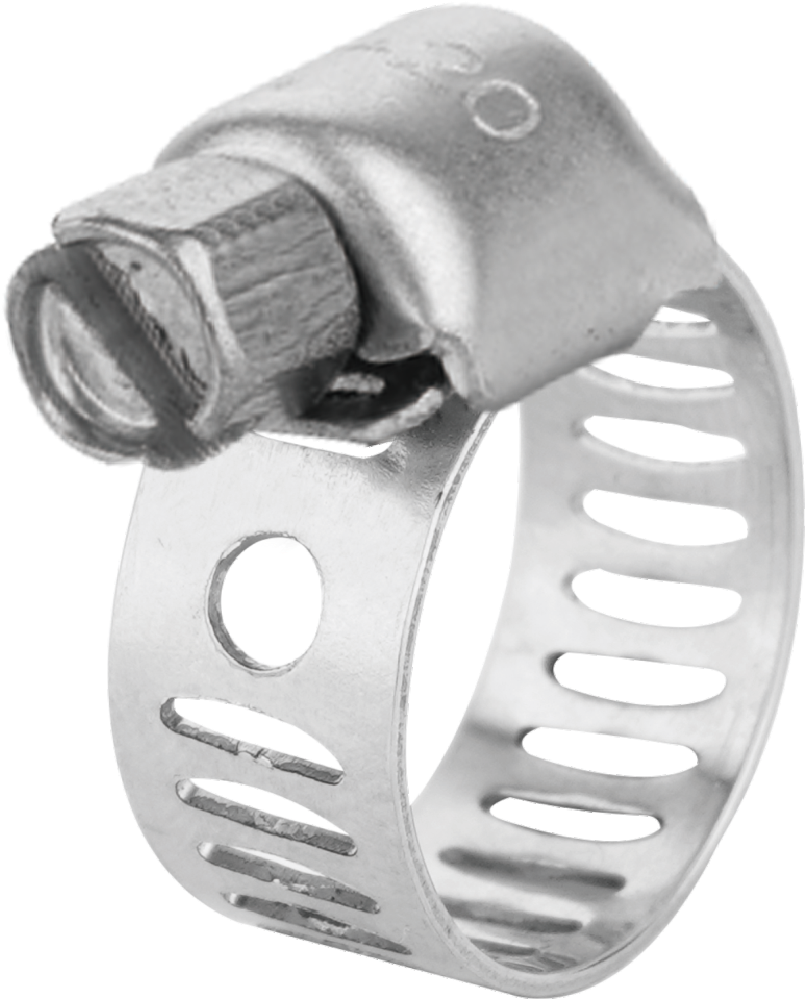
A worm-drive clamp is a simple screw-and-band system: turning the screw pulls the band tight, and the same action lets you loosen and reuse it. That mix of low cost and repeatable force is why it appears everywhere from garden hoses to engine bays.
The four core parts
Every clamp is built from four parts that work as one system. Band: a thin steel strip that wraps the hose and gives the gripping surface. Housing: sits on the band and holds the worm gear steady during tightening. Worm gear: a screw with spiral threads that engage the slots cut into the band. Captive screw: stays fixed to the housing so no pieces fall out during install.
Turning rotation into clamping force
Rotating the screw clockwise feeds the band through the housing and shrinks the diameter. Standard coolant and fuel lines need only 2-6 Nm (18-53 in-lbs); going past that risks cutting the hose liner or stripping the threads. HWKG’s W4 304 clamps list a free-running torque near 6 in-lbs and a suggested install torque of about 35-94 in-lbs depending on bandwidth. Many mechanics use a ‘snug plus a quarter-turn’ rule, then recheck for leaks after the engine warms up. For turbo, boost, or heavy-vibration lines, a abrazadera de engranaje helicoidal de alta resistencia adds welded construction and far higher clamping force than a standard screw type.
Worm Hose Clamp Materials and Size Ranges
DIN 3017 sets the common sizing. Bands come in 9 mm and 12 mm widths, and the clamping range spans roughly 6 mm to over 200 mm. Common graduated sizes include 12-20, 16-27, 20-32, 25-40, and 30-45 mm, so a 24 mm hose sits inside a 20-32 mm clamp and one size covers many hoses. That lets a supplier keep fewer part numbers in stock.
Picking the right steel grade
Material decides how long the clamp survives. Zinc-plated steel passes the British Standard 48-hour salt-spray test and suits dry indoor use. Grade 304 stainless handles temperature swings from -40 degC to +110 degC. Grade 316 is the marine choice, rated for 100-500 hours of salt spray (Grade 4/5 outdoor) and resists the pitting that salt water causes in 304. When a smooth hose surface matters, a non-perforated hose clamp avoids band-edge cuts on silicone and soft lines. For steady tension under heat cycling, a constant-tension hose clamp or a T-bolt hose clamp handles the load a basic screw clamp cannot.
The table below maps each steel grade to the environment it fits best:
| Material | Best environment | Salt-spray rating |
| SUS304 stainless | Outdoor, automotive (-40~+110 degC) | 100-500 h (Grade 4/5) |
| SUS316 stainless | Marine / salt water | 100-500 h, pitting-resistant |
| Acero galvanizado | Dry indoor | 48 h (British Standard test) |
Where a Worm Gear Hose Clamp Is Used
The same clamp seals very different systems, which is why one design serves car, boat, and factory alike. Matching the steel grade to the environment is what keeps the seal intact.
Automotive and marine
Coolant, fuel, and intake hoses face heat and vibration; SAE J1508 sets the spec for automotive use, and high-torque clamps rated at 88 in-lbs or more suit turbo plumbing. On boats, 316 stainless is the only safe option because salt water pits lower grades fast. For exhaust and high-boost joints, a Abrazadera de banda en V gives a flush, quick-release seal that a screw clamp cannot match.
Plumbing, garden, and industrial
Plumbers use 304 for water lines and fixtures, while garden systems rely on the simple screwdriver adjustment season to season. In factories, chemical compatibility drives the material choice, and wholesale buyers often request specific grades for their fluid-handling lines. RoHS and REACH compliance keeps materials within environmental-safety rules for export. A factory with custom engineering can produce clamps to an exact diameter, torque, or bandwidth – HWKG’s team of 50+ engineers and 20+ patents supports that kind of made-to-spec work.
Quick Answers
Can I reuse a worm drive clamp?
Yes. Loosen and retighten it fully; just inspect the band for cracks or rust first, since a worn band loses clamping force. Reuse is what makes the clamp economical for maintenance.
Why specify a manufacturer instead of a generic clamp?
A hose clamp supplier with digital quality control and 100% automated lines checks every unit from raw material to finish. For special jobs, a custom clamp – matched to your exact diameter, torque, and material – beats a one-size guess.