





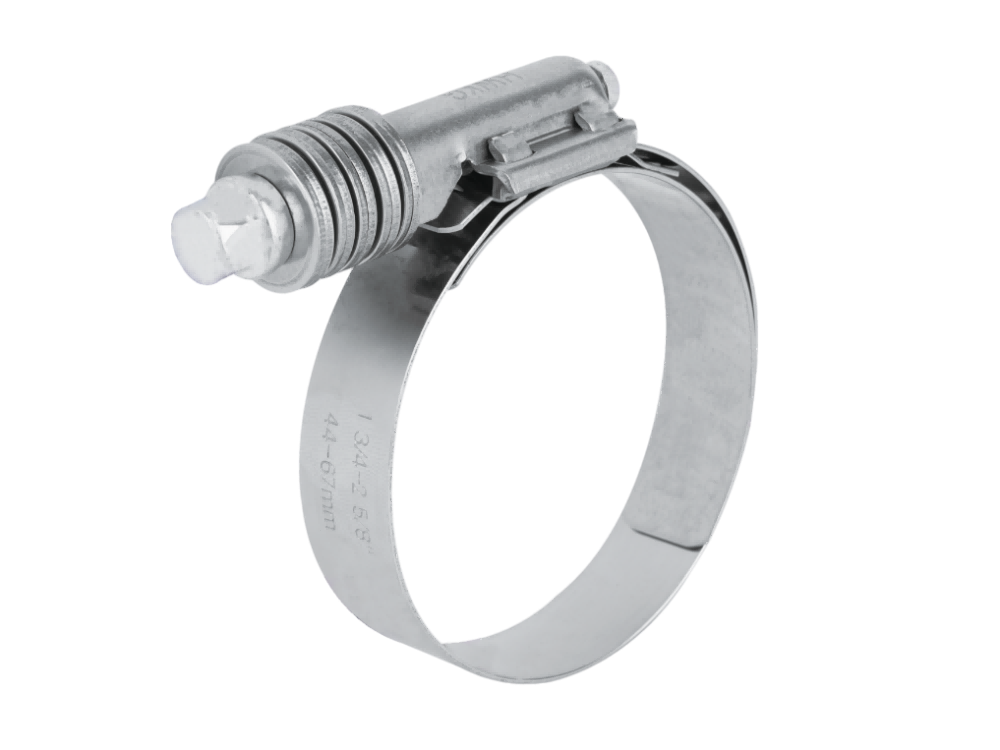
Constant tension clamps maintain a tight seal on hoses or pipes through continuous, stable pressure, even as temperature or pressure changes occur. These clamps prevent leaks and maintain a strong seal, crucial for systems subject to vibration or increased volume. Constant tension clamps are used in many industries. For example, in power line engineering, they help secure conductors, ensuring the safe and reliable transmission of electricity. They also play a vital role in applications where safety and strength are paramount, such as automobiles, factories, and ships.
Key Takeaways
- Constant tension hose clamp maintain a tight seal on hoses and pipes. They prevent leaks even as temperature or pressure changes. These clamps are self-adjusting. They use disc springs to accommodate changes in hose size. This means you don’t need to tighten them frequently. Choosing the right clamp material is crucial. Stainless steel is durable and won’t rust even in harsh environments. You must install the clamps correctly. Using tools such as a torque wrench will yield the best results. This also helps protect the hose from damage. Constant tension clamps are used in many industries. They are applied in automobiles, ships, and machinery. They are trusted because of their effective leak prevention and reliable performance.
How Constant Tension Clamps Work
Mechanical Structure and Design
Constant tension hose clamps feature special components that help keep the hose secure. These components function correctly even when temperature or pressure changes. Key components include a worm gear, disc spring, and a split-shell design. The worm gear makes tightening the clamp easy and convenient, and enhances its grip. The disc spring acts like a cushion, buffering changes in hose thickness to maintain a tight grip.
HWKG constant tension hose clamps are a prime example of ingenious design. The disc spring provides stable torque, meaning the clamp adjusts its tightness even when hose dimensions change. The split-shell design enhances the clamp’s strength and extends its service life. HWKG uses stainless steel to manufacture these clamps. This metal is resistant to rust and wear, allowing it to function properly even in harsh environments.
The table below shows the differences between constant tension clamps and standard clamps:
| Feature | Constant Tension Clamp | Standard Clamp |
|---|---|---|
| Self-compensation for clamping force | Yes, adjusts automatically for temperature and pressure changes | No, may lose clamping force over time |
| Response to pressure pulses | Absorbs impact force, maintaining sealing pressure | Does not absorb impact |
| Pressure distribution | Uniform pressure distribution with protective liner bands | May have uneven pressure distribution |
| Design origin | Precision spring band and dynamic adjustment structure | Standard fixed design |
Self-Adjusting Function
Constant tension clamps automatically adjust to temperature changes. Internal disc springs or special washers bend and move to maintain a tight grip as the hose thickens or thins. The springs in HWKG clamps always provide the appropriate pressure, effectively preventing leaks and ensuring safety.
Proper clamp installation is crucial. Users should follow the manufacturer’s torque guidelines. Some small clamps require 30-45 inch-pounds of torque, while larger clamps may require up to 90 inch-pounds. Using the appropriate torque helps the clamp stay securely in place while avoiding damage to the hose.
Constant Tension Clamp Types
Worm Gear Clamps
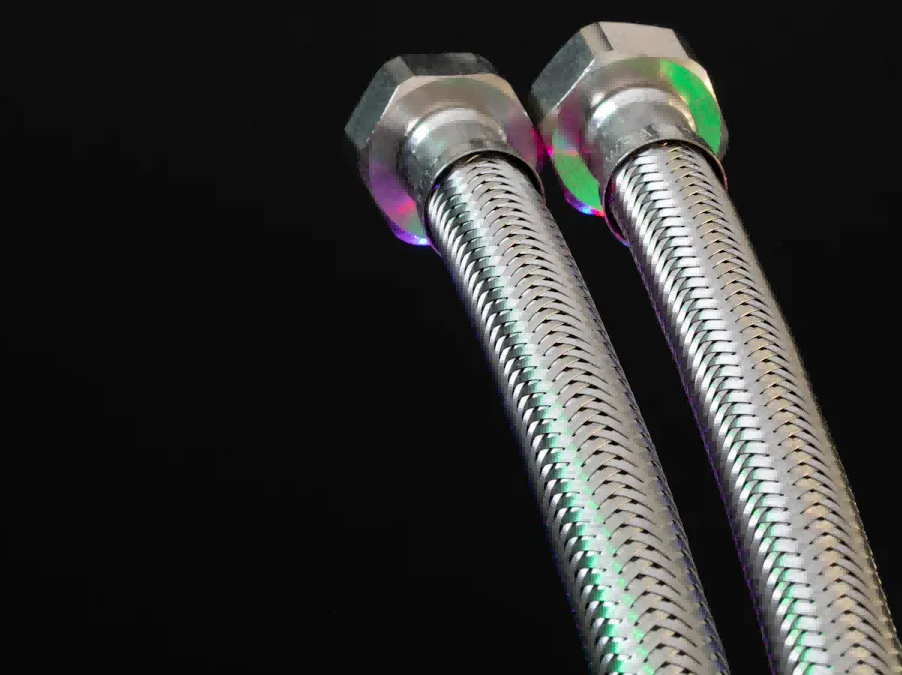
Worm gear clamps use a screw to tighten a metal strip. Turning the screw tightens or loosens the metal strip. This design facilitates adjustment and provides a strong clamping force. Worm gear clamps are widely used in automotive, factory, and marine applications. They are suitable for rubber, EPDM, and PVC hoses.
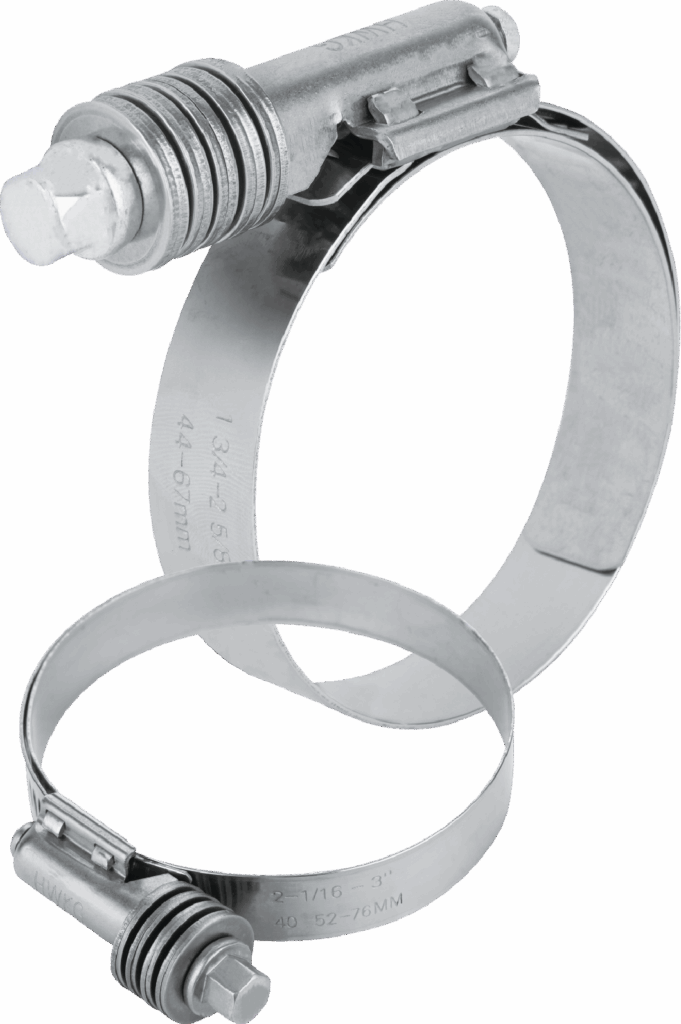
HWKG manufactures a variety of worm gear constant tension clamps. The SLHD and SLF series are made of stainless steel and feature disc springs. These models meet SAE J1508 standards, meaning they are suitable for automotive applications and are highly reliable.
| Model | Band/Protective Liner | Upper Cover/Base | Disc Spring | Hex Head |
|---|---|---|---|---|
| ZG14Q | Stainless Steel | Stainless Steel | Stainless Steel | Stainless Steel |
| ZG14B | Stainless Steel | Stainless Steel | Stainless Steel | Carbon Steel or 400 series Stainless Steel |
| ZG16Q | Stainless Steel | Stainless Steel | Stainless Steel | Stainless Steel |
Spring-loaded band clamps
Spring-loaded band clamps use a spring to maintain pressure on the hose. The spring adjusts the clamp’s tightness according to changes in hose size. This is especially important in situations with significant temperature variations. Spring-loaded band clamps are widely used in automotive cooling, fuel, and emission systems. They are also suitable for confined spaces, such as power steering and brake lines.
Band clamps
Band clamps consist of a wide, smooth band wrapped around the hose. They are tightened using bolts or buckles. Band clamps provide even pressure and protect the hose. They are commonly used in factories and for installing large hoses.
Special Designs
Some constant tension clamps have special features designed for specific applications. Wedge tension clamps utilize a wedge-shaped structure to provide strong clamping force. These clamps are highly effective under high pressure. Conical tension clamps distribute pressure, preventing pressure concentration at a single point. High-temperature tension clamps are suitable for high-temperature environments. They maintain good sealing even at high temperatures.
| Type of Tension Clamp | Unique Features |
|---|---|
| Wedge tension clamps | Strong grip using a wedge, works under heavy stress |
| Cone tension clamps | Spreads pressure evenly, lowers stress in one spot |
| High-temperature tension clamps | Works well in extreme heat |
Applications of Constant Tension Clamp
Cars and Trucks
Cars and trucks frequently experience rapid temperature changes. Their engines heat up and cool down frequently. Hose also expands and contracts accordingly. Constant tension clamps remain tight even when hose dimensions change. This prevents leaks in cooling, fuel, and exhaust systems. These clamps automatically adjust to maintain a tight fit, effectively preventing leaks.
Many vehicles travel on rough roads. Vibrations from the engine or road surface can cause ordinary clamps to loosen. Constant tension clamps remain tight even under severe vibrations or in hard-to-reach conditions.
Industrial Machinery
Plants and large machinery use constant tension clamps to secure hoses and pipes. These machines operate for extended periods with significant vibrations. These clamps help maintain a tight fit, reducing the risk of leaks or breakage. Regular inspection and cleaning of the clamps helps extend their lifespan and improve their performance.
| Feature | Description |
|---|---|
| Consistent pressure | Keeps steady pressure to stop leaks in shaky places |
| Cost-efficient | Saves money for hose connections |
| Reusable | Can be used again and again without losing strength |
Marine and HVAC Systems
Marine and HVAC systems frequently face the challenges of harsh weather. Seawater, humid air, and temperature fluctuations can damage ordinary clamps. Constant pressure clamps, made of stainless steel and special plastics, are rust-resistant and maintain a tight seal. These clamps adjust to changes in pressure and temperature, ensuring a safe and leak-free system.
Advantages of Constant Pressure Clamps
Leak Prevention
Constant pressure clamps help prevent leaks in hoses and pipes. They maintain a stable pressure at the connection point even as temperature or pressure changes. This stable clamping force means that water, air, or other liquids cannot leak. Many cars, trucks, and machinery use these clamps to ensure system safety. HWKG clamps feature disc springs and protective gaskets. These characteristics help the clamp maintain a tight connection and evenly distribute pressure. This design reduces the risk of leaks even in harsh environments.
Durability and Corrosion Resistance
Durability means a long service life for the clamp. HWKG uses high-quality stainless steel to manufacture constant tension clamps. This metal is not prone to rust or wear. The clamp can withstand rain, salt water, and chemical corrosion. The protective lining also helps prevent hose damage. This means the clamp is suitable for a variety of applications, including automobiles, ships, and factories. Users do not need to worry about clamp breakage or loss of strength.
Maintenance-Free Operation
Constant tension clamps require minimal maintenance. A self-adjusting spring ensures the clamp remains consistently tight without additional operation. Users save time and reduce maintenance costs by eliminating the need for frequent checks or tightening. These clamps are suitable for hard-to-reach locations. Even under severe machine vibration or movement, HWKG clamps remain secure.
Constant tension clamps offer long-term reliability, requiring only minimal maintenance to ensure safe system operation.
Choosing the Right Clamp
Application Requirements
Every job has different requirements. Users should consider the environment in which the clamp will be used. Some locations are hot or subject to severe vibration, while others may involve exposure to salt water or chemicals. Constant tension clamps are suitable for environments with significant temperature variations or high vibration. For automobiles, trucks, and ships, these clamps provide a safe and stable seal. In factories, they help ensure leak-free machine operation. Users should consider the pressure the hose will withstand and the frequency of system movement.
Material and Size
The right material is crucial. Stainless steel is rust-resistant and durable, especially suitable for humid or saline environments. Some clamps feature protective gaskets to effectively protect the hose from cuts or abrasion. Before selecting a clamp, always measure the hose size. The clamp should fit snugly, but not too tightly. A clamp that is too small may damage the hose, while a clamp that is too large will result in a poor seal. HWKG offers a variety of clamp sizes and widths to meet diverse application needs.
Installation Tips
Proper installation helps clamps perform at their best. Use appropriate tools, such as a torque wrench or screwdriver, and follow the manufacturer’s torque guidelines. This ensures the clamp is tight without damaging the hose. Some clamps are equipped with quick-release mechanisms for easy and rapid operation. Never reuse clamps in critical work. Use new clamps for optimal sealing and safety.
Constant tension clamps with self-adjusting springs ensure a secure hose seal, prevent leaks, and reduce maintenance costs.
Constant tension clamps keep hoses and pipes tightly closed, functioning even under varying temperatures or pressures. These clamps help prevent leaks and ensure safety. Choosing the right clamp for each job is crucial. Some clamps, such as HWKG clamps, have special features that allow them to perform better in harsh environments:
| Feature | Description |
|---|---|
| High Clamping Force | Holds tight and stops leaks in high-pressure or shaking systems. |
| Durable Stainless Steel Construction | Does not rust and lasts a long time, even in tough places. |
FAQ
What is the difference between constant pressure hose clamps and ordinary hose clamps?
Constant pressure hose clamps use a spring or disc to maintain a constant pressure. This design allows the clamp to automatically adjust as the hose expands or contracts. Ordinary clamps, on the other hand, are not adjustable and therefore loosen over time.
What are constant pressure hose clamps used for?
Constant pressure hose clamps are commonly used in automobiles, trucks, ships, and machinery. These clamps perform best in environments with high temperatures, vibrations, or significant pressure variations. They help prevent leaks and keep hoses secure.
How to properly install constant pressure hose clamps?
Use a torque wrench to tighten the clamps. The manufacturer’s torque guidelines must be followed. This helps ensure the clamps are securely fastened without damaging the hose.
Can constant pressure hose clamps be reused?
Most experts recommend against reusing these clamps in critical applications. New clamps provide the best seal and safety. Older clamps may not maintain a good hold.
What materials are used in HWKG constant tension hose clamps?
Most HWKG components are made of high-quality stainless steel. This metal is rust-resistant, durable, and has a long service life. Some models also come with a protective lining to prevent hose damage.