





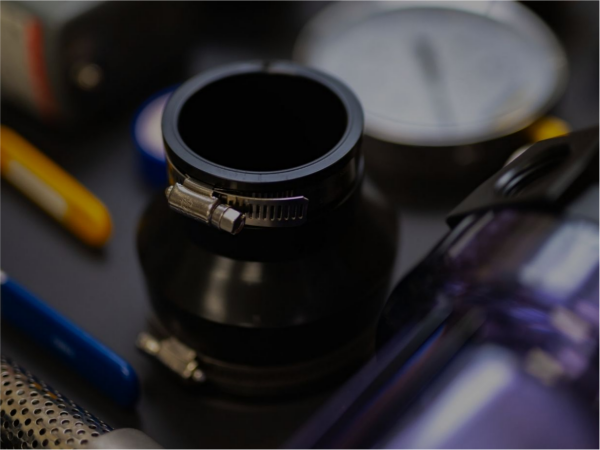
A rubber clamp is a versatile fastening tool designed to secure and stabilize components within a system. By combining a protective, cushioning rubber sleeve with a high-strength metal band, this engineered design effectively safeguards cables, pipes, and hoses from mechanical damage. Beyond surface protection, the primary function of a rubber clamp is to minimize operational vibrations, ensuring long-term system integrity and reducing wear over time.
Key Takeaways
- Dual-Protection Design: Rubber clamps feature a soft rubber sleeve that cushions delicate hoses, pipes, and cables, while a robust metal band provides the structural tension needed to keep assemblies securely in place.
- Application-Specific Selection: Choosing the correct clamp requires careful evaluation of the required diameter, material compatibility, and environmental factors to ensure optimal safety and performance.
- Proactive Maintenance: Proper installation—tightening sufficiently without over-torquing—combined with routine inspections is essential to prevent premature leaks, cracking, and wear.
Rubber Clamp Features
Main Components
A premium rubber clamp comprises two essential components engineered for durability:
- Rubber Insulation Lining: This resilient inner layer wraps directly around cables or hoses, acting as a shield against scratches, frictional wear, and structural vibrations.
- Heavy-Duty Metal Band: Providing the necessary clamping force, this band is typically fabricated from stainless steel or galvanized steel to deliver exceptional rust resistance and longevity in harsh environments.
Crucially, the rubber lining acts as a physical barrier that prevents direct metal-to-metal contact, significantly reducing galvanic corrosion and maintaining the clamp’s structural integrity.
How It Works
At its core, a rubber clamp secures an object through a combination of mechanical tension and elastic dampening. When the metal band is tensioned around the target hose or pipe, the inner rubber lining compresses, filling micro-gaps and absorbing multi-directional vibrations. This dual-action mechanism prevents slip-offs and mitigates fatigue failure of the secured lines.
To ensure consistent performance under extreme conditions, leading manufacturers like Hengwei leverage fully automated production lines. By integrating digital inspection systems, every single clamp is subjected to rigorous quality gates before packaging.
Automated Quality Control Process
Our optical and sensor-based inspection systems automatically detect and reject components with any of the following anomalies:
- Insulation Integrity: Surface tears, voids, or uneven thickness in the rubber profile.
- Structural Defects: Micro-cracks, burrs, or dimensional deviations on the metal band.
- Assembly Imperfections: Loose vulcanization or misalignment between the rubber sleeve and metal carrier.
Through this closed-loop manufacturing process, we minimize material waste while guaranteeing $100\%$ reliability for critical applications.
Material Selection & Technical Benefits
Choosing the correct material pairing is vital for ensuring longevity in harsh working environments. The table below details the performance characteristics of our standard rubber linings:
| Elastomer Type | Key Technical Properties | Ideal Application Environments |
| EPDM | Outstanding ozone and UV resistance. | Outdoor infrastructure, HVAC systems, and automotive cooling loops. |
| Neoprene | High flame-retardancy; balanced resistance to moderate oils, chemicals, and aging. | Industrial machinery, chemical processing plants, and marine envi |
Preventative Guide: Overcoming Common Failure Modes
Even high-quality clamps can fail if misapplied or poorly installed. Understanding these failure modes is key to preventing system downtime:
| Failure Mode | Root Causes | Preventive & Corrective Actions |
| Interface Leakage | • Under-torqueing during assembly.• Mismatched clamp diameter.• Thermal contraction of hoses. | • Use calibrated torque wrenches for installation.• Match clamp size precisely to the hose’s outer diameter (OD) under pressure. |
| Cracking or Band Deformation | • Excessive tightening torque.• Chemical incompatibility.• Stress corrosion cracking (SCC). | • Select appropriate material grades (e.g., 316 Stainless Steel for corrosive zones).• Strictly adhere to recommended torque limits. |
| Clamp Loosening | • Structural vibration.• Thread backing out due to thermal cycling.• Plastic creep of the hose. | • Periodically inspect torque specs during routine maintenance.• Opt for self-tens |
Rubber Clamp Types
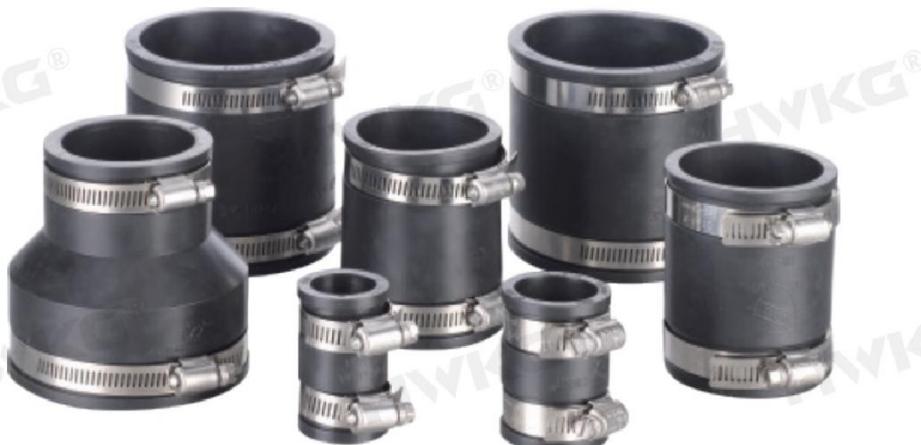
Types of Rubber Clamps & Industry Applications
Rubber-cushioned clamps are manufactured in various configurations, each engineered to address specific mechanical challenges across automotive, marine, agricultural, and industrial sectors. For B2B procurement managers seeking reliable, long-term fastening solutions, understanding these distinctions is critical.
Key Clamp Configurations
While specialized designs exist, the most widely deployed configurations in industrial supply chains include:
- Worm Gear Clamps: Feature a slotted metal band and a screw mechanism. Perfect for adjustable applications and varying hose diameters.
- T-Bolt Clamps: Engineered with a solid band and heavy-duty hex bolt, delivering high-torque, uniform sealing pressure for critical connections.
- Spring Clamps / Wire Clamps: Utilize constant-tension designs that automatically adjust to thermal expansion and contraction.
Technical Selection Guide: Choosing the Right Rubber Clamp
Selecting the ideal clamp requires a systematic analysis of operational parameters. A mismatched clamp not only risks premature hose wear but can also lead to catastrophic system leaks.
Material Compatibility Matrix
| Band Material | Core Performance Characteristics | Recommended Application Environments |
| Grade 304 Stainless Steel | Excellent mechanical strength; standard corrosion resistance; highly cost-effective. | Automotive engine bays, general industrial manufacturing, and municipal water lines. |
| Grade 316 / 316L Stainless Steel | Superior resistance to pitting, chlorides, and acids; prolonged service life in harsh media. | Marine hardware, offshore oil & gas platforms, and chemical processing equipment. |
| Nylon (PA66) | Lightweight, non-conductive, elastic, and highly resistant to chemical exposure. | Hydraulic line bundling and electrical cable rout |
Hose-Specific Selection Rules
- Soft Elastomer Hoses: Always opt for clamps featuring a smooth, non-slotted inner band or vulcanized rubber lining to prevent the hose cover from shearing under tension.
- Corrugated Hoses: Require a wider band design to distribute the clamping force evenly across the ridges without crushing the internal structure.
- Silicone Hoses: Highly sensitive to localized stress. Standard worm gears will pinch silicone; wide-band T-bolt clamps are mandatory to ensure even pressure distribution.
Rubber Clamp Uses
Common Applications
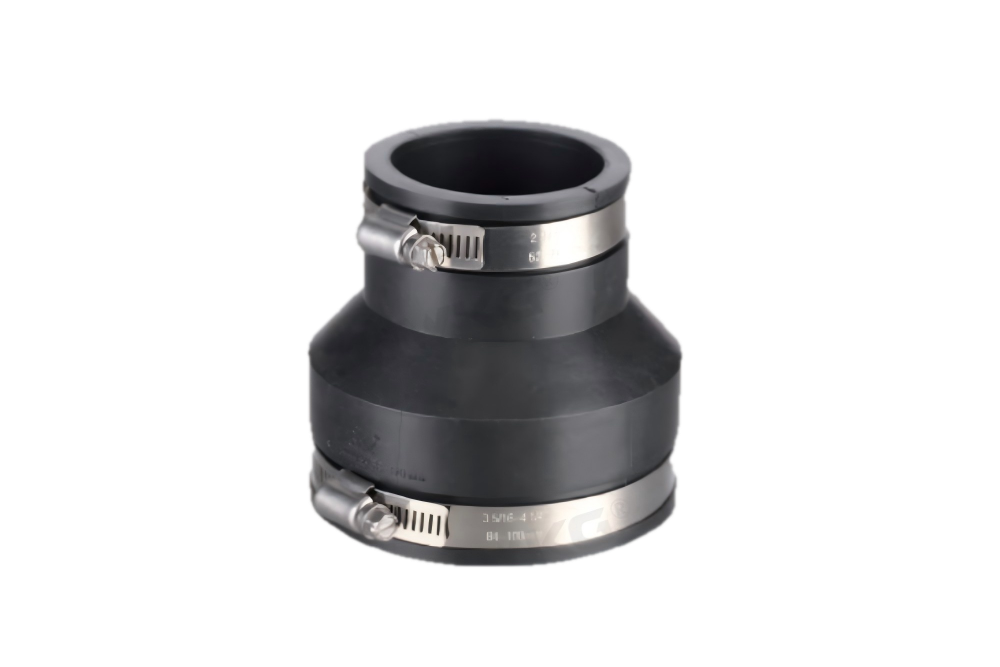
Rubber clamps are used in many places. In cars, they hold coolant hoses tight. This keeps pressure steady and stops leaks. Kitchens use rubber clamps for plumbing jobs. They help make pipes under sinks leak-proof. Gardeners use them to keep hoses in place. This makes sure water goes where it needs to. Factories use rubber clamps to move liquids, chemicals, and gases safely. They help stop spills during work.
Rubber clamps are important in electrical and plumbing work. They absorb shaking from pipes that carry fluids or gases. This lowers noise and keeps joints from breaking. Hospitals and homes use rubber clamps to keep plumbing quiet. They also hold pipes tight when temperatures or pressures change.
Rubber clamps help with cable management in many ways:
| Benefit | Description |
|---|---|
| Consistent strain relief | They support cables and stop them from sagging. |
| Protection from wear | They protect cables from damage and help them last longer. |
| Safety enhancement | They make cables neat and safe, lowering the risk of accidents. |
FAQ
What is the primary function of a rubber clamp?
A rubber clamp provides mechanical fastening, structural support, and vibration dampening for hoses, pipes, and cables. The inner rubber sleeve acts as a cushion to absorb operational vibration, eliminating surface wear and reducing acoustic noise.
How does Hengwei guarantee consistency in bulk orders?
Hengwei employs fully automated production lines equipped with optoelectronic and sensor-based quality control systems. Every clamp is scanned for rubber thickness, metal band dimensional accuracy, and vulcanization integrity prior to packaging.