





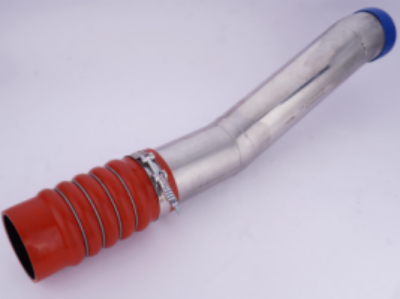
T 型螺栓软管夹 can work well on a radiator hose, but it does not fit every vehicle. These clamps deliver strong clamping force and lasting durability, making them a great choice for high-pressure cooling systems—and HWKG’s T-bolt clamps take this further, with precise, burr-free band edges that protect the hose under load. On a standard or older radiator hose, however, that same force may be too much and cause damage.
Three factors shape the right choice: hose material, system pressure, and budget. Wire-reinforced hoses act differently from standard rubber ones, system pressure decides how much holding power the clamp must give, and T-bolt clamps cost more than common alternatives.
主要收获
- T-bolt clamps give strong, even pressure for radiator hoses that handle high pressure.
- They stand up to shaking and rust, so they work great for race cars and off-road vehicles.
- Tightening too much can crush or tear normal rubber and silicone hoses.
- T-bolt clamps cost more than 蜗杆夹, so they work well for high-performance builds.
- For everyday cars, a worm gear clamp that fits right often works well and costs less.
What Is a T-Bolt Hose Clamp?
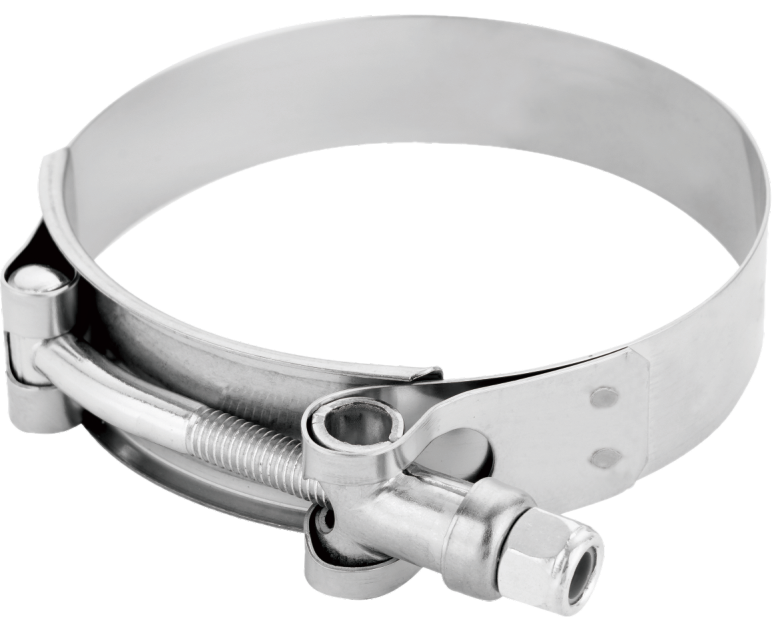
Key Features and How It Works
A T-bolt hose clamp uses a threaded T-bolt and a wide, smooth band to make strong clamping force. The wide band gives more clamping force and provides smooth 360° coverage. This creates even sealing pressure around hose and fitting assemblies. This design works well for high-vibration and industrial or military uses. The smooth band also stops tearing or cutting of soft hoses.
A spring-loaded version keeps tension steady at all times. It makes up for expansion and contraction when temperatures change. When the radiator hose heats up and expands, the spring stretches a little. The band grows with the hose while still holding clamping pressure. When the hose cools and shrinks, the spring pushes the band back to a tighter size. This keeps tension steady through repeated heating and cooling cycles without manual retightening.
Standard T-bolt clamps have a 0.75-inch band width and a 0.25-inch bolt diameter. Heavy-duty versions use a 0.875-inch band and a 0.3125-inch bolt for tougher jobs.
Common Applications Beyond Radiators
T-bolt clamps often show up on post-turbo intake pipes and other high-pressure uses. Aviation-quality versions have better welds and bolts for critical connections. Spring-loaded models work well with silicone coolant hose, charge air cooler hose, turbo sleeves, marine hose, and 90° or 45° elbows.
A T-bolt hose clamp gives 400–600 inch-pounds of clamping force. Worm gear clamps usually give 100–200 inch-pounds. This higher tension comes without band distortion. According to Murray Corporation, the solid band design makes T-bolt clamps great in high-pressure and high-temperature settings. As a maker with over 20 years of experience, HWKG supplies these clamps for automotive and industrial systems.
What Do Radiator Hoses Need from a Clamp?
Heat, Pressure, and Vibration Challenges
A radiator hose lives in a harsh place. Engine compartments reach surface temperatures above 200°F under normal driving. Coolant itself gets even hotter under pressure. The clamp must hold tight while the hose expands, contracts, and shakes mile after mile.
System pressure typically runs 12–17 PSI. That pressure raises the coolant’s boiling point, which prevents overheating. The table below shows how pressure lifts the vapor point.
| System Pressure (PSI) | Coolant Vapor Point (°F) |
|---|---|
| 10 PSIG | 239°F |
| 20 PSIG | 259°F |
| 30 PSIG | 273°F |
| 40 PSIG | 286°F |
| 50 PSIG | 297°F |
| 60 PSIG | 307°F |
| 70 PSIG | 316°F |
Modern hoses use EPDM rubber for heat and ozone resistance. Textile braiding or a wire spiral stops collapse under vacuum. A clamp must match this strength without cutting the hose.
Why a Secure Seal Is Critical
A secure seal keeps pressurized coolant inside the system. The rubber seal and metal clamp work as a team. If the seal fails even slightly, coolant escapes. Less coolant means less heat absorption. The engine then runs hot and may overheat.
Real-world failures prove this point. One driver reinstalled a radiator hose with a clip that felt tighter. Both upper hoses later dislodged and leaked. Another user found that clips which do not seat properly will not seal. OEM clips often use heavier gauge metal than aftermarket parts. Poor fit allows movement and raises leak risk.
A manufacturer or supplier of hose clamps knows this balance well. The clamp must grip firmly without crushing the hose. That is the core challenge for any radiator setup.
Pros and Cons of T-Bolt Hose Clamps for Radiator Hoses
Advantages: Clamping Force and Durability
Some mechanics say T-bolt clamps are the best choice for cooling system hoses. The design gives even clamping force around the whole hose. A T-bolt hose clamp stays steady under high pressure. It also resists loosening from vibration better than most other clamps. Stainless steel construction fights corrosion from road salt and moisture in the engine bay. This material helps the clamp survive repeated heat cycles without losing its grip.
The T-bolt design also spreads torque more evenly. That even spread lowers the risk of leaks at the connection point. A clamp that holds uniform pressure keeps the seal tight as the hose expands and contracts. For high-performance or racing uses, this reliability matters. The table below compares common clamp types.
| 夹钳类型 | 最适合 | 优势 | Watch Out For |
|---|---|---|---|
| Spring-loaded | Stock daily drivers | Cheap, self-adjusting with heat cycles | Weakest grip, wears rubber hoses over time |
| 蜗杆齿轮 | General automotive use | Adjustable, easy to install | Uneven pressure can pinch hoses |
| T 型螺栓 | High-performance, turbo, off-road | Even clamping force, holds under high pressure | Higher cost than standard clamps |
| Billet | Custom builds, show cars, high-heat applications | Precise fit, corrosion resistant, built to spec | Typically custom-order, longer lead time |
Drawbacks: Over-Tightening and Cost
The same force that makes T-bolt clamps strong can also cause trouble. Over-tightening is a real risk. Standard rubber hoses may crush or tear if the pressure is too high. Silicone hoses are very soft and tear easily, so they need a gentler clamping approach. Wide-band T-bolt clamps work well here because they spread pressure in a stable, even way. A manufacturer or supplier of hose clamps must balance grip with hose protection.
Cost is another drawback. T-bolt clamps cost more than standard clamps. Quality worm gear clamps are the lower-cost option. That means T-bolt clamps cost more per clamp. For a full cooling system with multiple connections, this difference adds up fast.
Wire-reinforced coolant hose presents a special challenge. These hoses can handle clamping force well, but the clamp must press the hose onto the barb instead of only squeezing the outer cover. A common mistake is using an oversized clamp on spiral or wire-reinforced hose. The clamp may tighten onto the cover without ever gripping the reinforcement. This creates a joint that feels secure but can pull off under pressure. For this reason, T-bolt clamps are not recommended for wire-reinforced coolant hose.
T-bolt clamps are also made for one-time use. Once tightened and removed, the clamp may not seal as well on a second install. Some users find this limitation frustrating for maintenance work. Finally, these clamps are a bit overkill for standard coolant lines. They are more commonly used on post-turbo intake pipes and other high-pressure applications. For a daily driver with stock hoses, a simpler clamp often does the job. HWKG offers custom and wholesale options for buyers who need specific clamp configurations.
How to Install T-Bolt Hose Clamps on a Radiator Hose
Step-by-Step Installation Tips
Good installation begins with getting ready. The installer should drain the cooling system and take off the old clamp and hose. The fitting and hose barb must have a clean surface. Old sealant or debris will stop a tight seal from forming. A clean surface helps the new clamp grip evenly.
Next, the installer slides the T-bolt hose clamp onto the hose before pushing the hose onto the fitting. This step matters because the clamp cannot slide over a hose that is already seated. Once the hose sits fully on the barb, the installer puts the clamp behind the bead. The clamp band should sit flat against the hose. A crooked band makes pressure uneven and may leak.
Precautions to Avoid Hose Damage
Over-tightening is the main risk during installation. The installer should follow the manufacturer’s torque specs when they are available. If no torque spec exists, tighten the nut firmly and evenly until the clamp band is compressed the same all around. After even compression, tighten only about 1/8 more turn. This small extra turn locks the clamp without crushing the hose.
Too much force during tightening can tear standard rubber or silicone hoses. The installer should check the factory service manual for exact clamp torque values, especially for T-bolt clamps. A torque wrench gives the best control. Without one, the installer should feel for resistance and stop before the hose bulges near the band. A good manufacturer or supplier of hose clamps often gives torque guidance with the product. HWKG, for example, backs its clamps with over 20 years of manufacturing experience and digital quality control. Following these steps protects the hose and ensures a leak-free connection.
T-Bolt Hose Clamp vs. Worm Gear Clamp for Radiator Hoses
Performance and Cost Comparison
The biggest difference between these two clamp styles is how hard they can squeeze. A T-bolt hose clamp gives 400–600 inch-pounds of torque. A worm gear clamp gives only 100–200 inch-pounds. That gap is why high-pressure systems like the T-bolt design better.
Durability follows the same pattern. Stainless steel T-bolt clamps fight corrosion fatigue over long events. Carbon steel worm gear clamps can break down in the same conditions. A worm gear clamp also cuts into smooth silicone at the band edges when it vibrates. A liner or spring-type T-bolt version protects that softer surface.
Cost goes the other way. T-bolt clamps cost more than worm gear clamps. A full cooling system with several connections makes that difference add up fast.
| 系数 | 蜗轮夹 | T 型螺栓夹 |
|---|---|---|
| Typical use case | Emission hoses, fuel filler necks, older coolant passages | Primary cooling hoses, heater core, turbo plumbing |
| Daily driver suitability | Adequate when installed correctly | Preferred when retorquing is impractical |
| Race car suitability | Generally avoided on critical circuits | Specified by endurance racing teams |
| Pressure environment | Fine for low-pressure systems | Needed for boosted systems with pressure transients |
| Retorquing | Requires periodic checks | Self-adjusting |
| 费用 | 较低 | 更高 |
Availability matters too. T-bolt clamps come in sizes for heater hoses from specific manufacturers like Akihisa, but supply may be limited. A buyer who needs a rare size should check stock early.
Which One Should You Choose?
The answer depends on the vehicle and the hose. A daily driver with standard hoses does well with worm gear clamps. They cost less and handle mild thermal cycling. Correct installation matters more than clamp style in this case.
A race car tells a different story. Endurance racing at Le Mans or in IMSA creates brutal thermal cycling, thermal shocks during pit stops, and constant vibration. Factory-backed teams almost universally specify spring-type constant tension clamps or high-quality T-bolt clamps with spring elements on critical cooling and charge air circuits. Some teams choose stainless steel constant tension clamps instead of carbon steel to prevent corrosion fatigue from degrading spring pre-load over a long race weekend. NASCAR crew chiefs treat clamp specification and torque verification as genuine reliability variables.
EV and hybrid battery thermal management adds another wrinkle. These systems cycle pumps and valves multiple times per trip through cold-start warming, fast-charge cooling, and regen braking heat. That creates more frequent small thermal cycles than an ICE cooling system sees. Many EV thermal systems also use dielectric fluids with different viscosity, surface tension, and materials compatibility than conventional ethylene glycol. Existing hose clamp standards were not written around those fluids.
A manufacturer or supplier of hose clamps can match the right clamp to each job. HWKG offers a range of hose clamps, including worm drive and bolt clamps, with digital quality control and custom options. Buyers who need wholesale volumes or a custom fit can request a quote from the factory directly.
A T-Bolt Hose Clamp works great on high-performance or high-pressure radiator setups. On a stock vehicle with standard or wire-reinforced hoses, it may not be needed or could even cause harm. The trade-offs are clear: better hold and vibration resistance versus higher cost, one-time use, and over-tightening risk.
“T-bolt clamps can lose tension over time, and sizes are somewhat limited.”
For a daily driver, a correctly sized worm gear clamp often works fine. For a race car or boosted system, a T-Bolt Hose Clamp from a trusted manufacturer like HWKG gives the secure seal the build needs. Check coolant clamps at every major service, and replace them every 4–5 years.
常见问题
Do T-bolt clamps work on silicone radiator hoses?
They can, but silicone is soft and tears easily. A wide-band T-bolt clamp spreads pressure evenly and lowers that risk. A spring-loaded version works even better because it adjusts as the hose expands. Installers should tighten gently and stop before the hose bulges near the band.
How tight should a T-bolt clamp be on a radiator hose?
Follow the manufacturer’s torque spec when one is available. Without a spec, tighten the nut until the band compresses evenly, then add about 1/8 turn. A torque wrench gives the best control. Too much force crushes standard rubber and silicone hoses.
Can a T-bolt clamp stop a radiator hose leak?
It often can, if the leak comes from a loose or weak clamp. The T-bolt design holds 400–600 inch-pounds of torque and resists vibration loosening. A cracked fitting, a worn hose, or a damaged barb will still leak. The clamp only fixes the connection, not the part.
How often should a driver replace radiator hose clamps?
Replace them every 4–5 years, or at every major cooling service. Heat cycles and vibration wear metal and rubber over time. A supplier or manufacturer can confirm the right replacement size. Buyers who need bulk quantities can request wholesale pricing from the factory.
Are T-bolt clamps worth the extra cost for a daily driver?
Usually not. A quality worm gear clamp handles stock cooling systems fine. A T-bolt clamp suits high-pressure or racing setups. A custom build with boosted cooling benefits from the stronger hold. A stock daily driver rarely needs it.