




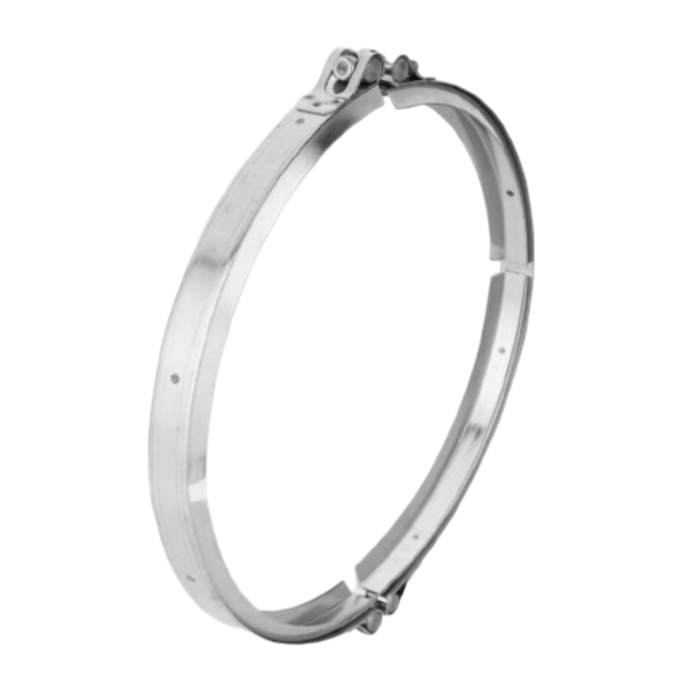
Proper torque is critical for V 型带夹 sealing performance. Per mainstream automotive and exhaust component manufacturer specifications, the recommended torque values are listed below:
- Dry thread (no lubricant): 10–14 ft·lbs
- Lubricated thread (anti-seize/light oil): 7.2–10 ft·lbs
Over-tightening will deform or damage pipes, flanges and clamps, while under-tightening causes exhaust leakage and abnormal noise. Following standard torque values ensures safe, long-term operation of the joint.
主要收获
- Adhere to standard torque: 10–14 ft·lbs for dry threads and 7.2–10 ft·lbs for lubricated threads to prevent leakage and component damage.
- Verify installation quality: the clamp must sit fully flush without gaps or movement. Routine inspections keep the system leak-free.
- Both over-torquing and under-torquing lead to failures. Always refer to official manufacturer technical manuals for reference.
Why V band clamp tightness matters
Risks of over-tightening
Excessive torque poses major risks, especially for automotive exhaust systems. Over-tightening can bend or collapse exhaust tubing, creating permanent damage. It also generates stress concentration points that gradually develop into cracks. In severe cases, welded joints on mufflers, catalytic converters and mounting brackets may fracture. Complying with rated torque values is the key to avoiding these failures.
Risks of under-tightening
Insufficient torque results in loose clamping. Exhaust gas leakage leads to loud operating noise and rattling. In extreme cases, pipe separation occurs, bringing safety hazards and high repair costs. Exhaust leaks also disrupt the engine’s air-fuel ratio, triggering emissions test failures. Exhaust fumes are harmful and pose safety risks to operators.
Seal and performance impact
Getting v band clamp tightness right keeps the seal strong. It also helps the system work well. If clamps are not tightened evenly, leaks and rattling can happen. Pipes might even come apart. When installing, you must line up parts and seat flanges evenly. Not following torque rules can hurt clamps, flanges, or pipes. The table below shows what happens if you do not use the right torque:
| Type of Error | 后果 |
|---|---|
| Under-Torquing | Bad seal, leaks, gasket wear, sensor issues, unsafe exhaust leaks |
| Over-Torquing | Clamp and flange damage, bolt stretching, gasket crushing, new leak spots |
Many users wonder about the working principle of V-band clamps and whether gaskets are required. V band clamps make a strong seal by spreading force around the joint. Some systems use gaskets for extra sealing. But getting clamp tightness right is always most important.
How to tighten V band clamps
Recommended torque specs
V-band clamps are widely applied to automotive exhaust assemblies. Torque values vary by thread condition and bolt specification, complying with general industrial and automotive fastener standards:
- Standard dry thread: 10–14 ft·lbs
- Lubricated thread: 7.2–10 ft·lbs
- Small-size applications: 45–55 in·lbs / 80 in·lbs (per actual bolt dimension)
- Metric bolt reference: M8 bolt: 8–12 N·m; M10 bolt: 15–18 N·m
Always prioritize the torque requirements stated in the manufacturer’s official manual. Correct torque prevents leakage and component damage for reliable operation.
Tools for tightening
Use a manual ratchet or calibrated torque wrench for installation. Pneumatic tools and impact drivers are prohibited — they deliver uncontrollable force and easily over-tighten or damage clamps. A rubber mallet helps seat the clamp fully and evenly. For high-temperature exhaust environments, apply a small amount of heat-resistant anti-seize compound on threads to prevent corrosion and simplify future disassembly.
Step-by-step tightening
Follow the standardized installation steps below for reliable sealing:
- Align male and female flanges completely to ensure a flush joint.
- Place the V-band clamp over the flange joint.
- Perform preliminary hand tightening (do not apply full torque).
- Tap the clamp gently with a rubber mallet to achieve full seating.
- Tighten the T-bolt gradually and evenly with a torque wrench to the specified value.
- Re-tap the clamp and double-check the final torque if conditions allow.
- After the first full heat-cool cycle of the exhaust system, perform a re-torque to maintain stable clamping force.
Tip: Select a clamp that matches the pipe outer diameter and flange specification. Ignore the incorrect rule of “clamp width equals 2–3 times pipe size” — always follow the manufacturer’s part matching guide.
Signs of correct tightness
A v band clamp that is tight enough will show these signs:
- The clamp sits flat all the way around.
- There are no gaps between the clamp and flanges.
- The joint feels strong and does not move or rattle.
- There are no leaks or hissing sounds when running.
- The bolt threads look good and the nut is not stripped.
If the clamp is loose or leaks, check your work and tighten it again.
Troubleshooting issues
Even with standard operation, sealing failure may occur. Below are common faults and solutions:
- Mismatched Clamp Specification: A clamp with incorrect dimensions will cause leakage. Always select parts matching pipe and flange size.
- Improper Seating: A misaligned or uneven clamp leads to leakage or detachment. Strictly follow official installation procedures.
- Over-torquing: Excessive force deforms clamps and flanges. Use only a calibrated torque wrench and avoid impact tools.
- Corrosion: Rust weakens structural strength and destroys sealing. Replace corroded components with qualified 不锈钢夹具.
- Inferior Product Quality: Low-grade materials and poor manufacturing lead to early failure. Choose products from manufacturers with complete quality control systems.
If a v band clamp still leaks, do these steps:
- Check all gaskets or seals. Make sure they are there and in good shape. Some systems need gaskets for extra sealing.
- Look at the self-locking nuts. Change them if they do not hold tight.
- Put high-temp, nickel anti-seize on all threads and spots that touch.
- Tap the clamp with a soft mallet while you tighten it to help it sit right.
- Tighten to the right torque.
- Do not over-tighten, or the clamp will not last as long.
Note: Tighten all v band clamps again after the first time they get hot and cool. Do this during regular checks. This helps stop leaks and keeps things working well for a long time.
与其他夹钳类型的比较
| 夹钳类型 | Tightening Procedure | 特点 |
|---|---|---|
| V 形带夹钳 | Tighten to spec, tap with mallet, retighten | Makes a tight seal, easy to put on and take off, used in many jobs |
| T 型螺栓夹 | Tighten T-bolt with hex nut | Gives even force, leak-proof, smooth surface |
| 蜗轮夹 | Tighten screw mechanism | Works different, may not seal as tight as v band or T-bolt clamps |
V-band, T-bolt and worm gear clamps serve different working scenarios including automotive, plumbing and garden irrigation. Choose the proper clamp type according to system pressure, temperature and sealing requirements.
Mastering the working principle and standard installation of V-band clamps is the foundation of creating durable, leak-proof joints. Standardized operation and accurate torque control guarantee system safety and stability.
Before installation, confirm clamp specifications and clean all contact surfaces. Ensure pipes and flanges are fully aligned. Conduct regular inspections to prevent leakage and component damage. Always implement the manufacturer’s rated torque to avoid flange deformation and extend the service life of the joint.
The right torque makes V band clamps safe and strong. People must check the clamp type before tightening. Clean all parts so nothing gets stuck. Make sure pipes are lined up straight. Check clamps often to stop leaks and damage. Use the maker’s torque numbers to keep flanges from bending. This helps the connection last long and stay leak-free every time.
常见问题
How often should someone check V band clamp tightness?
Inspect clamp tightness during routine equipment maintenance. Per mainstream manufacturer recommendations, perform a re-torque after the first heat-cool cycle, and carry out regular inspections every several months.
Can V band clamps be reused after removal?
Yes, you can use V band clamps again if they are not damaged or rusty. A supplier might tell you to change clamps that are worn or stretched.
What industries use V band clamps most?
V-band clamps are widely used in automotive, aerospace and large-bore industrial piping systems, delivering reliable leak-proof connections for standard and customized projects.