





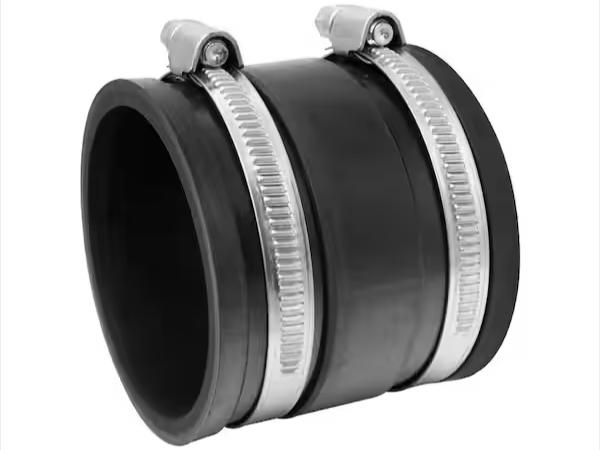
A hose clamp is a mechanical fastener that secures hoses to fittings by applying circumferential compression, creating a sealed connection for fluid and gas transfer systems. Whether you are installing a radiator hose on a passenger vehicle, connecting a chemical transfer line in a processing plant, or repairing a garden irrigation line, the quality of the clamp — and how it is installed — directly determines whether the connection holds or leaks.
This guide covers the full hose clamp lifecycle: selecting the right type from the five primary clamp categories, sizing the clamp correctly against hose OD, installing to manufacturer torque specifications (with both in-lb and Nm values), performing post-installation leak checks, and following a structured maintenance schedule. Industry standards referenced include SAE J1508 (hose clamp specifications for automotive), DIN 3017 (hose clamps — parts 1 through 5 covering clamp types, materials, and delivery conditions), and ASTM A240 (stainless steel plate and sheet for pressure vessels).
Types of hose clamps
There are many kinds of hose clamps. Each type is made for a special job. Picking the right clamp stops leaks and keeps things safe. Hengwei is a trusted company. They make many hose clamps for different jobs. Their clamps are high quality and very reliable.
Here is a table. It shows the main hose clamp types, how they work, and where people use them:
| Hose Clamp Type | Functionality | Applications |
|---|---|---|
| Worm Gear Hose Clamps | Uses a screw mechanism to tighten around hoses, allowing for a wide diameter range and static tension. | Plumbing, automotive, industrial applications, where a reliable seal is needed. |
| Spring Hose Clamps | Applies constant pressure using spring tension, adjusting for temperature changes. | Automotive cooling systems, vacuum lines, plumbing. |
| Ear Hose Clamps | Features one or two “ears” that are crimped for a permanent, tamper-proof seal. | Automotive, industrial, and plumbing applications, especially in tight spaces. |
| T-Bolt Hose Clamps | Uses a bolt and nut for high clamping force and even pressure. | Heavy-duty automotive, industrial, and high-pressure systems. |
| Specialty Hose Clamps | Includes adjustable, quick-release, wire, and V-band clamps for unique needs. | Custom applications, exhaust systems, and heavy-duty uses. |
Worm gear hose clamps
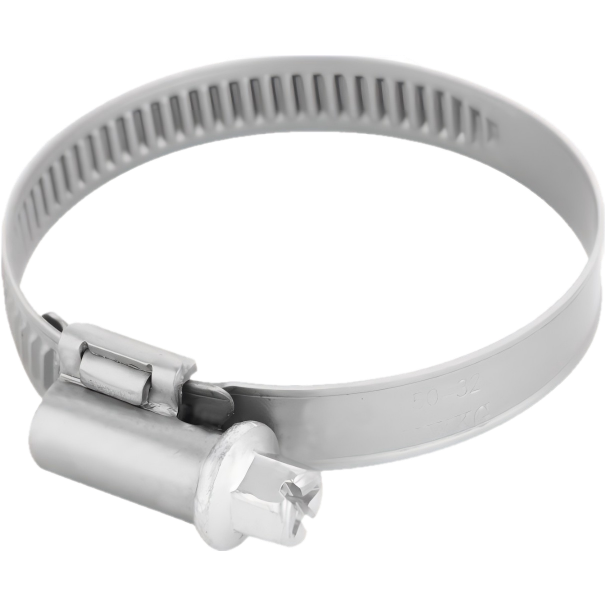
Worm gear hose clamps use a screw to tighten a metal band. This makes the clamp fit tightly on the hose. Most are made from stainless steel, so they are strong and do not rust. Hengwei’s worm drive clamps are used in plumbing, cars, and factories. They are a good choice for most jobs and do not cost much. The factory uses digital tools to check every clamp.
Spring hose clamps
Spring hose clamps use spring tension to keep hoses tight. They change shape when it gets hot or cold. This helps stop leaks. People use them in car cooling systems, vacuum lines, and plumbing. Hengwei makes spring clamps that hold steady and do not shake loose.
Ear hose clamps
Ear hose clamps have one or two “ears.” You squeeze the ears with special pliers to make a tight seal. This type is good for small spaces and places that shake a lot. Hengwei’s ear clamps fit tightly and cannot be taken off easily. They are cheap and simple to use. The factory uses machines to make sure each clamp is strong.
T-bolt hose clamps
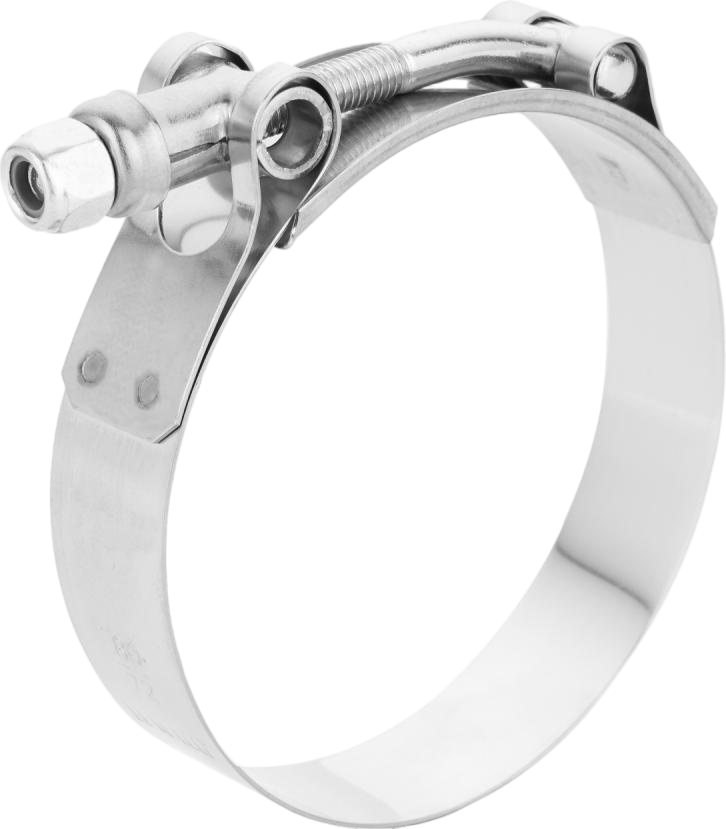
T-bolt hose clamps use a bolt and nut to squeeze the hose. They are made from strong metals like stainless steel. Hengwei’s T-bolt clamps are best for tough jobs, like engines or big machines. They press evenly, so leaks are less likely in high-pressure places. The factory can make special sizes for different needs.
Specialty hose clamps
Specialty hose clamps fix special problems in many jobs. Hengwei makes adjustable, quick-release, wire, and V-band clamps for different needs. Adjustable clamps fit many hose sizes. Quick-release clamps are fast to put on. Wire clamps hold heavy hoses. V-band clamps work with high pressure in exhaust pipes. The company’s team makes new clamp designs for new problems.
| Type of Hose Clamp | Specific Problems Solved |
|---|---|
| Adjustable hose clamps | Fit many sizes, so they are flexible. |
| Ear clamps | Stop shaking in cars and factories. |
| Embossed hose clamps | Stop hose damage and slipping. |
| Quick-release clamps | Make it easy to put on and take off. |
| Screw clamps | Stop hoses from moving and fit many sizes. |
| V-band clamps | Handle high pressure, used in exhausts. |
| Wire clamps | Hold heavy hoses tightly. |
| Worm-drive hose clamps | Squeeze flexible hoses tightly in plumbing and cars. |
Hengwei’s smart factory uses machines and computers to make all these clamps. Their clamps help people in cars, plumbing, gardens, and factories. The company always tries to make better clamps. That is why many people buy from them all over the world.
Applications for hose clamps
Hose clamps are used in many places. They help keep things safe and stop leaks. People use them in cars, homes, gardens, and factories. Hengwei makes many kinds of hose clamps for these jobs. The next parts show where hose clamps are used and why good quality is important.
Automotive uses
Cars need hose clamps to work well and stay safe. These clamps hold hoses tight and stop leaks in car parts. Here are some places where hose clamps are used in cars:
- Radiator hoses
- Fuel lines
- Air intake systems
- Turbocharger connections
A strong clamp keeps coolant inside the radiator. It also stops fuel from leaking out. Turbocharged engines need clamps that can handle heat and pressure. Hengwei’s worm gear and T-bolt clamps are made for these jobs. Good hose clamps help cars run and keep drivers safe.
Tip: Check hose clamps when you take care of your car. Changing a bad clamp can save money on repairs.
Plumbing and sanitary systems
Plumbing needs hose clamps to keep water moving and stop leaks. These clamps connect hoses to pipes, faucets, and water purifiers. Hengwei’s stainless steel clamps do not rust and last a long time. In kitchens and bathrooms, a tight clamp stops water damage and mold.
Rust can make hose clamps weak over time. A rusty clamp is hard to fix or take off. If a clamp breaks, leaks and safety problems can happen. The best way to fix a leak is to use a new clamp.
- Stops leaks in water purifiers and bathroom fittings
- Keeps water from leaking under sinks and behind walls
- Makes sanitary systems safe and clean
Garden and outdoor applications
Gardeners use hose clamps to keep water flowing in gardens. These clamps hold hoses on sprinklers, taps, and drip lines. Hengwei’s adjustable and quick-release clamps are easy to use. A good clamp helps water reach plants and stops waste.
People use hose clamps for fixing things outside. They repair broken hoses on lawn tools and secure pipes in ponds or fountains. Outside, clamps face rain, sun, and dirt. Hengwei’s stainless steel clamps last through many seasons.
- Keeps irrigation systems from leaking
- Holds hoses on garden tools and equipment
- Helps with fast outdoor repairs
Industrial and specialized uses
Factories need hose clamps to keep machines safe and working. These clamps seal hoses in machines, chemical lines, and food equipment. Hengwei sells clamps for many factory jobs.
If a clamp is not tight, leaks can happen. In high-pressure systems, a weak clamp can break. This can stop machines and put workers in danger. Good hose clamps protect machines and people.
| Industrial Process | Recommended Clamp Type |
|---|---|
| Extreme Temperature Environments | Stainless Steel Clamps |
| Corrosive Chemical Environments | 316 Stainless Steel Clamps |
| Food and Hygiene Industries | Food-Grade Stainless Steel Clamps |
| Marine and Seawater Environments | 316 Stainless Steel Clamps |
Hengwei’s clamps meet strict rules for factories. Their digital system checks every clamp for strength and lasting power. In hydraulic systems, a bad seal can cause leaks or failure. High-quality hose clamps help stop these problems and keep things running.
Note: Always pick the right clamp for the job. In important places, use clamps tested for safety.
Hose clamps are important in daily life and in factories. Picking the right clamp keeps people, property, and equipment safe.
Choosing a hose clamp
Quick Selection Matrix
| If your application has… | Choose | Material | Key Consideration |
|---|---|---|---|
| Low pressure (~50 PSI), general use | Worm Gear | W4 (304 SS) or zinc-plated carbon steel (W1) | Widest adjustability; avoid cutting into soft hoses above 35 in-lb |
| Thermal cycling, automotive coolant | Spring | Spring steel | Self-compensates for hose expansion/contraction; lower seal pressure limit |
| Permanent, tamper-proof seal | Ear (Oetiker) | W4 or W5 | Single-use; requires crimping pliers; excellent vibration resistance |
| High pressure (150–300 PSI), vibration | T-Bolt | W4 or W5 | Highest clamping torque; specify C2 shape with bridge piece for silicone hoses |
| Large diameter (>100 mm), industrial ducting | Wide-Band Bolt | W2 or W4 | Wide band distributes force; prevents hose cutting |
| Marine, salt spray, chemical exposure | T-Bolt / Band | W5 (316 SS) | 2–3% molybdenum for chloride pitting resistance |
Hose clamp installation
A proper hose clamp installation keeps connections secure and leak-free. Hengwei recommends following clear steps for every project. Good preparation and careful tightening help prevent problems later.
Preparing hose and fitting
Before installing a hose clamp, users should check the hose and fitting. Clean parts make a better seal and help the clamp last longer. Here are the steps for getting ready:
- Inspect the hose and fitting. Make sure both are clean, smooth, and free of cracks or damage.
- Push the hose fully onto the barb or pipe. The fit should feel snug and not loose.
- Place the hose clamp on the hose before sliding it onto the fitting if possible.
- Position the clamp so the screw housing is easy to reach.
- Align the clamp parallel to the hose. Place it just behind the raised bead or barb for the best grip.
Tip: Never use a damaged hose or fitting. Even small cracks can cause leaks.
Positioning and tightening
Position the clamp 6–10 mm (¼–⅜ in) behind the barb or raised bead. This placement ensures the clamp compresses the hose over the fitting’s sealing zone — the thickest part of the fitting — rather than over an unsupported section of hose. Installing the clamp directly on top of the barb can pinch the hose and create a leak path.
Torque specification (per SAE J1508 reference values):
| Clamp Type | Torque (in-lb) | Torque (Nm) | Comment |
|---|---|---|---|
| Worm Gear (¾ in) | 10–30 | 1.1–3.4 | Upper limit for soft silicone hoses; 35 in-lb+ risks cutting |
| Worm Gear (½ in) | 6–15 | 0.7–1.7 | Narrow band requires less torque for same pressure |
| T-Bolt (4 in) | 60–90 | 6.8–10.2 | Standard for 19 mm band; wider band (25 mm) may require 90–120 in-lb |
| Heavy-Duty T-Bolt | 90–120 | 10.2–13.6 | 300+ PSI applications; use calibrated torque wrench |
Leak check and adjustment
After installing the hose clamp, users should always check for leaks. This step ensures the connection is safe and ready for use.
- Pressurize the system. For cars, refill coolant or start the engine. For plumbing, turn on the water.
- Look closely at the clamp area. Watch for any drops or wet spots.
- If a leak appears, tighten the clamp a little more. Do not overtighten.
- Wait a few minutes and check again. Some hoses settle after first use.
- Recheck the connection after a few hours or the next day.
Callout: Regular checks help catch leaks early and prevent bigger problems.
Troubleshooting common issues
Many hose clamp problems come from simple mistakes. Here are some common errors and how to avoid them:
- Using the wrong clamp size. A clamp that is too big or too small will not seal well.
- Placing the clamp in the wrong spot. Always position it just behind the barb or bead.
- Overtightening or undertightening. Both can cause leaks or damage the hose.
- Using worn or rusty clamps. Old clamps may break or lose grip.
- Ignoring material compatibility. Always match the clamp material to the hose and fluid.
Following these installation best practices helps users get a safe, long-lasting seal. Hengwei’s quality hose clamps make the job easier and more reliable.
Hose clamp best practices
Common Installation Mistakes
| Mistake | Consequence | Correction |
|---|---|---|
| Wrong clamp size | Can’t achieve full seal; may slip off under pressure | Measure hose OD with fitting installed; select mid-range clamp |
| Clamp not aligned parallel to hose | Uneven compression; leak on low-pressure side | Visually check parallelism before final tightening |
| Overtightening | Band cuts into hose; permanent hose damage | Use torque wrench; stop at manufacturer-specified torque |
| Undertightening | Insufficient seal; blow-off at pressure spike | Leak check after pressurization; re-torque if needed |
| Using worn/corroded clamp | Band failure; sudden leak | Replace clamps showing rust pitting, thread galling, or deformation |
| Ignoring material compatibility | Galvanic corrosion; chemical attack on band | Match W-grade to environment; use W5 for marine/chemical |
Maintenance tips
Checking hose clamps often keeps them safe. Hengwei says to look at clamps as often as the job needs. The table below shows when to check and fix clamps:
| Inspection Frequency | Actions Required |
|---|---|
| During Every Use | Look for leaks you can see. |
| Monthly | Check for rust, cracks, loose screws, or wet spots. |
| Quarterly | Test if the clamp moves or if pressure drops. |
| Annual Replacement | Change clamps every year in important places. |
People should tighten worm gear clamps again if needed, especially if things shake or get hot and cold. Watch the hose near the clamp to stop problems before they start. Hengwei uses smart machines to make sure every clamp is strong and works well.
To use a hose clamp the right way, start by picking the correct type and size. Clean the hose and fitting before you put on the clamp. Tighten the clamp slowly and carefully. Good clamps, like Hengwei, help keep things safe and working well. For your next project, remember this checklist:
- Do not twist the hose
- Watch out for sharp bends
- Look at clamps often to check them
Clamp Pressure Ratings by Type
Hose Clamp Pressure Ratings at a Glance
The maximum seal pressure of a hose-and-clamp connection is limited by the lower of (a) the hose burst pressure and (b) the clamp’s effective seal pressure. In most applications, the clamp — not the hose — is the limiting factor.
| Clamp Type | Band Width | Approx. Continuous Seal Pressure | Notes |
|---|---|---|---|
| Worm Gear | 9 mm | 50–60 PSI | Lower limit; consider double-clamping near upper bound |
| Worm Gear | 12.8 mm (½ in) | ~80 PSI | Standard automotive grade |
| Worm Gear | 15 mm+ | ~100 PSI | Wide band, best for soft hoses |
| Spring | Variable | 30–80 PSI | Relies on hose softening under heat for full seal |
| Ear (Oetiker) | 9–12 mm | 150–200 PSI | OEM-rated when correctly crimped |
| T-Bolt | 19–25 mm | 200–300 PSI | Highest continuous seal pressure; use C2 with bridge for silicone |
FAQ
How tight should a hose clamp be?
The correct torque depends on clamp type and size. Worm gear clamps (¾ in): 10–30 in-lb (1.1–3.4 Nm). T-bolt clamps: 60–120 in-lb (6.8–13.6 Nm), depending on band width. The practical test: after tightening to specified torque, pressurize the system and check for leaks. If the hose bulges through the clamp slots or the band visibly deforms the hose surface, you have overtightened — back off ¼ turn and retest. For critical applications (turbocharger, fuel, chemical transfer), always use a calibrated torque wrench rather than tightening by feel. “Snug” is not a specification.
Can Hengwei hose clamps be reused?
Worm gear and T-bolt clamps are generally reusable, but inspect for three failure modes:
(1) Thread galling — stainless-on-stainless threads can seize under repeated tightening; use anti-seize compound for assemblies that will be disassembled frequently.
(2) Band perforation wear — worm gear clamp slots can elongate or round off, reducing torque transfer.
(3) Corrosion pitting — if pitting depth exceeds 10% of band thickness, the clamp should be replaced regardless of surface appearance. Ear clamps (Oetiker type) are single-use by design — once crimped, the ear is permanently deformed and cannot be re-crimped to original specification. Spring clamps can be reused if the spring steel has not lost tension (check visually for gap between coils when relaxed).
What tools work best for installing hose clamps?
Tool selection depends on clamp type and required precision:
General: A hose pick or lubricant (soapy water) helps slide hoses onto fittings without damaging the hose inner lining.
Worm gear clamps: A 5/16″ or 7mm nut driver provides better torque control than a flathead screwdriver. For critical applications, use a torque-limiting screwdriver set to the clamp’s specification.
T-bolt clamps: A socket wrench matching the hex nut size (typically 7/16″ or 10mm for smaller clamps, 9/16″ or 13mm for larger). A torque wrench with socket adapter is recommended for high-pressure applications.
Ear (Oetiker) clamps: Side-jaw crimping pliers designed specifically for Oetiker-style ears. Standard pliers will not achieve the correct crimp force and may damage the ear unevenly.
Spring clamps: Spring clamp pliers with angled jaws (available in flat-band and round-wire variants) are essential — attempting to use standard pliers on a spring clamp risks injury from sudden release.