


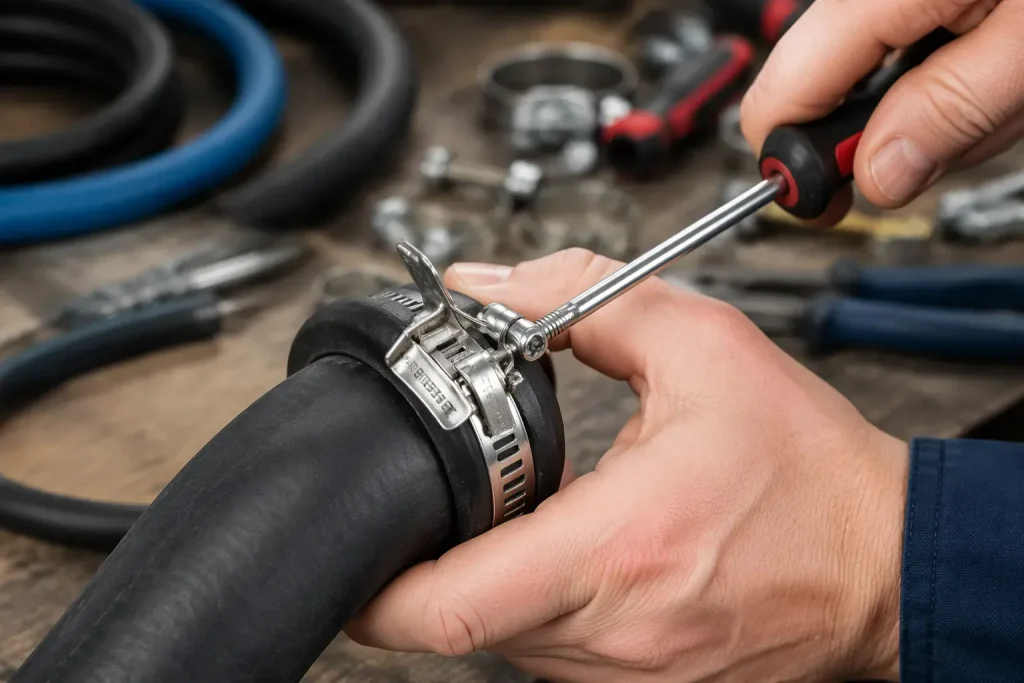
A quick release hose clamp holds a hose onto a fitting and can be opened by hand, so a line is connected or disconnected in seconds without tools. That matters in car repair, plumbing work, garden watering, boat setups, and industrial equipment, where a tight seal and easy access are both required.
HWKG’s quick release hose clamps take this further, backed by digital quality control and in-house R&D across a range that also covers worm drive clamps, T-bolt clamps, constant tension hose clamps, and band clamps . This guide explains what a quick release hose clamp is used for, from routine hose connections to fast, tool-free servicing in demanding systems.
Key Takeaways
- Quick release hose clamps let you connect and disconnect hoses fast without tools.
- These clamps work well in tight spaces like car engines and under sinks.
- You can reuse them many times if you open the clip fully and store them dry.
- Choose the right size and material for your job to prevent leaks.
- Regular checks and proper tightening keep clamps working for years.
What Is a Quick Release Hose Clamp?
Key Features and How It Works
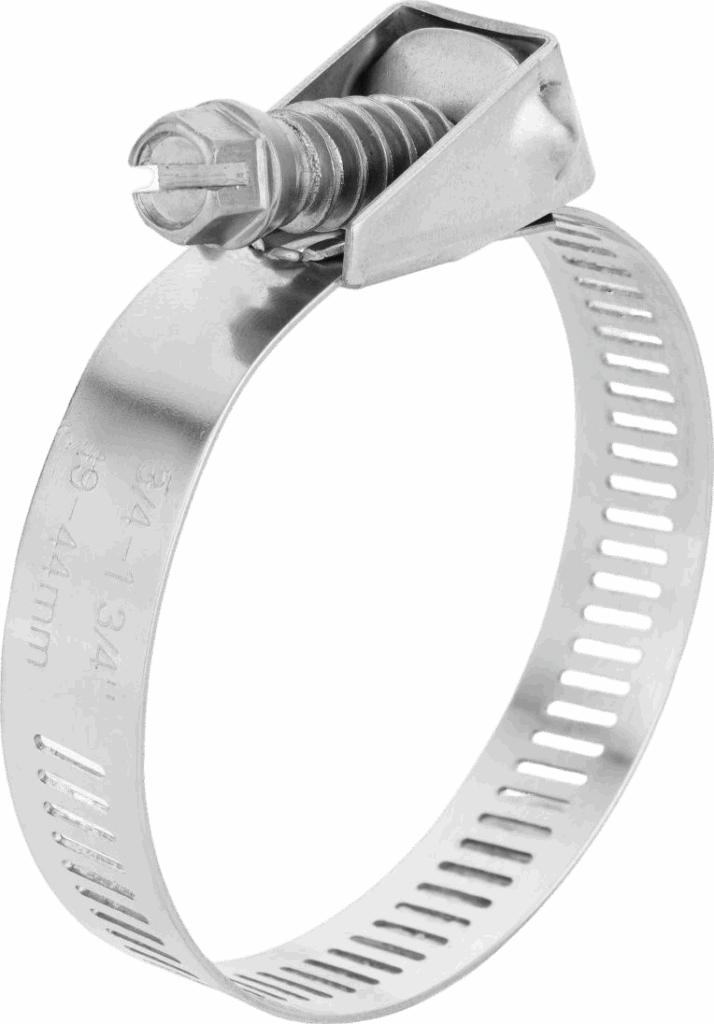
A quick release hose clamp uses a simple locking clip. A mounted screw sits on this clip. The user flips the clip up, and the small end of the metal strip comes free. The band opens fully in one motion. No screwdriver or wrench is needed at any point.
This quick release mechanism makes the clamp easy to open and fast to re-tighten. The band wraps around the hose and fitting, and the clip locks the strip end back in place. A firm push closes the band, and the screw holds the setting. The design creates a tight seal that helps prevent fluid from leaking out under normal working pressure.
The tool-free action suits tight spots. A worker can reach a clamp behind an engine block or under a sink and open it by hand. The band also opens wide enough to slip over a closed pipe, which matters for tube and hose connections in finished systems.
Quick-Release Hose Clamp vs. Standard Clamps
Each clamp style fits a different job. A worm drive hose clamp uses a perforated steel band and a one-piece housing for high-torque general fastening in plumbing, automotive, and industrial work. A bolt clamp delivers uniform clamping force through welded construction, which suits heavy-duty duty cycles. A band clamp pairs a steel band with an EPDM rubber cushion to absorb vibration and protect pipes. A pipe coupling creates flexible, leak-proof pipe connections across different pipe materials.
A quick-release hose clamp wins where access is frequent. A standard worm drive clamp holds well but needs a tool for every adjustment. The quick release clamps trade nothing on holding power for that speed. Users pick the style that matches the task, and many keep several types on hand.
HWKG manufactures this full range as a supplier, so buyers can match the clamp type to the job. The factory also offers custom options for wholesale orders.
What Is a Quick Release Hose Clamp Used For?
Automotive and Marine Applications
Cars and boats fit many hoses into tight spaces. A quick release hose clamp is useful on fuel lines, coolant hoses, and air intake systems. A mechanic who works on a coolant line can open the band by hand and slide it back. Then the hose can be refitted without looking for a screwdriver. Fuel lines need a firm seal, and the locking clip keeps the band tight once it is pressed closed. Air intake systems get the same speed benefit, since technicians often remove and refit these parts during routine service.
Marine setups add salt water and vibration to the mix. A boat owner who checks hoses each season needs clamps that open and close many times without losing grip. Quick release clamps work well for that routine. They also fit closed systems, where the band must open fully to slip over a fixed pipe. A worker can disengage the clamp, wrap it around the hose, and lock it again in one motion.
Plumbing, Garden, and Industrial Uses
Home and garden work shows the same pattern. Garden hoses, pool equipment, and outdoor spigots all need connections that come apart for winter storage or repair. A homeowner can swap a spray nozzle or drain a pool line without tools. The clamp resists weather during indoor and outdoor use, and the band holds a steady seal against normal water pressure.
Industry stretches the range further. Woodworking shops use hose clamps on chip and dust handling lines, and workers remove the dust collector hoses when a bag needs emptying. Food and beverage plants rely on clamps for washdown lines. Acid and chemical lines need a tight joint that will not leak. Vacuum and exhaust systems, fire equipment, landscaping rigs, hydraulic circuits, and material handling gear all use these clamps. Each setting shares one trait: the hose clamp application involves frequent changes or a closed system. A supplier who stocks several styles helps a factory match the clamp to the line. Quick release clamps also cut installation time on a busy floor, and they let a crew fix leaks fast without a tool run.
Installing and Removing Quick Release Hose Clamps
Step-by-Step Installation
A clean fit starts before the band goes on. The worker slides the hose fully onto the fitting and checks that the hose sits square. A crooked hose creates a weak seal point. The next steps apply to most quick release hose clamps:
- Open the locking clip and free the small end of the metal strip.
- Wrap the band around the hose, just behind the fitting’s raised ridge.
- Press the strip end back into the clip until it clicks into place.
- Turn the mounted screw by hand or with a driver to set the final tension.
Good installation rewards patience at step four. The band should grip firmly without crushing the hose wall. A worker tests the joint with a light pull and a short pressure check before returning the system to service.
Removal and Reuse Tips
Removal takes seconds with the same clip. The worker flips the locking clip up, and the band opens fully. The hose then slides off the fitting without a tool. This speed helps during roadside repairs and routine service alike.
Reusability depends on care. A worker should open the clip fully before pulling the band away, since a half-open band can bend the strip edge. Wiping the band clean after removal keeps the screw turning freely on the next job. Storing clamps in a dry box prevents rust on the screw threads. A quick release hose clamp that receives this basic care can serve many connect and disconnect cycles, which makes it a practical reusable fastening solution for busy shops and home garages.
Maintaining and Choosing the Right Hose Clamp
Maintenance for Long-Term Reliability
A regular check keeps any clamp working for years. The user looks at the band for bends and the screw for stiff threads. A quick wipe clears away dust and dried fluid. Worn parts should be replaced before they break on the job.
Good habits protect the seal. The user checks each joint for leaking edges and tightens the screw only when needed. Tightening too much crushes the hose wall and causes leaks later. A short pressure test after service confirms the joint holds. Stored hose clamps should go in a dry box, away from damp floors.
Sizing and Material Tips
The right fit starts with measuring. The user measures the outside diameter of the hose over the fitting, then picks a hose clamp size that covers that number with a little room to adjust. Stock ranges go up to 8-inch / 200 mm diameter. A band that is too short will not close, and a band that is too big leaves slack.
Material choice follows the environment. Zinc-plated steel works for dry indoor jobs, and stainless steel resists moisture outdoors and in washdown areas. The band should match the hose material and the fitting surface. A reliable manufacturer backs these choices with testing. HWKG brings 20+ years of manufacturing experience, digital quality control, automated production lines, 50+ engineers, and 20+ patents to its hose clamps. Buyers can compare that record when they check a supplier, ask for wholesale pricing, or order custom clamps for a specific line.
A quick release hose clamp secures a hose to a fitting and opens by hand in seconds. Drivers, plumbers, and plant crews value the speed, the tool-free operation, and the reuse across many jobs. Each hose clamp style fits a different task, so users should match size, type, and material to the hose, the fitting, and the setting. Correct sizing keeps clamps tight and holds pressure without crushing the hose wall. Good habits stop leaks before they start. Workers should check every connection today, then pick the right clamps for the next project.
FAQ
How fast does a quick release hose clamp open?
The user flips the locking clip up, and the band opens fully in one motion. No tool is needed. A worker can free the hose clamp in seconds, even in a tight spot behind an engine block or under a sink.
Can a user reuse these clamps?
Yes. A user opens the clip fully, slides the band off, and wipes it clean. Dry storage protects the screw threads. With basic care, the clamps serve many connect and disconnect cycles, which suits busy shops and home garages.
Do quick release clamps hold enough pressure for fuel or coolant lines?
The locking clip holds the band tight once pressed closed, and the mounted screw sets the final tension. A light pull and a short pressure check confirm the joint before service. Users should size the hose clamp to the hose and fitting.
What sizes and materials are available?
Stock ranges go up to 8-inch / 200 mm diameter. Zinc-plated steel suits dry indoor jobs, and stainless steel resists moisture outdoors and in washdown areas. A supplier like HWKG offers custom options for wholesale orders.
Where do standard clamps still fit best?
Worm drive clamps excel at high-torque general fastening. Bolt clamps deliver uniform force for heavy-duty work. Band clamps with an EPDM cushion absorb vibration. Pipe couplings create flexible, leak-proof pipe joints. Each style fits a different task, and many crews keep several types on hand.