




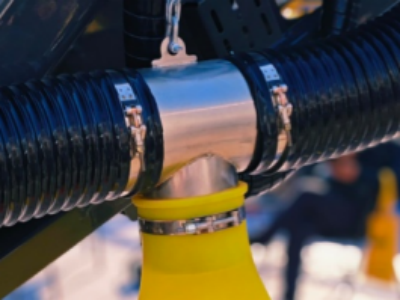
A T 型螺栓夹 is a strong fastener that uses a T-shaped bolt to hold hoses and pipes very tightly. They are a tough option compared to regular 蜗杆传动夹具. The T-bolt design spreads even pressure around the whole band. This makes it perfect for systems that vibrate a lot or have high pressure. Unlike worm gear clamps with bands full of holes, T-bolt clamps have a smooth inner band that protects the hose. Their strong build and higher torque capacity suit demanding jobs. These 夹具 work best in cars, factories, and heavy equipment.
主要收获
- T-bolt clamps provide strong, even pressure for a tight seal.
- They work best in high-pressure and high-vibration systems.
- The smooth band protects hoses from damage.
- Choose T-bolt clamps for tough jobs; worm drive clamps for light tasks.
- T-bolt clamps cost more but save money with reliable performance.
T-Bolt Clamps vs. Worm Drive Clamps

How a T-Bolt Clamp Works
A T-bolt clamp uses a T-shaped bolt and nut to pull a wide stainless steel band tight around the hose. Turning the nut pulls the bolt head toward the band. This closes the circle and squeezes the hose evenly all the way around. The result is a firm, reliable seal.
The threaded mechanism lets the installer control the clamping force precisely. Good control helps the operator get the exact pressure needed for sealing. This precision lowers the risk of over-tightening or damaging the hose material. The T-shaped bolt setup improves torque distribution and grip strength compared with traditional worm gear clamp versions. In spring-loaded versions, a calibrated spring sits between the bolt head and the band. The spring compresses during installation. It keeps applying force as temperatures or pressures change. This self-adjusting feature makes the clamps ideal for systems with thermal cycling. The spring takes up slack as hoses expand and contract. Operators do not need to retighten after installation. This cuts down maintenance time.
The heavy-duty construction includes welded housings and wide bands made from stainless steel. Manufacturers like HWKG make these clamps with strict quality standards. Digital quality management and automated production lines keep results consistent across large orders. This reliability makes the clamps suitable for automotive coolant systems, fuel lines, and air intake assemblies.
Key Design Differences
The table below sums up the main differences between these two clamp types:
| 特点 | T 型螺栓夹 | 蜗杆传动夹 |
|---|---|---|
| Band surface | Smooth inner band | Perforated (slotted) band |
| Housing type | Heavy-duty welded housing | One-piece stamped housing |
| Fastening method | T-shaped bolt with nut | Worm gear engaging slots |
| 压力分布 | Even around full circumference | Concentrated near screw housing |
| Clearance requirement | Protrudes further from band | Lower profile for tight spaces |
| Typical torque capacity | Higher torque capacity | Lower to moderate torque |
The smooth inner band of a t-bolt clamp protects hoses from cuts or abrasion under high torque. 蜗杆传动夹具 use slots that can dig into soft hose materials. This creates weak points that may lead to leaks over time. T 型螺栓夹 deliver uniform clamping force across the entire band circumference. The pressure distribution stays even from one end of the band to the other. This evenness stops leaks at joint edges. Worm gear clamp designs focus force near the screw housing. This uneven pressure can twist hoses, especially on larger diameters.
One limitation of the T-bolt design involves clearance. The bolt and nut assembly sticks out further from the band surface. 蜗杆传动夹具 sit closer to the hose. This allows installation in tight spaces like engine compartments or enclosed piping systems. For heavy truck engines and industrial machinery, clearance is rarely an issue. But for passenger cars with compact engine bays, engineers often pick worm drive clamps for tighter spots. Engineers must check available space before selecting a T-bolt design.
Installing these clamps correctly requires attention to clamping force specifications. The right torque ensures a leak-free connection without damaging the hose. HWKG serves industries that depend on these solutions. Their product line includes both types, allowing buyers to choose the right option for each application. Custom orders are available for unique requirements.
Clamping Force and Pressure Handling
Why T-Bolt Clamps Tighten Harder
The T-bolt design provides higher clamping force than a worm drive clamp. A smooth band lets the T-head bolt and saddle create even clamping force all around the hose. A worm-drive clamp uses a slotted band with a screw housing that focuses torque at one point. This makes uneven pressure that is highest under the housing and falls on the opposite side. The T-bolt spreads force more evenly, stopping the hose from squeezing out. T-bolt clamps give two to four times the clamping force at the same torque level.
Spring-loaded versions add a trunnion with a calibrated spring. This spring compresses during installation and keeps constant torque as temperatures change. The self-adjusting feature is helpful in high-vibration places like heavy-duty engines and industrial machines. Large-diameter hoses benefit because they need steady pressure across a wider surface. The design stops leaks even as hoses expand and contract during use.
Over-tightening is a real risk. Too much torque can bend or crush aluminum piping, causing a bad seal. Installers must follow torque specs carefully to avoid damaging the hose or pipe material.
Pressure Ratings and Burst Resistance
Hoses held with T-bolt clamps reach impressive pressure ratings. A standard t-bolt clamp handles 150 to 250 PSI according to StrongFlex data. Heavy-duty versions go over 300 PSI. HoseCandy reports a similar range of 150 to 300 PSI for their assemblies. These ratings show the clamp’s ability to keep a leak-free seal under tough conditions.
| Source | 压力额定值(PSI) |
|---|---|
| HoseCandy | 150–300 |
| StrongFlex (standard) | 150–250 |
| StrongFlex (heavy-duty) | 300+ |
Even clamping force plays a direct role in reaching these high ratings. A seal that is even all around the hose prevents weak spots that would fail under pressure. This makes T-bolt clamps good for automotive coolant systems, fuel lines, and air intake assemblies where burst resistance matters.
Manufacturers like HWKG make these clamps with automated production lines and digital quality management. Each clamp goes through strict testing to ensure steady performance across large orders. The factory offers custom solutions for unique pressure needs. Buyers can request tailored designs for special applications.
Band Construction and Hose Protection
Band Width, Thickness, and Materials
T-bolt clamps have stainless steel bands that are welded together for strong, steady holding power. The band’s width and thickness depend on the clamp size and how tough the job is. A normal T-bolt clamp has a 3/4″ wide band that is .025″ thick. Heavy-duty types go up to a 7/8″ wide band that is .040″ thick. Bands that are wider and thicker can handle more torque and bigger diameters without bending out of shape.
The grade of stainless steel is important for fighting rust. Buyers can pick from a few choices:
| 年级 | Corrosion Resistance Properties |
|---|---|
| 304 | Works well in low to medium rust settings; good for plumbing, cars, and general factory use. Costs less and is easy to find. |
| 316 | Much better at fighting rust because it has molybdenum added; best for harsh places like the ocean, coastlines, chemical plants, and contact with saltwater or strong chemicals. Costs more but lasts longer. |
| 18-8 | A group that includes 304; has 18% chromium and 8% nickel. Fights rust a little less than 304 if 304 has molybdenum added. Good for general rust protection. |
For exhaust pipes, 304 stainless steel works well in T-bolt V-band clamps. It stands up to heat and rust in tough conditions. Marine and chemical jobs often need 316 stainless steel bands. This grade does well in saltwater and strong chemical contact.
Smooth Inner Band Benefits
The smooth inner band is what makes T-bolt clamps different from worm drive designs with holes. A flat, unbroken surface spreads the load evenly over the hose. Bands with holes create stress points when they are tightened too much. These stress points can cut into soft hose materials and cause early failure.
Avoid mixing soft silicone hose with sharp-edged perforated bands; instead, choose constant tension or lined bands, and recheck torque after the first heat cycle to prevent loosening, creep, and cold-flow leaks.
Silicone hoses and soft rubber hoses gain the most from a smooth inner band. The unbroken surface lowers the chance of dents and surface damage. Installers should check the inner band for a smooth, unbroken surface before they start. They should also make sure the clamp does not stick before it reaches the right diameter.
HWKG is a maker and supplier of worm drive clamps, bolt clamps, band clamps, and pipe couplings. The company uses strong materials and automated production to give steady quality. Buyers who want a trusted factory for custom or wholesale orders can ask for designs made for their own hose protection needs.
When to Use Each Clamp Type
Best Uses for T-Bolt Clamps
T-bolt clamps work best in jobs that need strong clamping force and a tight seal in tough conditions. Coolant hoses on heavy trucks and industrial engines need steady pressure to stop leaks when temperatures change. Fuel lines in high-performance or racing vehicles gain from the even force these clamps give, which helps stop leaks under high pressure. Air intake systems on turbocharged engines also count on them to hold hoses tight during boost events. Exhaust tubing connections use T-bolt V-band clamps made from 304 stainless steel to stand up to heat and rust. Heavy-duty equipment in construction, mining, and farming depends on these clamps for hydraulic and pneumatic lines that face constant vibration.
A forensic engineering study published in the Journal of the National Academy of Forensic Engineers found that worm gear clamp bands can suffer fatigue failure under normal road and engine vibrations. This finding backs the choice of T-bolt clamps for critical, high-vibration systems. Many engineers see t-bolt clamps as one of the best hose clamp options when clamping force and long-term reliability matter most.
When Worm Drive Clamps Win
Worm drive clamps stay the practical choice for many everyday jobs. Plumbing systems in homes and commercial buildings use them because they cost less and install fast with a screwdriver. Low-pressure automotive jobs, like radiator hoses on passenger cars, work well with worm drive clamps when space is tight. Kitchen and sanitary water pipes, drainage hoses, and garden irrigation systems all count on these clamps for simple, budget-friendly connections.
However, worm drive clamps have known weak points in demanding settings. Common failure modes include:
- Overtightening, which warps the hose surface and creates a leak path.
- Undertightening, which leaves the connection loose.
- Failure to retorque after thermal cycling.
- Band-edge cutting into silicone hose under vibration.
- Relaxation followed by blow-off under pressure pulses.
These issues rarely show up in low-pressure, low-vibration environments. They become serious in turbo plumbing or heavy machinery. Installers should match the clamp to the job. A worm gear clamp works fine for a garden hose. A fuel line on a race car needs something stronger.
HWKG serves automotive, kitchen and sanitary, and garden irrigation industries with a full product line. The company offers worm drive clamps, bolt clamps, band clamps, and pipe couplings. Buyers looking for a reliable manufacturer or supplier can request wholesale or custom orders. The factory uses automated production and digital quality management to deliver consistent results for large-scale projects.
Installation and Cost Considerations
Tools, Torque, and Reusability
Most t-bolt clamps work with a standard 7/16″ socket wrench. This is different from worm drive clamps, which use a flathead screwdriver. Technicians often like the socket better because it gives more steady torque. A wrench can also reach tight spots where a screwdriver will not fit.
Installers must follow torque specs to prevent damage. Too much tightening can crush aluminum pipes or bend the hose. A worm gear clamp might strip its housing if you use too much force. T-bolt clamps last better through repeated adjustments. You can loosen and retighten them many times without losing holding power. This reuse saves money on replacement parts over time.
For a 3-inch T-bolt clamp on silicone hoses, the suggested installation torque is 4 to 6 ft-lb (48 to 72 in-lb). Since silicone is softer and squishes more than reinforced rubber, it is best to stay at the lower end of that range (4–5 ft-lb) to avoid bending the hose.
Price and Long-Term Value
T-bolt clamps cost more per unit than worm drive clamps. The higher price comes from the stainless steel build and welded housing. Buyers who need a leak-free seal in high-vibration systems find the extra cost worth it. A failed connection can cause downtime and costly repairs.
HWKG works as a manufacturer and supplier with digital quality management and automated production lines. The factory delivers fast turnaround for large wholesale orders. Custom designs are available for special applications. Buyers looking for a reliable supplier for critical hose connections can ask for product samples and specifications.
A T-bolt clamp is a heavy-duty fastener with a T-shaped bolt that delivers high, even clamping force. Match the clamp type to the job. Choose T-bolt clamps for high-pressure, high-vibration systems. Pick worm drive clamps for low-pressure, budget-friendly tasks. Before buying, weigh pressure needs, hose material, clearance, and cost. For critical applications, always check manufacturer specs. HWKG, a trusted manufacturer, offers both types for wholesale and custom orders.
常见问题
What torque should I use for a T-bolt clamp?
For a 3-inch T-bolt clamp on silicone hoses, use 4 to 6 ft-lb (48 to 72 in-lb). Stay at the lower end for silicone so you don’t crush the hose material.
Can I reuse a T-bolt clamp after removal?
Yes. These clamps can be loosened and tightened again many times without losing their grip. Reusing them saves money on new parts over time.
How do T-bolt clamps compare to worm drive clamps for vibration?
T-bolt clamps spread clamping force evenly around the whole band. Worm drive clamps put force near the screw housing, which makes pressure uneven. This makes T-bolt clamps better for systems with a lot of vibration.
What industries use T-bolt clamps most often?
Automotive coolant systems, fuel lines, air intake assemblies, exhaust tubing, and heavy-duty equipment in construction, mining, and farming depend on T-bolt clamps for high-pressure connections.
Where can I buy T-bolt clamps wholesale?
HWKG is a maker and supplier of T-bolt clamps and other hose clamp types. The factory uses automated production and digital quality management to keep large orders consistent. Custom designs are available.