


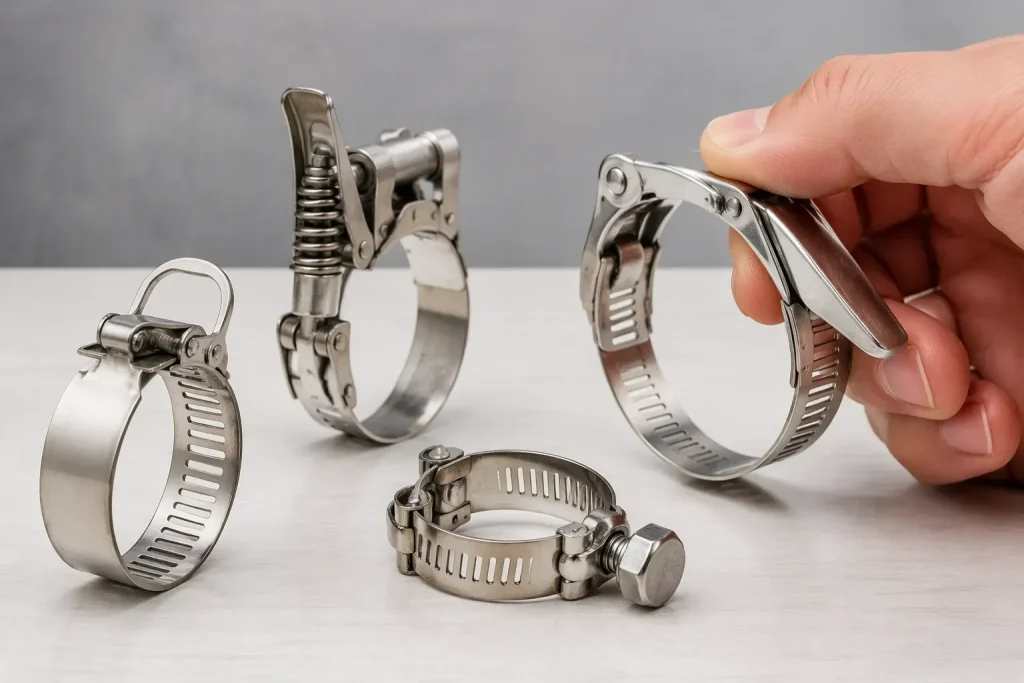
A quick release hose clamp earns its name from a simple trait: the user can install or remove it in seconds without losing a secure hold. Lever and cam-lock, spring-loaded, and quick-release worm gear or bolt styles form the main families, each locking a hose with its own mechanism and freeing the connection at a different speed.
These designs sit within a wider range of hose clamp types, which includes worm gear, ear, T-bolt, spring, wire, band, V-band, and swivel models. Buyers comparing these types of hose clamps should weigh three points: locking method, release speed, and the application each style serves best.
HWKG’s quick release hose clamps take this further, backed by digital quality control and in-house R&D across a range that also covers worm drive clamps, T-bolt clamps, constant tension hose clamps, and band clamps.This guide walks through each quick release hose clamp family, how it locks, and where it fits best.
Key Takeaways
- Lever and cam-lock clamps open with one hand and hold tight with a cam. They work best on soft hoses that need frequent access.
- Spring-loaded clamps squeeze open easily and keep steady tension. They are great for vibrating engine lines.
- Quick-release worm-gear and bolt clamps combine a strong screw or bolt hold with a fast latch. They handle firm, thick-wall hoses under high pressure.
- Choose a clamp based on hose material, access space, pressure, vibration, and budget. Match the clamp to the job for quick, secure releases.
Hose Clamp Types And Quick Release Hose Clamps
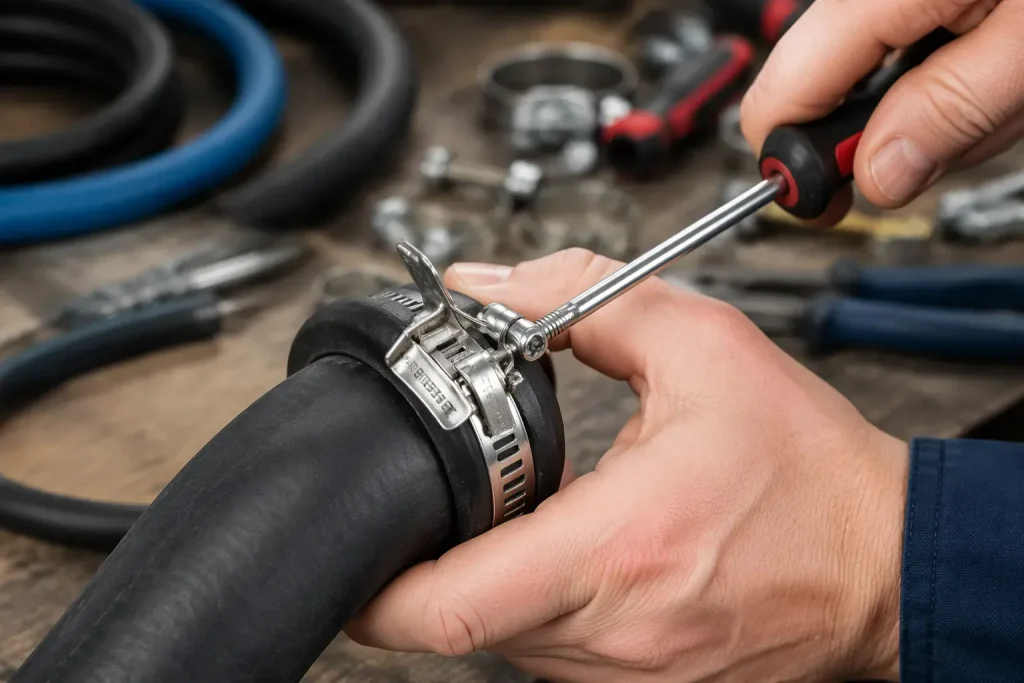
Where Quick Release Fits
Hose clamps hold a flexible line onto a rigid fitting. The wider family covers many designs. Worm-drive hose clamps tighten with a screw mechanism. Ear clamps crimp permanently with a special tool. T-bolt, spring, wire, band, V-band, and swivel models each answer a specific demand. These different types of hose clamps share one job: securing hose connections without leaks.
Quick release clamps sit inside this family as a convenience-focused option. A latch, lever, or spring replaces the slow screw-and-tool routine. The user opens the clamp, moves it, and closes it again. Many hose clamp types are available in quick release form, so the category spans small fuel lines up to large industrial pipe joints. A wholesale supplier can stock several styles in matching size ranges.
What Sets Them Apart
The defining trait is speed with security. A quick release hose clamp delivers a reliable connection that goes on or comes off in seconds. That speed matters in maintenance bays, on production lines, and in field service work. Quick installation and removal also reduce downtime for equipment that needs frequent inspection.
These clamps come in many styles and sizes. Lever, cam-lock, spring-loaded, and quick-release bolt versions all belong to the group. Each one suits a different hose material and access space. Buyers who compare the different styles of hose clamps should note one point. A standard worm gear or jubilee clips design still works well for permanent, low-maintenance joints. Quick release designs simply add repeatable access. A factory or custom manufacturer can match the right variant to the line.
Lever And Cam-Lock Quick Release Hose Clamps
Design And Operation
A lever and cam-lock clamp uses an over-center action to create clamping force. The user flips the lever, and an eccentric cam rolls past its pivot point. The band gets tighter as the cam turns. Once the lever passes center, the clamp stays closed on its own under tension. This quick release mechanism lets you open and close it fast and easily with one hand. A small locking clip or latch stops the lever from flipping open when there is vibration.
Corrosion-resistant versions work well indoors, outdoors, and in marine use. Adjustable hose clamps in this family let the user set the band diameter before latching. Stainless steel bands and plated hardware fight rust in damp settings. A snap grip hose clamps design adds a spring-assisted jaw for even faster handling. These hose clamps open and close without tools, which saves time during filter changes and line swaps.
Best-Fit Applications And Cost
Lever and cam-lock models fit soft and medium hose materials, like silicone, EPDM, and rubber coolant lines. They need clear access around the fitting, because the lever swings through an arc. Tight engine bays may limit how far the lever can travel. Performance stays strong in low to moderate pressure service. Buyers in regulated markets should confirm compliance with named standards for their industry before they purchase.
Relative cost runs higher than a basic worm gear hose clamp, which reflects the machined cam and lever assembly. A wholesale supplier often prices these units by size and material grade. Operations with lots of maintenance usually recover the cost through faster service. Each release takes seconds, and the clamp returns to the same setting. A custom manufacturer can supply matched sets for a production line.
Spring-Loaded Quick Release Hose Clamps
Design And Operation
A spring-loaded clamp uses a coiled spring to keep the band tight against the hose. The spring holds energy and always pushes the band inward. This steady tension keeps pressure even when the hose expands, shrinks, or gets squeezed by heat. The user squeezes the tabs or lifts the latch, and the clamp opens in one motion. A small locking clip keeps the spring compressed during storage and transport.
The quick-release mechanism on these hose clamps needs no tools. One squeeze frees the clamp, and one push puts it back. Spring and worm gear clamps are the most common designs in engine applications, and both work well on coolant and air lines. A wholesale supplier often stocks spring models in bulk for fleet and plant maintenance.
Best-Fit Applications And Cost
Spring-loaded units fit soft rubber and silicone hoses on smaller fittings. They work great in high-vibration settings, like engine bays and pump lines, because the spring takes in movement instead of loosening. Access space matters less here than with lever designs, since the tabs need only a finger’s reach. Buyers in regulated industries should check compliance with the standards named for their sector before ordering.
Cost stays modest compared with machined lever styles. Stamped steel and stainless versions cover most budgets, and a custom manufacturer can adjust band size for a specific line. These hose clamps trade some peak torque for steady tension, so they fit low to moderate pressure joints best. Installers who service equipment often prefer the fast release for repeat access. Pairing them with ear clamps or snap grip hose clamps on nearby lines keeps a workshop stocked for every joint.
Quick-Release Worm-Gear And Bolt Clamps
Design And Operation
Quick-release worm-gear and bolt clamps give you strong tightening plus fast removal. A worm-gear version keeps the screw band you already know, but adds a split housing or flip latch. You tighten the screw for a strong hold, then open the latch to free the band in seconds. Bolt clamps work the same way, using a heavy-duty bolt and a hinged or quick-detach bridge. Both designs pair proven installation and locking methods with a fast release path.
HWKG makes worm drive, heavy-duty bolt, band, and pipe coupling clamps in this family. The company brings over 20 years of manufacturing experience to the line. Automated production lines and a large engineering team keep output steady and support custom work. A locking clip or latch on the quick release hose clamp keeps the band closed under load.
Best-Fit Applications And Cost
These hose clamps fit firm and thick-wall hoses, including reinforced rubber and heavy industrial lines. They work best in high-pressure and high-vibration service, where a strong, even band load matters. Bolt styles spread force evenly across the band, which suits large pipe joints and couplings. Buyers in regulated sectors should confirm compliance with the standards named for their industry.
Cost sits mid-range: above basic worm gear models, below specialty machined designs. A wholesale supplier can price these hose clamps by size and material grade. A custom manufacturer can tailor band width and bolt size for a specific line. Plants that service equipment often choose this style for the balance of torque and speed. The release step takes seconds, and the clamp returns to its set tension. For heavy joints that still need frequent access, these hose clamp designs offer a practical middle path.
Choosing Among Types Of Hose Clamps
Comparing Fit, Performance, And Compliance
A side-by-side view helps buyers sort the three families. The table below summarizes the quick release hose clamps covered above.
| Feature | Lever/Cam-Lock | Spring-Loaded | Quick-Release Worm-Gear/Bolt |
|---|---|---|---|
| Locking method | Over-center cam | Coiled spring tension | Screw or bolt plus latch |
| Release speed | One-hand flip | One squeeze | Latch open, seconds |
| Best hose | Soft to medium | Soft rubber, silicone | Firm, thick-wall |
| Vibration | Good with locking clip | Excellent, constant tension | Strong, even band load |
| Relative cost | Higher | Modest | Mid-range |
Each family meets a different compliance path. Buyers should confirm standards named for their industry before ordering. No single style wins on every measure. A lever-style hose clamp suits frequent filter changes. A spring hose clamp holds steady tension on coolant lines. A bolt hose clamp carries heavy pipe joints.
Matching Type To Application And Budget
Hose material drives the first decision. Soft silicone and EPDM lines suit lever or spring designs. Reinforced rubber and heavy industrial lines favor quick-release worm-gear or bolt styles. Access space comes next. A lever needs room to swing, so tight engine bays may point toward spring tabs or a flip latch. These hose clamps open without tools. Stainless hose clamps resist rust in damp settings. Adjustable hose clamps let users set the band diameter first.
Pressure and vibration demands narrow the field. High-vibration joints reward constant spring tension. High-pressure joints need the even band load of a bolt design. Budget then sets the final choice. Spring models cost least, lever styles cost most, and worm-gear or bolt versions sit between. Many hose clamps share the same size range across families. Small hose clamps fit fuel and air lines. Heavy-duty hose clamps serve plant piping.
A wholesale supplier can stock all three families in matching sizes. A custom manufacturer can tailor band width for a specific line. Installers often pair ear clamps with quick release clamps on nearby joints. The right types of hose clamps depend on the job, not on habit. Each hose clamp type has a best-fit job. Matching the hose clamp to the application beats defaulting to one style. Smart buyers compare the different types of hose clamps before they commit. Reliable hose clamps return to the same setting after each release.
Three families cover most quick release needs. Each one offers a distinct takeaway:
- Lever and cam-lock clamps flip open with one hand and hold through an over-center cam. They suit soft hoses that need frequent access.
- Spring-loaded clamps squeeze open in one motion and hold with constant tension. They shine on vibrating engine lines.
- Quick-release worm-gear and bolt clamps combine a screw or bolt hold with a fast latch. They carry firm, thick-wall hoses under high pressure.
Selection starts with hose material, then access space, pressure and vibration demands, compliance needs, and budget. A wholesale supplier can stock all three families, and a custom manufacturer can match band sizes to a line. Smart buyers match the hose clamp to the job. That habit beats defaulting to one style, and it keeps every release quick and secure.
FAQ
How does a buyer choose between the quick release styles?
Start with the hose material. Soft silicone and rubber lines suit lever or spring designs. Firm, thick-wall lines favor worm-gear or bolt styles. Then check access space, pressure, vibration, and budget. A wholesale supplier can confirm sizes across families.
Do quick release hose clamps hold as securely as standard clamps?
Yes, when the user matches the clamp to the job. A cam passes center and stays locked. A spring keeps constant tension. A bolt spreads even load. Each design keeps a firm grip, and a locking clip adds safety on vibrating lines.
Can these hose clamps handle high-pressure lines?
Bolt and heavy-duty worm-gear styles carry high-pressure service best. Their even band load suits reinforced hose and large pipe joints. Lever and spring models fit low to moderate pressure. Buyers should confirm the clamp meets the standard named for their industry.
Do quick release hose clamps work outdoors and in marine settings?
Corrosion-resistant versions do. Stainless steel bands and plated hardware resist rust in damp conditions. A manufacturer can advise on the right material grade. Users should still inspect the hose clamp after long exposure to salt water or weather.