






A T-bolt clamp must be tightened according to its material and bolt size to ensure a leak-free seal. For instance, commercial-grade T-bolt clamps with a 1/4″ screw typically require 35–45 in-lbs, while heavy-duty industrial series can handle up to 75–90 in-lbs. Following professional engineering standards prevents hose damage and ensures system safety. As a leading manufacturer, HWKG’s high-performance T-bolt clamps engineered to meet strict industrial specifications.
Key Takeaways
- Tighten T bolt clamps to the recommended torque values to prevent leaks and ensure safety. Always refer to the manufacturer’s specification or standard industrial charts (such as SAE J1508). Avoid universal guessing, as over-torquing can crush fittings.
- Check the clamp size and bolt diameter before tightening. Use methods like the Turn-of-Nut or Torque Table for accurate results.
- Regularly inspect and maintain clamps to catch issues early. This helps prevent leaks and keeps equipment running smoothly.
Recommended T Bolt Clamp Tightness
Torque Specifications
According to the SAE J1508 standard for hose clamps, torque specifications depend strictly on the bolt diameter, band material, and application:
- Standard Commercial T-Bolt Clamps (1/4″ Bolt): 35 – 50 in·lbf (4.0 – 5.6 N·m)
- Heavy-Duty Industrial T-Bolt Clamps (5/16″ Bolt): 70 – 90 in·lbf (7.9 – 10.2 N·m)
- Spring-Loaded Clamps: 30 – 45 in·lbf (3.4 – 5.1 N·m)
Utilizing these precise values protects silicone or rubber hoses from shearing. Premium hardware from HWKG is designed and tested to withstand these optimal installation torques without thread stripping.
Practical Tightening Methods
Many people do not own a torque wrench. Experts share some easy ways to tighten clamps right. The table below lists common methods and their details:
| Method | Description | Accuracy/Notes |
|---|---|---|
| Turn-of-Nut Method | Tighten the bolt until snug, then turn it a set angle (like ¼ turn) for final tension. | About ±15% of the needed force; good for strong fasteners; does not use torque reading. |
| Tension Indication | Use tools that measure force directly (like special washers, smart bolts, or strain gauges). | Most accurate; removes guessing from friction; needed for planes or important loads. |
| Torque Table/Chart | Look up trusted charts for torque values based on bolt type and size. | Uses proof load; always check the newest values for your job. |
Some helpful tips are:
- Tighten the clamp until it stops spinning on the hose.
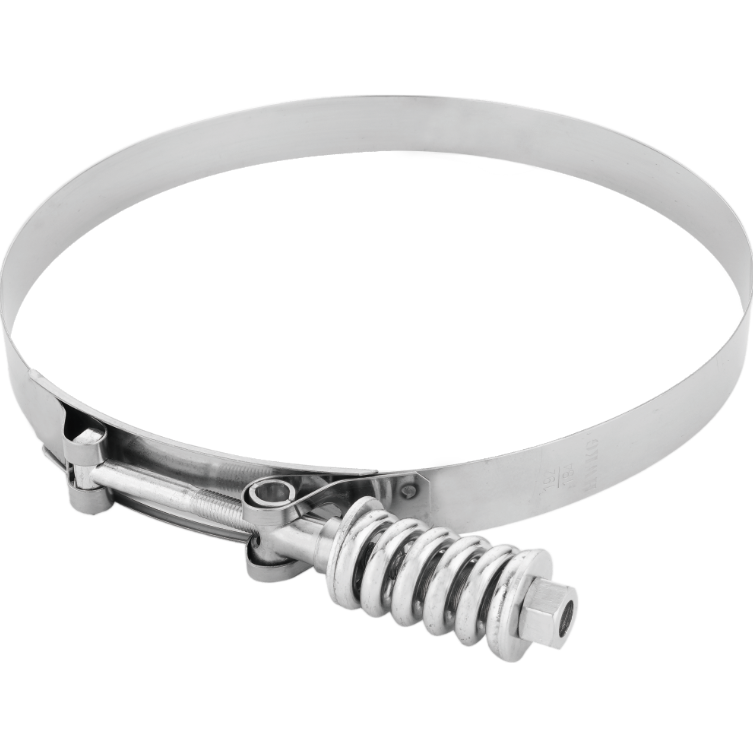
- For spring clamps, press the coil spring all the way, then loosen two turns.
- Use a feeler gauge to make sure the clamp presses evenly.
Hengwei Hose Clamp Co., LTD. makes clamps that press evenly and are simple to install. Their clamps are strong, last long, and work well in big orders and factories. These things make them a top choice for companies needing special solutions.
Tip: Always use the right torque or method for your clamp and job. This keeps you safe and helps your equipment last longer.
Why T-Bolt Clamps Need Correct Tightness
Risks of Over-Tightening
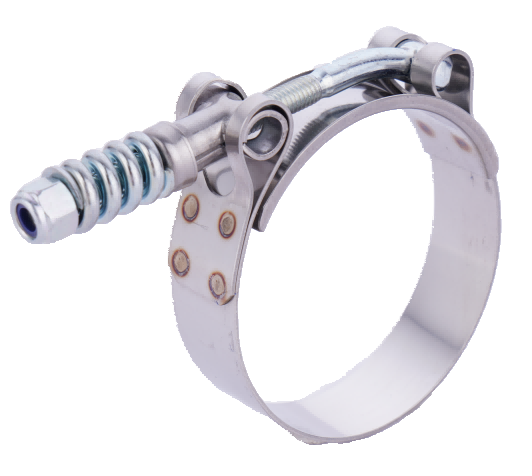
If you make a t bolt clamp too tight, it can hurt hoses and fittings. When you tighten too much, you might see the hose change shape, the clamp bend, or even leaks. The table below lists the main types of damage:
| Type of Damage | Description |
|---|---|
| Hose Deformation | The hose can get squished or lose its shape. This makes it hard for fluid to move. |
| Clamp Damage | The clamp might bend or get weak. This makes the connection not as strong. |
| Leakage | If the hose gets damaged, it can leak. This means you lose fluid and it can be dangerous. |
If you use too much force, you can hurt the parts for good. Things might not line up right, so the system cannot handle stress well.
Risks of Under-Tightening
If a t bolt clamp is too loose, you can have problems. Shaking or moving can make the clamp even looser. This means the connection is not safe. If you use the wrong size or do not tighten enough, the clamp will not fit right. Rust and wearing out can make the clamp weak, so it cannot hold tight. The system might not be steady, which can make things unsafe and cause trouble.
- Fluid and Pressure Leaks: Severe drops in system pressure, leading to critical fluid or air loss in turbocharger and coolant lines.
- Hose Blow-off: Under high pressure or temperature spikes, the hose can completely slip off the fitting barb, causing catastrophic system failure.
- Accelerated Wear from Vibration: Joint friction increases under operational vibration, leading to premature hose chafing and clamp fatigue.
Effects on Performance and Safety
Putting on a t bolt clamp the right way makes the connection strong and last longer. Lining up and tightening the clamp right stops leaks and keeps equipment safe. Using the right amount of force helps your equipment last and means you do not need to fix it as much. Checking and taking care of the clamps often keeps everything working well and safe. People who make and sell clamps say to follow these steps to keep things working for a long time.
Note: Making sure the clamp is tight enough helps things work better and keeps people safe in cars, factories, and special jobs.
How to Tighten a T Bolt Clamp
Tools You Need
Get your tools ready before you start. The right tools help you make the clamp fit well. Most people need these tools:
- Torque wrench (for tightening just right)
- Socket set (fits the clamp’s bolt or nut)
- Feeler gauge (checks if pressure is even)
- Clamp pliers or torque driver (helps tighten carefully)
- Safety gloves
How you tighten the clamp changes how close you get to the right tightness. The table below shows how accurate each way is:
| Tightening Method | Accuracy Range | Typical Application |
|---|---|---|
| Torque Wrench Method | ±25% | Standard engineering joints, batch assembly |
| Hand-feel Method | ±35% | Non-critical, static joints with no vibration |
| DTI Washer Method | ±10% | Steel structures, bridges, and construction joints |
A torque wrench is easy to use and pretty accurate for most t bolt clamps. Hengwei Hose Clamp Co., LTD. makes clamps that work with normal tools. This helps people in factories and stores do the job fast.
Step-by-Step Process
Doing each step in order helps the clamp seal well and last longer. Follow these steps to get the best results:
- Pick the socket that fits the clamp’s bolt or nut.
- Put the socket on the wrench and place it on the clamp’s bolt or nut.
- Turn the wrench to the right to tighten the clamp slowly.
- Keep turning until the clamp feels tight, but do not make it too tight.
- Look at the clamp and hose to see if the seal is even and tight.
- Set the torque wrench to the number the maker says.
- Put the torque wrench on the clamp’s bolt or nut so it fits well.
- Turn the nut until you reach the right torque.
- Make sure the clamp is tight enough but not too tight.
Positioning Rule: Always position the T-bolt clamp band between 1/8″ and 1/4″ (3mm to 6mm) behind the hose bead or fitting barb shoulder. Placing it too close to the edge causes hose extrusion; placing it too far back causes the hose to flare and leak.
For spring clamps, press the coil spring all the way, then loosen it two turns. Use a feeler gauge to check if the clamp presses the hose the same all around. Hengwei Hose Clamp Co., LTD. makes clamps that are easy to use for both special and regular jobs.
Checking Tightness
After you put on the clamp, check if it is tight enough to keep things safe and working well. Try these tips:
- Tighten the clamp until it sits flat on the rubber hose.
- Run your finger over the clamp and hose. It should feel smooth, not sharp.
- Look to see if the hose is pressed down under the clamp.
- For big clamps, tighten in three steps: first 30%, then 70%, then all the way.
- Use a good torque wrench to get the best results.
- After one or two days, especially if things shake a lot, check the clamp again and tighten if needed.
Note: Check clamps often if things move or shake a lot. This keeps the clamp tight and safe.
Hengwei Hose Clamp Co., LTD. makes clamps for tough jobs. Their clamps work well in cars, factories, and special uses. Checking and taking care of the clamps helps them last longer.
Troubleshooting T Bolt Clamp Issues
Signs of Over-Tightening
Technicians look for changes in the clamp or hose.
- The clamp or hose can bend or change shape.
- The hose might bulge out in spots.
- Hose ends can split or crack.
- The clamp can twist or threads can break.
These problems make the hose and clamp wear out faster. Over-tightening happens when too much force is used. It also happens if torque rules from the maker are not followed.
Signs of Under-Tightening
Under-tightening makes leaks and weak connections. The clamp can slip or turn while working.
- Fluid leaks show up where the hose connects.
- The hose feels loose or moves easily.
- The clamp sits uneven or does not press down.
- Shaking makes the clamp get looser over time.
Factory teams say torque failure happens a lot. Important hoses need 45 to 60 inch-pounds of torque to stop problems.
How to Fix Common Problems
Many clamp problems are easy to fix. The table below lists common issues and what to do:
| Issue Type | Description | Solution |
|---|---|---|
| Torque Failure | Clamp fails at bolt due to low torque | Retorque to 45–60 inch-pounds |
| Corrosion | Clamp rusts in harsh environments | Use SS316 material and clean regularly |
| Compression Issues | Clamp does not seal at specified torque | Check clamp position and retorque |
Installers should put the clamp on the fitting barb shoulder. Retorque after the first heat cycle to fix heat damage. For shaking, use lock washers or thread-locking glue. Custom clamps from Hengwei Hose Clamp Co., LTD. help stop these problems. Buyers and makers like clamps tested for rust and sealing.
Tip: Pick the right clamp for each job and check torque values. This keeps the connection tight and stops leaks.
To make sure a t bolt clamp is tight enough, follow the right torque values. Use tools that are checked and work well. Check the clamps often to catch problems early. Hengwei Hose Clamp Co., LTD. sells strong clamps that help stop leaks and breaks. Looking at the clamps regularly lowers risks and keeps things safe.
FAQ
How to determine if a T-bolt clamp is tightened?
Using a torque wrench is most effective. The clamp should not rotate on the hose. The hose should not have bulges or cracks.
Can T-bolt clamps be reused after disassembly?
Yes, if the T-bolt clamp is not damaged or rusted, it can be reused. Before reinstallation, always check the threads and the wear on the clamp band.
Where can I find a reliable T-bolt clamp supplier or manufacturer?
Buyers can contact trustworthy manufacturers, suppliers, or factories like Hengwei Hose Clamp Co., Ltd. They provide wholesale and custom hose clamp solutions for numerous industries.